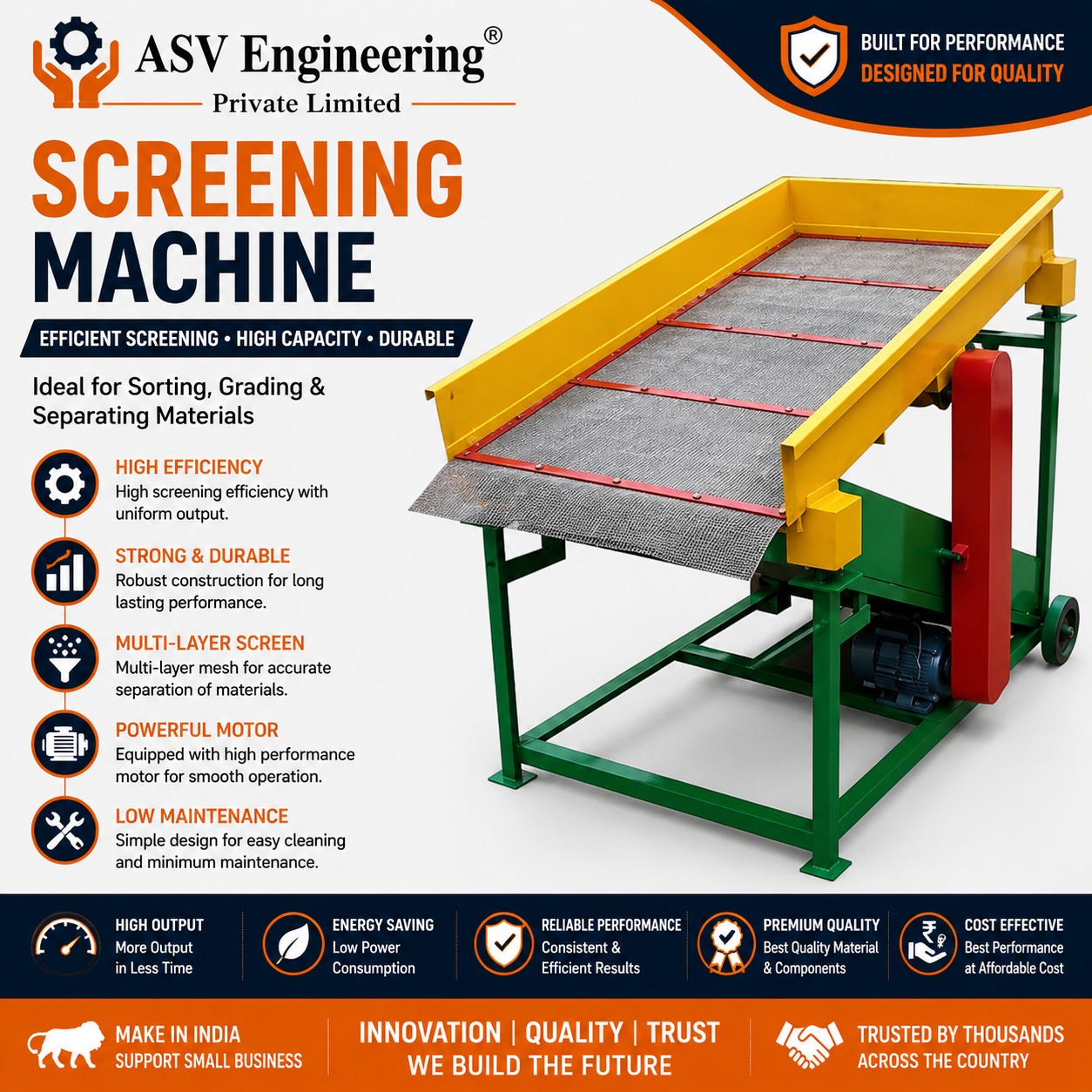
Screening Machine
Description
What Is a Screening Machine?
A screening machine is material separation equipment that sorts bulk materials by particle size using one or more mesh screens with specific aperture dimensions. As a capable screening machine manufacturer and supplier in Delhi, India, we design and build these machines for industries ranging from agriculture and food processing to mining, chemicals, construction, and recycling. The fundamental purpose is simple yet critical, dividing a mixed stream of material into different size fractions so that each fraction meets the size specification required for the next stage of processing, packaging, or sale. Without proper screening, product quality suffers, equipment downstream gets damaged by oversized particles, and fines that should be separated contaminate the final product.
How Does a Screening Machine Separate Materials?
The material to be screened is fed onto a vibrating or gyrating screen surface that carries one or more layers of mesh with progressively smaller openings from top to bottom. As the screen surface moves, smaller particles pass through the mesh openings while larger particles travel across the surface to a discharge point. The motion can be linear vibration, circular vibration, or elliptical depending on the machine design and the material characteristics. Single-deck screens produce two fractions, oversize and undersize. Multi-deck machines with two, three, or four screens can separate material into four or five distinct size ranges in a single pass. Screening efficiency depends on the balance between feed rate, screen area, mesh aperture, and the motion characteristics of the machine.
Key Features of Our Delhi-Fabricated Screening Machines
Our machines use high-frequency vibrating motors mounted on an isolated sub-frame to direct vibration energy into the screen surface rather than the supporting structure. Screen frames are built from mild steel with SS304 contact surfaces for food and pharmaceutical applications, or heavy fabricated mild steel for mining and aggregate use. Quick-release clamping systems allow screen changes in minutes rather than hours, which is critical when processing multiple products on the same machine. Rubber or polyurethane screen panels are available as alternatives to woven wire mesh for abrasive materials that wear through wire quickly. Adjustable vibration amplitude and frequency controls let operators optimise screening performance for different materials without replacing the motor. Spray bar attachments can be fitted for wet screening applications where water helps separate sticky or clay-laden materials.
Technical Specifications
Screen area options range from 0.5 square metres on the compact model to 10 square metres on the large industrial separator. Motor power ranges from 0.5 HP for laboratory and small-batch units to 15 HP for heavy-duty production machines. Vibration frequency is adjustable between 900 and 1500 cycles per minute. Number of decks available are single, double, triple, and quadruple. Mesh aperture sizes span from 0.045 mm fine mesh for chemical powders up to 100 mm coarse mesh for aggregate grading. Feed rate capacity varies from 500 kg per hour to 50 tonnes per hour depending on material density and screen area. Machine weight ranges from 150 kg to 3000 kg. Operating voltage is 415V three-phase, 50 Hz.
Applications and Industries Served
Screening machines serve an enormous range of industries. In agriculture, they grade grains, pulses, spices, seeds, and flour by removing oversized impurities and fine dust. The mining and quarry industry uses screens to classify aggregates, crushed stone, sand, and ore into commercial size grades. Chemical and pharmaceutical manufacturers screen powders, granules, and APIs to ensure particle size compliance. The food processing industry screens sugar, salt, flour, and cocoa powder. Recycling operations use screens to separate glass cullet, plastic granules, metal chips, and compost by size. Construction material producers screen sand, gravel, and premix aggregates. Water treatment plants use vibrating screens to remove suspended solids. The aluminium recycling industry relies heavily on screening to separate turnings, chips, and shreds by size before remelting.
Benefits of Installing a Proper Screening Machine
Without screening, downstream equipment such as pulverisers, mixers, packaging machines, and conveyors suffer premature wear from oversized tramp material. Product quality suffers when fine particles contaminate coarse fractions or vice versa, leading to customer complaints and rejected consignments. Proper screening improves product uniformity, which in turn commands better market prices. A well-selected screening machine also improves plant throughput by removing bottlenecks caused by mixed-size material that would otherwise require manual sorting. For agricultural processors, screening removes stones, sticks, and foreign objects that pose a contamination risk and a potential recall liability. Energy consumption decreases when downstream machines process only the size fraction they were designed to handle.
Maintenance and Care Recommendations
Inspect screen surfaces daily for tears, holes, or blinding, which occurs when near-size particles lodge in mesh openings and reduce effective screen area. Replace damaged screens immediately rather than running with compromised separation efficiency. Tighten screen clamping systems before each shift to prevent material leakage around the screen edges. Grease vibration motor bearings every 200 operating hours as specified by the motor manufacturer. Inspect springs and isolator mounts quarterly for fatigue cracks. Check feed chute and discharge lip alignment monthly to ensure even material distribution across the full screen width. Clean spray nozzles weekly in wet screening applications to prevent clogging from mineral deposits. Maintain spare screens in multiple aperture sizes to handle different product runs without delay.
Frequently Asked Questions
What is the price of a screening machine?
Prices vary significantly based on screen area, number of decks, motor power, construction material, and specialised features like spray bars or quick-change frames. Contact our Delhi factory at +91 8588856870 for pricing matched to your specific application.
How do I choose the right screen mesh size for my product?
Mesh selection depends on the maximum and minimum particle sizes you need to separate. Our technical team reviews your material specifications and recommends the optimal mesh aperture and wire diameter for your application.
Can one machine handle multiple products with different mesh sizes?
Yes. Our quick-release screen clamping system lets you swap screens between production runs in under 20 minutes. Keep a stock of screens in the aperture sizes your operation requires.
Is wet screening available on your machines?
Yes. We offer spray bar attachments and sealed trough options for wet screening applications where water or another liquid assists the separation process, particularly useful for sticky clay-laden materials.
Why Choose Our Delhi Factory and How to Order
We manufacture screening machines at our Nangloi Delhi factory for clients across India's agricultural, mining, chemical, and food processing sectors. Our engineering team selects the correct screen area, motor specification, and deck configuration based on your material type, throughput requirement, and available floor space. We have delivered screening solutions to grain processors in Punjab, aggregate producers in Rajasthan, chemical plants in Gujarat, and recycling operations in multiple states. To discuss your screening challenge, request a quotation, or arrange a factory visit, call us at +91 8588856870. We provide pan-India delivery, on-site installation, and commissioning support to ensure the machine performs to specification from the first day of operation.
| Specification | Details |
|---|---|
| Machine Type | Screening Machine |
| Body Material | SS304 / MS |
| Power Supply | 220V/440V Three Phase |
| Warranty | 1 Year |
Related Products
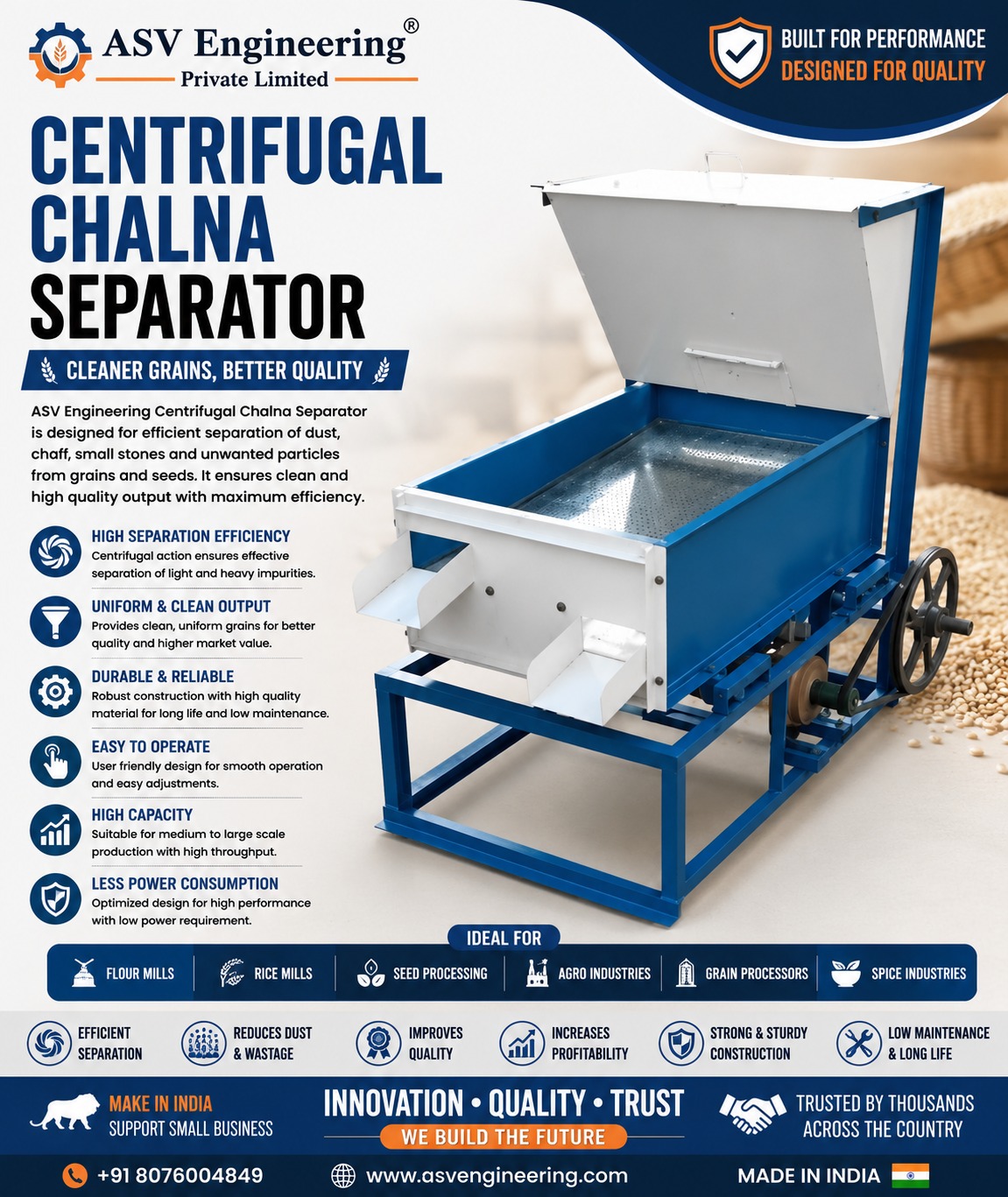
Centrifugal Chalna Separator
View Details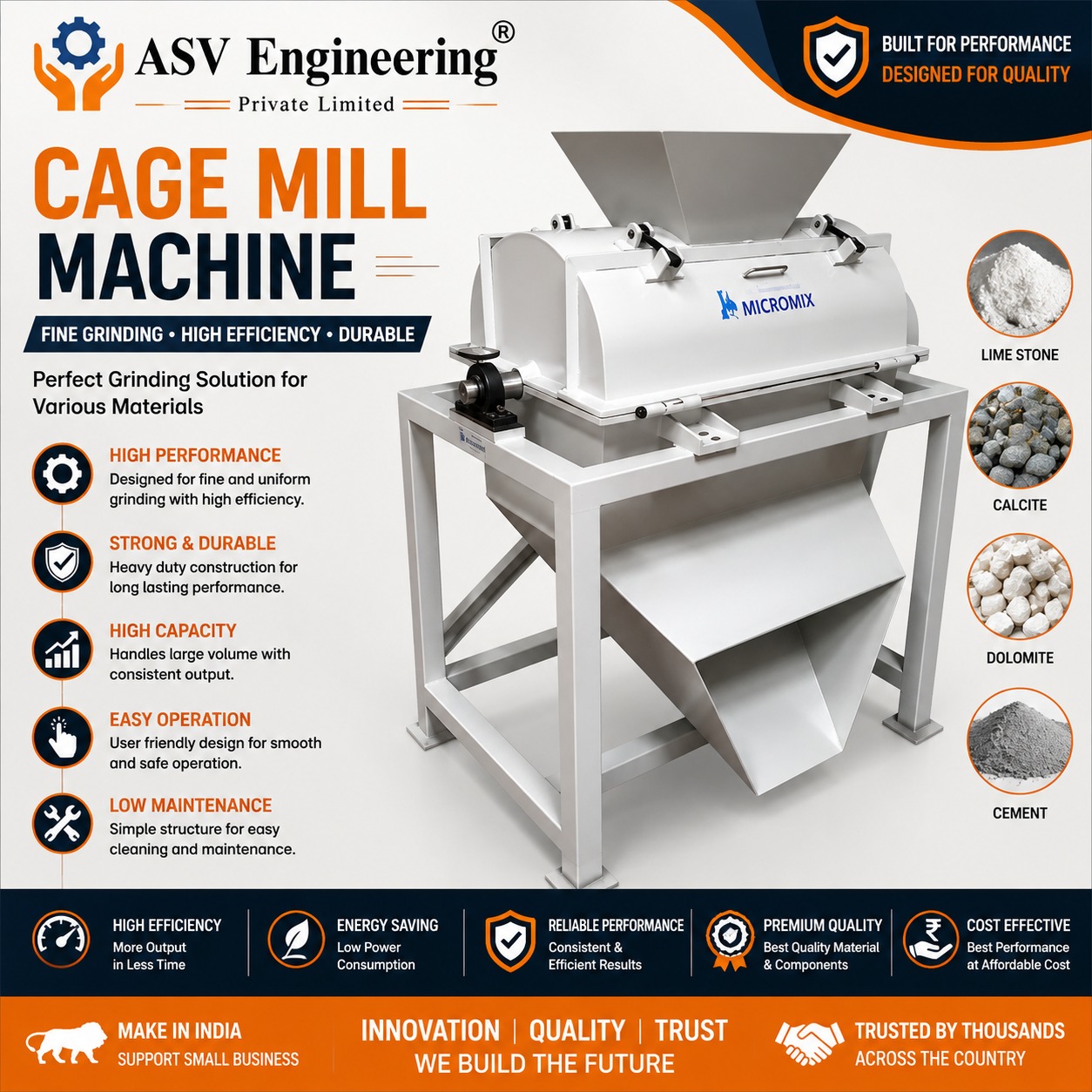
Cage Mill Machine
View Details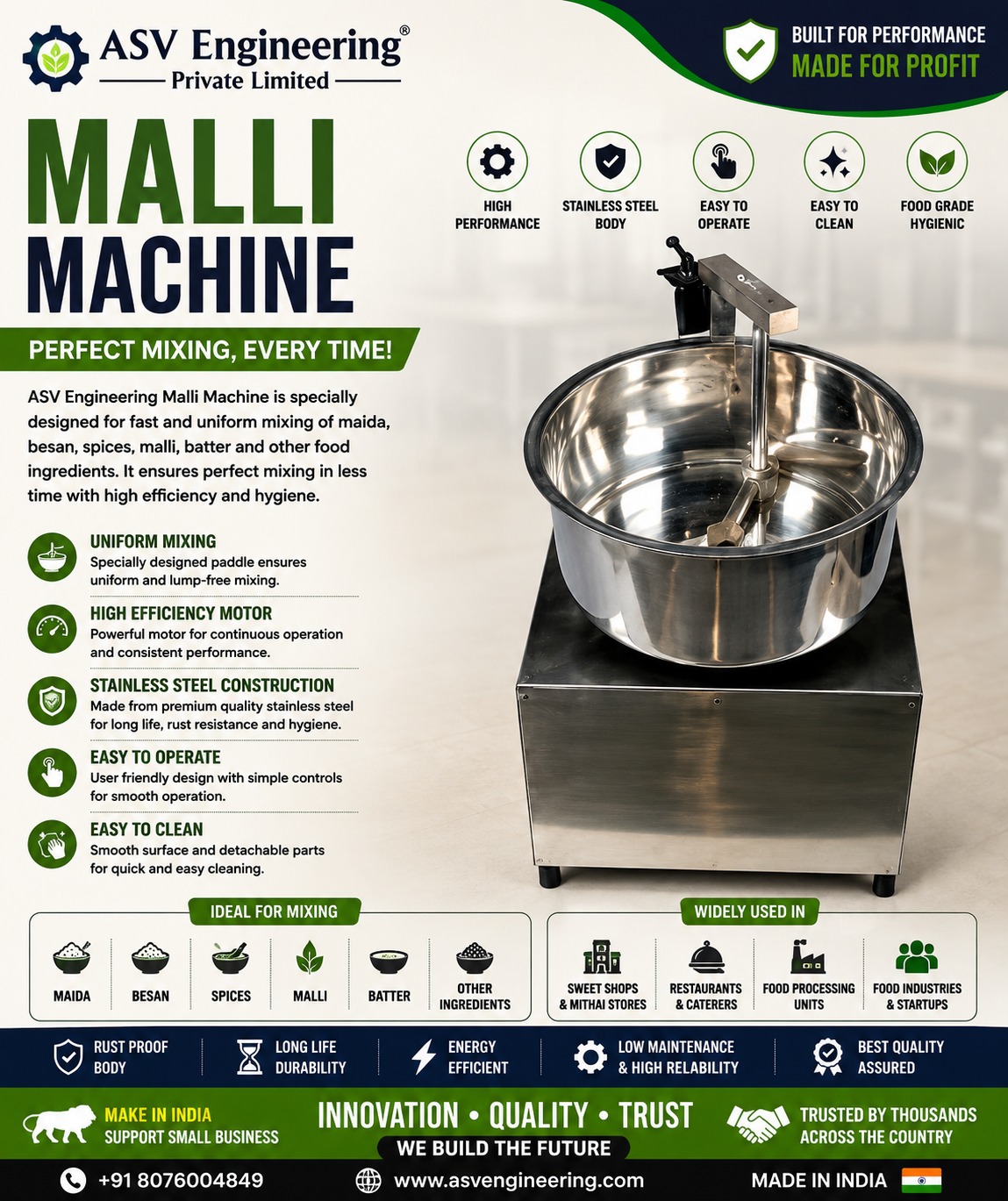
Malli Machine
View Details