Centrifugal Chalna Separator
Description
What Is a Centrifugal Chalna Separator?
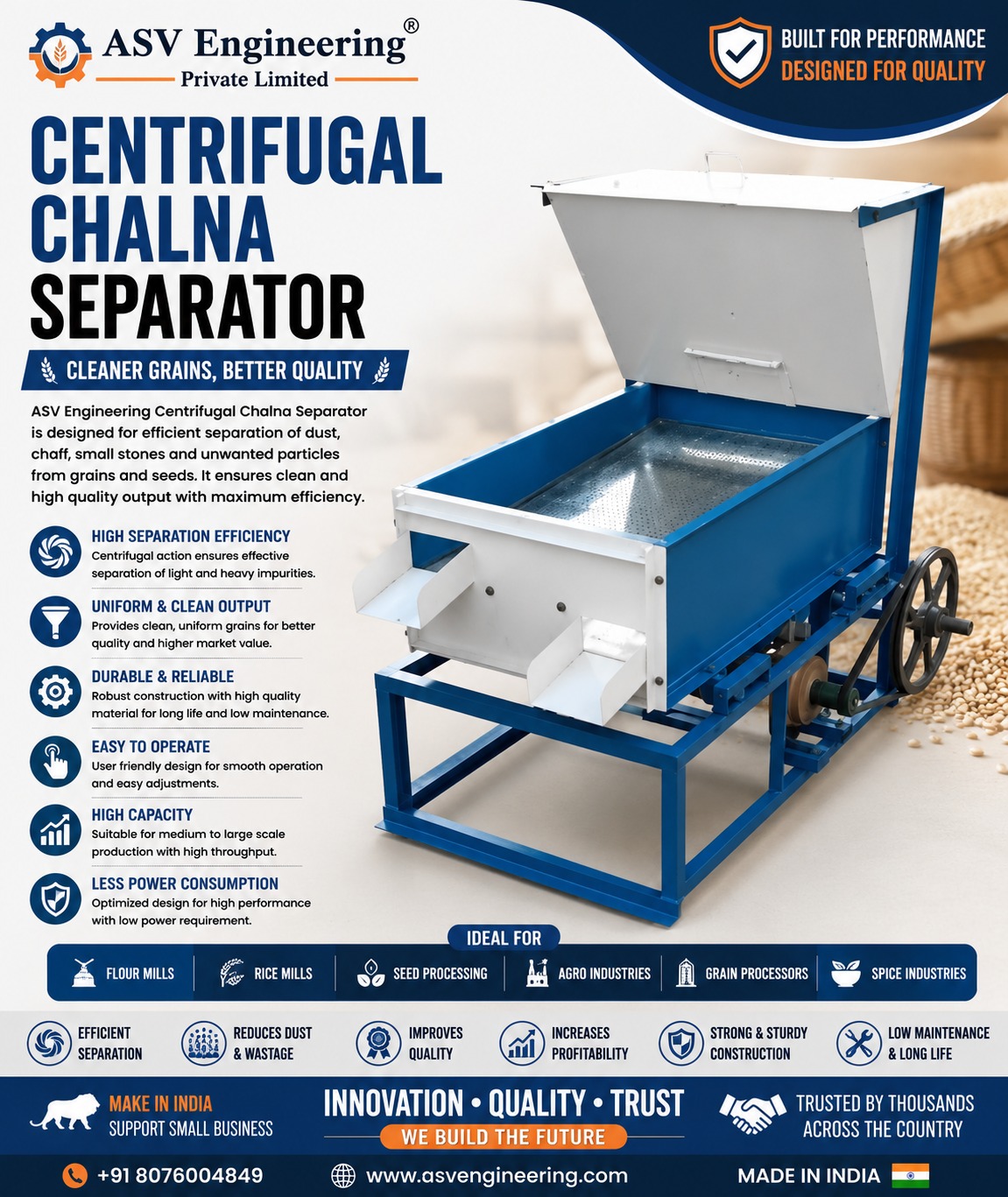
A centrifugal chalna separator is a high-speed rotating classification equipment used to separate fine particles from coarse material using centrifugal force. As a specialist centrifugal chalna separator manufacturer and supplier in Delhi, India, we build these machines for spice processors, grain mills, chemical plants, pharmaceutical manufacturers, and mineral processing facilities. The term chalna comes from the Hindi word for sieve, and the centrifugal design takes the basic sieving concept to a much higher performance level by using rotational speed instead of gravity or vibration alone to force particles through the screen surface, achieving separation efficiencies and throughput rates that static or vibratory screens cannot match.
How Does a Centrifugal Chalna Separator Operate?
The separator consists of a cylindrical screen chamber with a high-speed rotor mounted inside. Material is fed into the centre of the chamber where the spinning rotor flings it outward against the screen surface. Centrifugal force, generated at several hundred times the force of gravity, pushes fine particles through the mesh openings while retaining oversize particles on the screen. The fines collect in an outer housing and are discharged through a dedicated outlet, while the oversize material travels along the screen and exits through a separate discharge chute. The rotor speed and screen mesh are selected based on the particle size distribution of the material and the separation target. This continuous process achieves separation rates far exceeding what a traditional flat chalna or vibrating screen can deliver.
Key Features of Our Delhi-Manufactured Centrifugal Chalna
Our machines feature a rotor dynamically balanced to minimise vibration and ensure smooth operation at high RPM. The screen is a cylindrical basket made from woven wire mesh or perforated plate, available in a wide range of aperture sizes and easily replaceable when worn. The housing is fabricated from heavy mild steel or stainless steel 304 depending on whether the application involves food products or industrial chemicals. An adjustable feed rate control prevents overloading the screen, which would reduce separation efficiency. Heavy-duty bearings are mounted in pillow blocks with grease fittings accessible from outside the housing for easy maintenance. The compact vertical or horizontal layout adapts to different plant floor configurations.
Technical Specifications
Motor power ranges from 3 HP to 20 HP depending on screen diameter and throughput requirement. Rotor speed is adjustable between 800 and 2400 RPM through belt drive ratio changes or VFD control. Screen diameters are available in 400 mm, 600 mm, and 900 mm. Throughput capacity spans from 200 kg per hour on the small model to 3000 kg per hour on the large industrial unit. Screen aperture options range from 0.1 mm for very fine powder separation to 10 mm for coarse grading. Machine weight ranges from 200 kg to 1200 kg. Operating voltage is 415V three-phase, 50 Hz. The overall height of a typical mid-range model is approximately 1500 mm.
Applications and Industries Served
Spice processing is one of the largest application areas. Turmeric, chilli, coriander, cumin, and masala powders are screened through centrifugal chalna machines to remove coarse fibres, husks, and foreign particles before packaging. The flour milling industry uses these separators to remove bran and oversized particles from refined flour. Chemical manufacturers screen powders, pigments, and granules to achieve tight particle size distributions. Pharmaceutical companies use fine-mesh centrifugal separators to classify active ingredients and excipients. The mineral processing industry screens talc, calcium carbonate, limestone powder, and bentonite. Recycled plastic granule producers use these machines to separate dust and fines from saleable granules.
Benefits of Choosing Centrifugal Separation Over Traditional Screening
A traditional flat vibrating screen relies on gravity and surface motion to move particles across the mesh, which limits both speed and the fineness of separation achievable. A centrifugal chalna separator applies forces many times greater than gravity, dramatically increasing the rate at which fine particles pass through the mesh. This means a smaller machine footprint can achieve the throughput of a much larger vibrating screen. Separation efficiency improves significantly for near-mesh-size particles that tend to blind or peg on conventional screens. The enclosed design also contains dust far more effectively than open vibrating screens, improving workplace air quality and reducing product loss.
Maintenance and Care Guidelines
Inspect the screen basket daily for holes or worn spots that would allow oversize material to contaminate the fines fraction. Replace screens proactively on a scheduled basis rather than waiting for visible failure. Grease rotor bearings every 150 operating hours using the recommended high-speed bearing grease. Check rotor balance vibration levels monthly using a handheld vibration meter and rebalance or replace worn rotor components as needed. Inspect drive belts weekly for proper tension and signs of cracking or glazing. Clean the interior of the housing and screen basket thoroughly when changing material types to prevent cross-contamination. Verify all housing bolts and access panel fasteners are tight before starting each shift.
Frequently Asked Questions
What is the price of a centrifugal chalna separator?
Pricing depends on screen diameter, motor power, construction material, and throughput capacity. Contact our Delhi factory at +91 8588856870 for a quotation tailored to your specific separation requirement.
How fine can this machine separate particles?
Our machines handle separation down to 100 microns using fine woven wire mesh screens. For even finer classification below 100 microns, consult with our engineering team about specialised screen options.
Can it handle wet materials?
The standard model is designed for dry material separation. For wet screening applications, we offer modified designs with sealed housings and drainage provisions. Discuss your wet material requirement with us.
How often does the screen need replacement?
Screen life depends on material abrasiveness and operating hours. For non-abrasive food products, screens typically last 500 to 1000 operating hours. Abrasive mineral applications may require replacement every 200 to 400 hours.
Why Choose Our Delhi Factory and How to Order
We manufacture centrifugal chalna separators at our Nangloi Delhi factory for spice mills, chemical plants, and mineral processors across India. Our engineering team works directly with clients to select the correct screen mesh, rotor speed, and machine size for their specific material and throughput target. We have supplied separators to spice processing units in Gujarat and Rajasthan, flour mills in Punjab and Haryana, and chemical plants in multiple industrial zones. To get a quotation, discuss a challenging separation problem, or schedule a factory visit, call us at +91 8588856870. We deliver across India and provide installation and performance verification at your facility.
| Specification | Details |
|---|---|
| Machine Type | Centrifugal Chalna Separator |
| Body Material | SS304 / MS |
| Power Supply | 220V/440V Three Phase |
| Warranty | 1 Year |
Related Products
Screening Machine
View Details
Cage Mill Machine
View Details
Malli Machine
View Details