Cyclone Pulverizer Machine
Description
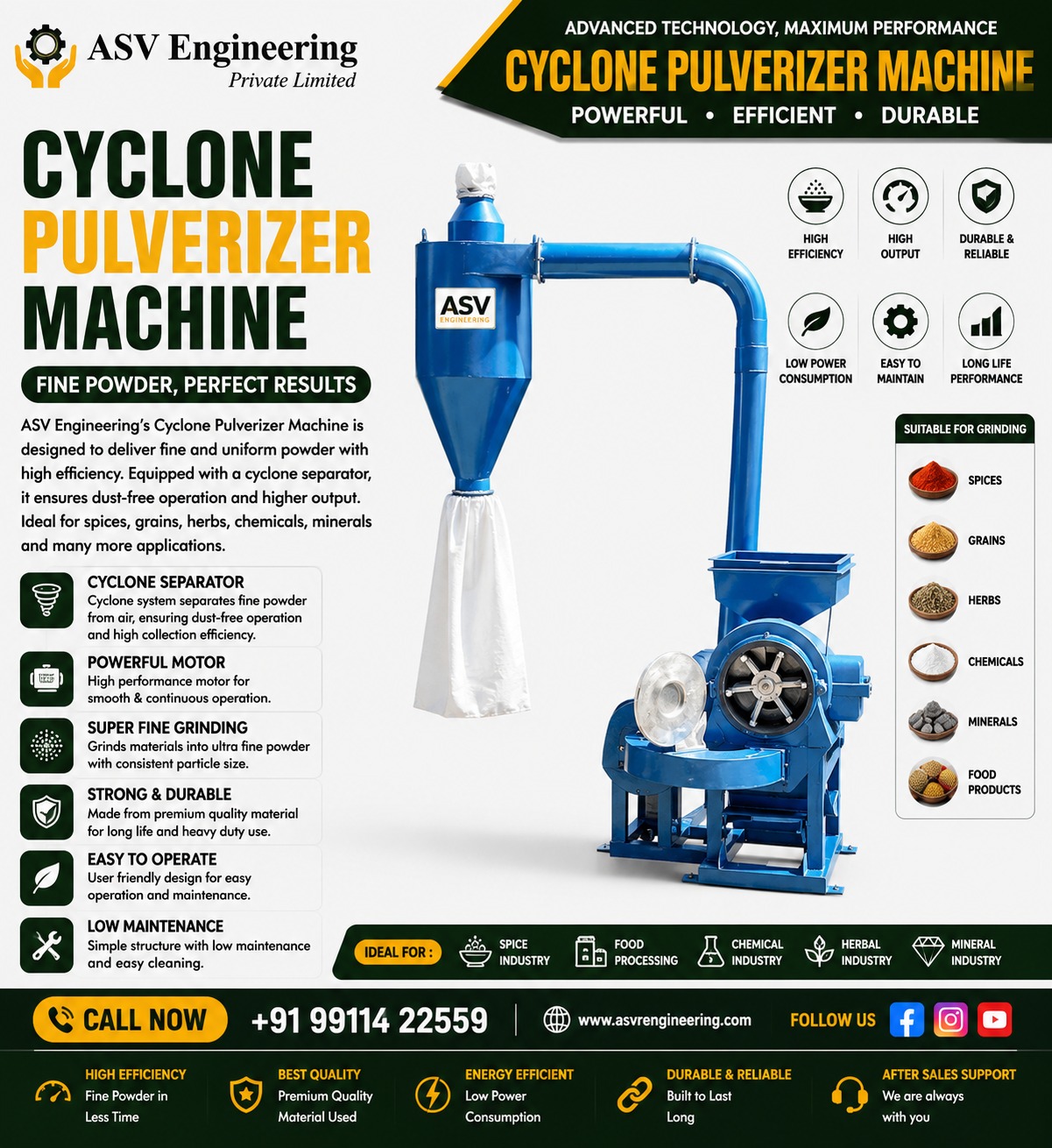
When businesses seek a cyclone pulverizer machine manufacturer in Delhi, India, they need equipment that can grind a wide range of materials to fine powders without excessive heat buildup or dust leakage. Our factory builds cyclone pulverizer machines that address exactly these concerns, combining high-speed grinding with an integrated cyclone separation system that collects fine particles efficiently and keeps the working environment clean. From spice grinding operations to pharmaceutical powder production, this machine serves industries where particle size consistency and dust control are non-negotiable.
What Is a Cyclone Pulverizer Machine?
A cyclone pulverizer machine is a high-speed grinding device that uses a rotating hammer mechanism or pin mill to reduce materials to fine powders, while an integrated cyclone separator collects the ground product and separates it from the air stream. The cyclone system is the defining feature because it replaces traditional bag filters or screen-only collection methods with a more efficient, low-maintenance approach. Material is fed into the grinding chamber, struck repeatedly by high-speed hammers or pins until it reaches the desired fineness, then carried by airflow into the cyclone where centrifugal force separates the powder from the air. Fine particles settle into a collection container while clean air exits through the exhaust. This design significantly reduces dust emissions compared to conventional pulverizers.
Key Features
The cyclone pulverizer machine from our Delhi factory features a heavy-duty grinding chamber lined with hardened steel wear plates that resist abrasion from hard and fibrous materials alike. The rotor assembly is dynamically balanced to minimize vibration during high-speed operation, which extends bearing life and reduces noise. Adjustable classifier fins inside the grinding chamber allow the operator to control particle size without changing screens, providing flexibility when switching between different product fineness requirements. The cyclone separator is constructed from thick mild steel with a smooth internal finish that prevents powder buildup and ensures consistent separation efficiency. A collection bin with a quick-release clamp sits beneath the cyclone for easy product retrieval. The feeding hopper includes a safety interlock that stops the motor if the hopper is opened during operation. The machine frame is welded from heavy-section mild steel and rests on vibration-absorbing rubber mounts.
How Does the Cyclone Pulverizer Machine Work?
The operator loads raw material into the feeding hopper, which uses a gravity or screw-feed mechanism to deliver material into the grinding chamber at a controlled rate. Inside the chamber, a high-speed rotor fitted with hardened hammers or pins strikes the material repeatedly, fracturing it into progressively smaller particles. Airflow generated by the rotor's spinning action carries the ground particles toward the classifier section, where larger particles are deflected back into the grinding zone for further reduction. Only particles that meet the fineness criteria pass through the classifier and enter the cyclone separator. In the cyclone, the air-powder mixture spirals downward along the inner wall. Centrifugal force pushes heavier powder particles to the wall where they slide down into the collection bin, while cleaned air exits through the top exhaust port. This continuous process allows uninterrupted feeding and collection, making the machine suitable for long production runs.
Technical Specifications
The grinding chamber diameter ranges from 300 millimetres to 600 millimetres depending on the model, with rotor speeds between 3000 and 5000 revolutions per minute. Motor power ranges from 5 kilowatts to 30 kilowatts, supplied on three-phase 415-volt connections. Production capacity varies from 50 to 500 kilograms per hour depending on the material hardness, feed size, and desired fineness. Achievable particle size ranges from 60 mesh to 300 mesh, with some materials ground even finer depending on their characteristics. The cyclone separator diameter is matched to the grinding chamber capacity to ensure efficient separation at full throughput. The collection bin holds 20 to 50 litres depending on material density. Overall machine dimensions range from 120 cm x 80 cm x 160 cm for smaller models to 200 cm x 120 cm x 200 cm for industrial units. Machine weight ranges from 150 to 600 kilograms. Noise level is approximately 80 to 85 decibels at one metre distance.
Applications and Industries
Cyclone pulverizer machines serve a diverse range of industries across India. Spice grinding is one of the largest applications, where the machine grinds turmeric, chilli, coriander, cumin, and masala blends to fine powders. Pharmaceutical companies use cyclone pulverizers to grind active ingredients and excipients to precise particle sizes for tablet and capsule manufacturing. Agricultural processing facilities grind grains, pulses, and feed ingredients. Chemical manufacturers process pigments, resins, and compound chemicals. The mineral processing industry uses these machines for grinding limestone, talc, calcium carbonate, and similar materials. Food processing plants grind sugar, salt, rice flour, and other food-grade powders. The textile industry processes fibre waste into fine dust for composite materials. Even cosmetic manufacturers use cyclone pulverizers for grinding mineral powders used in makeup formulations.
Benefits of the Cyclone Collection System
The cyclone separator offers meaningful advantages over conventional dust collection methods. Bag filters and screen-only systems clog frequently, reducing airflow and grinding efficiency while requiring regular cleaning or replacement. The cyclone uses no consumable filter media, so there are no bags to replace and no filter cleaning downtime. Dust containment is significantly better because the cyclone captures fine particles that would otherwise escape into the workshop air, improving worker health and reducing housekeeping costs. Product recovery is higher because the cyclone captures particles that might be lost through less efficient collection systems. Maintenance costs drop because the cyclone has no moving parts and requires only occasional inspection of the inner wall surface. The combination of these factors translates to lower operating costs and higher productive uptime compared to conventional pulverizer designs.
Maintenance and Care
Maintaining the cyclone pulverizer machine involves several regular tasks that preserve performance and extend equipment life. Inspect the grinding hammers or pins daily for wear and replace them when the edges become rounded, which reduces grinding efficiency. Check the wear plates lining the grinding chamber weekly and replace them when they become thin enough to expose the chamber wall. The cyclone separator interior should be inspected monthly for powder buildup or coating that could restrict airflow; wipe it clean with a dry cloth. Bearings should be lubricated every two weeks with high-temperature grease rated for the operating speed. The rotor assembly should be checked for dynamic balance every six months, as uneven wear on hammers can cause vibration. Electrical connections and the motor should be inspected quarterly by a qualified electrician. Our Delhi factory stocks all wear parts including hammers, pins, wear plates, bearings, and cyclone components for rapid dispatch across India.
Frequently Asked Questions
What is the price of a cyclone pulverizer machine in India?
Pricing depends on the grinding chamber size, motor power, production capacity, and the materials of construction. Smaller models suitable for spice grinding and small-scale operations are priced for accessibility, while large industrial units with higher motor power and output command premium prices. Contact our sales team at +91 8588856870 for a detailed quotation matched to your specific grinding requirements.
What materials can the machine grind?
The machine handles a wide variety of materials including spices, grains, pulses, sugar, salt, herbs, minerals, certain chemicals, and pharmaceutical compounds. Hard or highly abrasive materials like quartz and corundum may require specialized wear-resistant components, which we can supply on request. Very wet or sticky materials are not suitable for this type of pulverizer and should be dried first.
How fine can the machine grind?
Standard configurations achieve particle sizes between 60 mesh and 300 mesh, depending on the material and the classifier setting. Finer grinding may be achievable with certain soft materials by adjusting the classifier fins and reducing the feed rate. Discuss your specific fineness requirements with our technical team to ensure we recommend the right configuration.
Is the machine noisy?
Cyclone pulverizers operate at approximately 80 to 85 decibels, which is typical for high-speed grinding equipment. We recommend hearing protection for operators during extended runs. The vibration-absorbing rubber mounts on the machine base help reduce transmitted noise to the floor and surrounding structure.
Why Choose Our Delhi Factory and How to Order
Our Nangloi, Delhi factory builds cyclone pulverizer machines with a focus on grinding performance, dust control, and long-term durability. We use quality steel for the chamber, rotor, and cyclone, and we source reliable motors and bearings that handle continuous industrial operation. Every machine undergoes test grinding with representative materials before dispatch to verify production capacity, particle size, and cyclone efficiency. We offer pan-India delivery and installation support, and our technical team can visit your site to assist with commissioning and operator training. To discuss your material grinding needs, request a quotation, or place an order, call us at +91 8588856870. Our team will help you select the right cyclone pulverizer configuration and ensure it arrives at your facility ready to deliver the performance you need.
| Specification | Details |
|---|---|
| Machine Type | Cyclone Pulverizer Machine |
| Body Material | SS304 / MS |
| Power Supply | 220V/440V Three Phase |
| Warranty | 1 Year |
Related Products
Screening Machine
View Details
Centrifugal Chalna Separator
View Details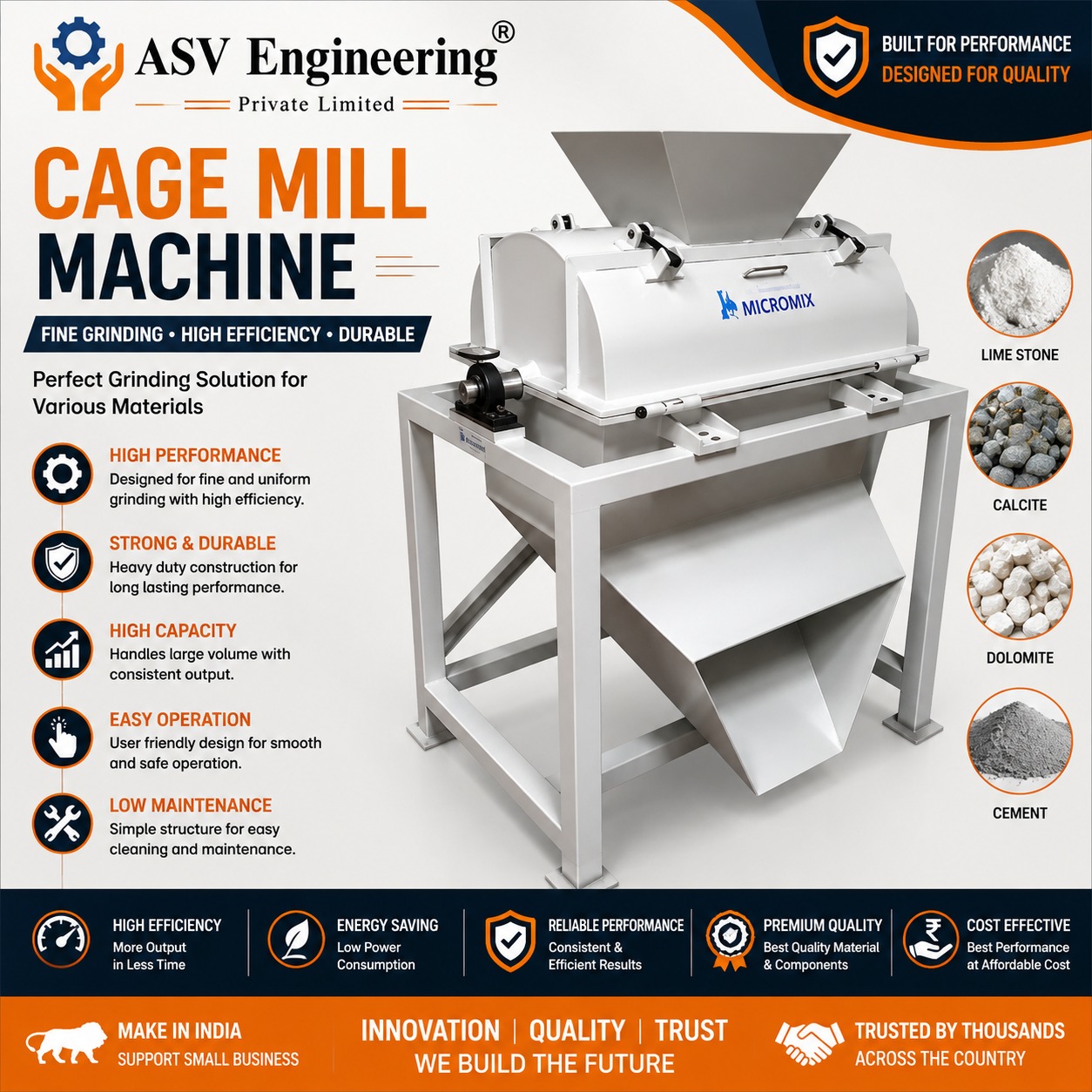
Cage Mill Machine
View Details