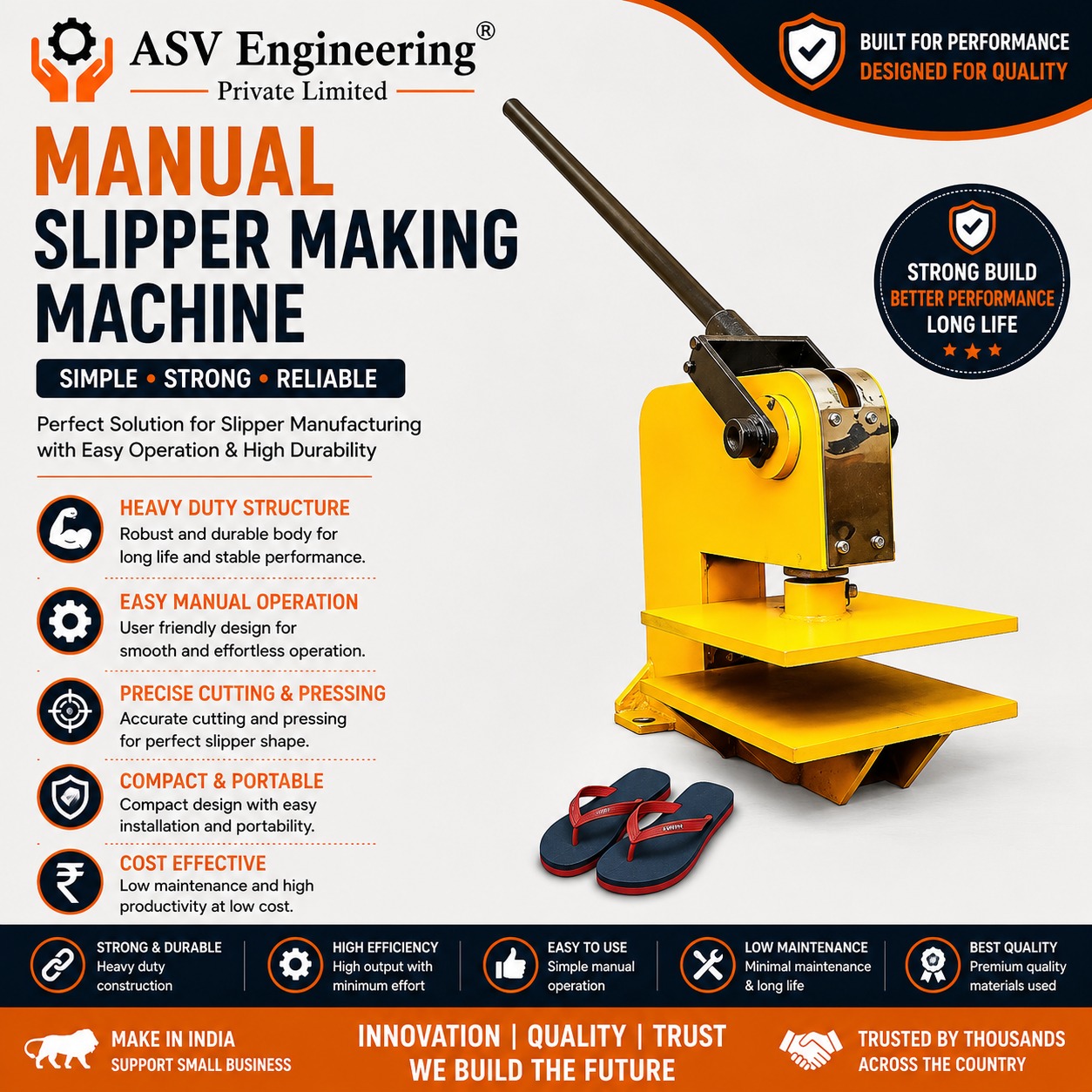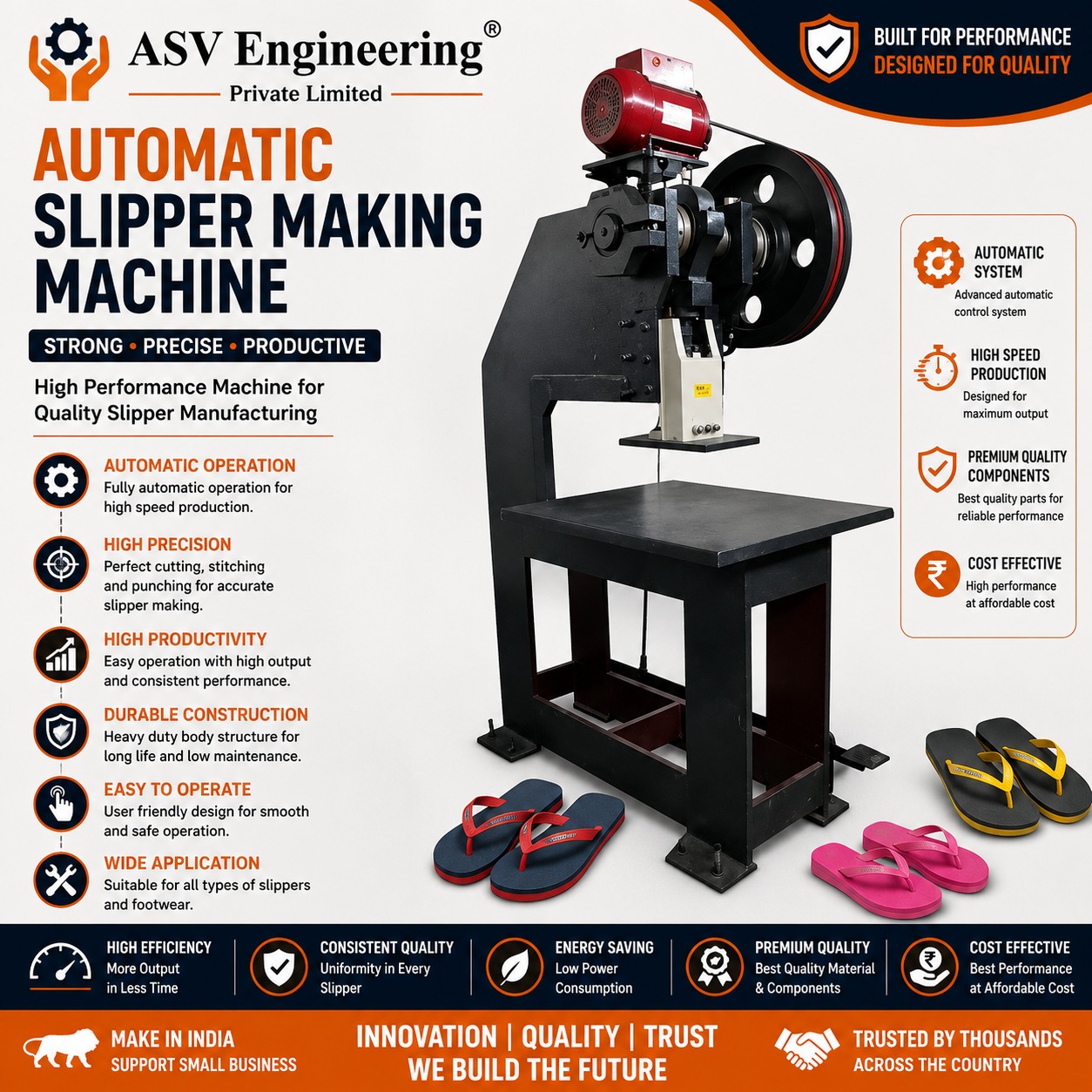
Slipper Making Machine
Description
What Is a Slipper Making Machine?
A slipper making machine is integrated manufacturing equipment used to produce rubber, EVA foam, PVC, and thermoplastic slippers and flip-flops through a continuous or batch process of material preparation, moulding, cutting, and finishing. As a practical slipper making machine manufacturer and supplier in Delhi, India, we supply these machines to footwear manufacturers, rubber product workshops, and emerging entrepreneurs looking to enter the high-volume, low-margin slipper market that serves every demographic segment across India. From basic bathroom slippers sold at five-rupee price points to branded casual flip-flops retailed at two hundred rupees, the production process starts with the same fundamental machinery and the same set of raw materials.
How Does the Slipper Manufacturing Process Work?
The process begins with raw material preparation, which may involve mixing rubber compounds with vulcanising agents, colouring pigments, and foaming agents, or loading pre-formulated EVA or PVC granules into a heating and mixing unit. The prepared material is then injected or pressed into slipper-shaped moulds. In the direct injection moulding process, which is the most common modern method, the molten material is injected directly into a closed two-part mould that contains the cavity for the slipper sole shape. After a controlled cooling period, the mould opens and the formed sole is extracted. The sole is then either attached to a pre-made strap through a strap insertion station or the strap is moulded directly onto the sole in a second injection cycle. Trimming, quality inspection, and packaging follow. Batch production using hydraulic press machines works differently, where sheets of heated material are pressed between male and die moulds, and individual soles are cut from the pressed sheet before strap attachment.
Key Features of Our Delhi-Designed Slipper Machines
Our machines use precision-machined aluminium or steel moulds that produce slipper soles with consistent thickness, texture, and dimensional accuracy. Hydraulic clamping systems provide even pressure distribution across the mould face, preventing flash and short-mould defects. Temperature controllers maintain mould surface temperature within plus or minus two degrees Celsius, which is critical for EVA foaming consistency and rubber vulcanisation quality. Multi-station rotary moulding machines allow simultaneous loading, moulding, cooling, and unloading operations that maximise output per machine footprint. Mould changeover is straightforward with quick-clamp systems, enabling the same machine to produce different slipper sizes and styles throughout the day. Energy-efficient hydraulic power packs with variable displacement pumps reduce electricity consumption compared to fixed-displacement systems.
Technical Specifications
Hydraulic press models range from 50 tonnes to 200 tonnes clamping force depending on sole size and material type. Rotary injection moulding machines produce between 800 and 3000 pairs per shift of eight hours. Motor power ranges from 5 HP for small presses to 25 HP for high-speed rotary machines. Mould cavities are available in single-cavity for large sizes, two-cavity for standard adult sizes, and four-cavity for children's sizes. Mould temperature control range spans from 150 to 220 degrees Celsius for rubber and from 160 to 200 degrees Celsius for EVA. Cycle time per pair varies from 30 seconds for EVA flip-flops to 3 minutes for vulcanised rubber slippers. Machine weight ranges from 500 kg for a small press to 5000 kg for a full rotary injection line.
Applications and Industries Served
The footwear manufacturing industry in India is the second largest employer after agriculture. Slipper and flip-flop production serves the mass domestic market across every Indian state and is a significant export category to African, Southeast Asian, and Middle Eastern markets. Rubber slipper manufacturers in Kota, Jodhpur, and Agra have been producing affordable footwear for decades using hydraulic press technology. The EVA injection moulding approach has gained popularity in new-age manufacturing facilities across Gujarat, Tamil Nadu, and the National Capital Region because of its faster cycle times and lighter finished product weight. Custom slipper manufacturers serving corporate gifting, hospital supply, hotel amenities, and promotional merchandise also use these machines for short production runs with custom branding on the sole.
Benefits of Investing in Slipper Making Machinery
India consumes billions of pairs of slippers and flip-flops annually, and the market continues to grow with population growth and increasing per-capita footwear consumption. The raw materials, rubber, EVA, and PVC granules are available from domestic suppliers at competitive prices, and the finished product sells at a consistent margin in every channel from wholesale bazaars to online marketplaces. A compact machine setup requires relatively modest factory space compared to many other manufacturing ventures. The entry barrier is low enough for small entrepreneurs and self-help groups while the production speed can satisfy medium-scale commercial buyers as well. Seasonal demand peaks during summer and monsoon months create predictable production cycles that simplify planning and cash flow management.
Maintenance and Care Recommendations
Inspect mould surfaces weekly for scratches, dents, or material buildup that transfer defects to finished soles. Clean moulds at the end of each production day using the recommended cleaning solution for your material type. Check hydraulic oil level and condition monthly, and replace the oil at the intervals specified in the service manual. Inspect hydraulic hoses and fittings quarterly for signs of wear, seepage, or bulging that could indicate impending failure. Lubricate all toggle mechanisms, guide rods, and sliding surfaces every 200 operating hours. Verify temperature controller calibration quarterly using a separate thermocouple. Inspect electrical connections and control panel components annually by a qualified electrician. Keep spare mould sets, hydraulic seals, and heating elements in stock to prevent extended downtime.
Frequently Asked Questions
What is the price of a slipper making machine in India?
Pricing depends on machine type, hydraulic press tonnage, number of mould cavities, and whether you need a simple press or a fully automatic rotary injection machine. Call our Delhi factory at +91 8588856870 for a quotation based on your production target.
How many pairs of slippers can I produce per day?
A single-shift operation produces between 800 and 3000 pairs per day depending on the machine model, material type, and slipper style. Two-shift operation effectively doubles this output.
Can the same machine make rubber slippers and EVA flip-flops?
Hydraulic press machines handle rubber and EVA with appropriate mould temperature settings. Injection moulding machines are typically dedicated to one material type. We recommend discussing your multi-material requirement with our team before purchasing.
What raw materials do I need?
Rubber slippers require rubber compound with vulcanising agents and colouring. EVA flip-flops require EVA granules with foaming agent. PVC slippers require PVC compound. Straps are typically pre-manufactured and purchased separately. We help you identify reliable raw material suppliers.
Why Choose Our Delhi Factory and How to Order
We manufacture slipper making machines and supply complete production setups including moulds, material mixing equipment, and strap insertion stations from our Nangloi Delhi factory. Our team has experience working with footwear manufacturers across North India and understanding the specific needs of small to medium-scale producers. We provide mould design assistance, raw material guidance, and operator training with every machine. To discuss your footwear production requirement, get a machine quotation, or visit our factory for a demonstration, call us at +91 8588856870. We deliver across India and handle installation and commissioning at your production facility.
| Specification | Details |
|---|---|
| Machine Type | Slipper Making Machine |
| Body Material | SS304 / MS |
| Power Supply | 220V/440V Three Phase |
| Warranty | 1 Year |
Related Products
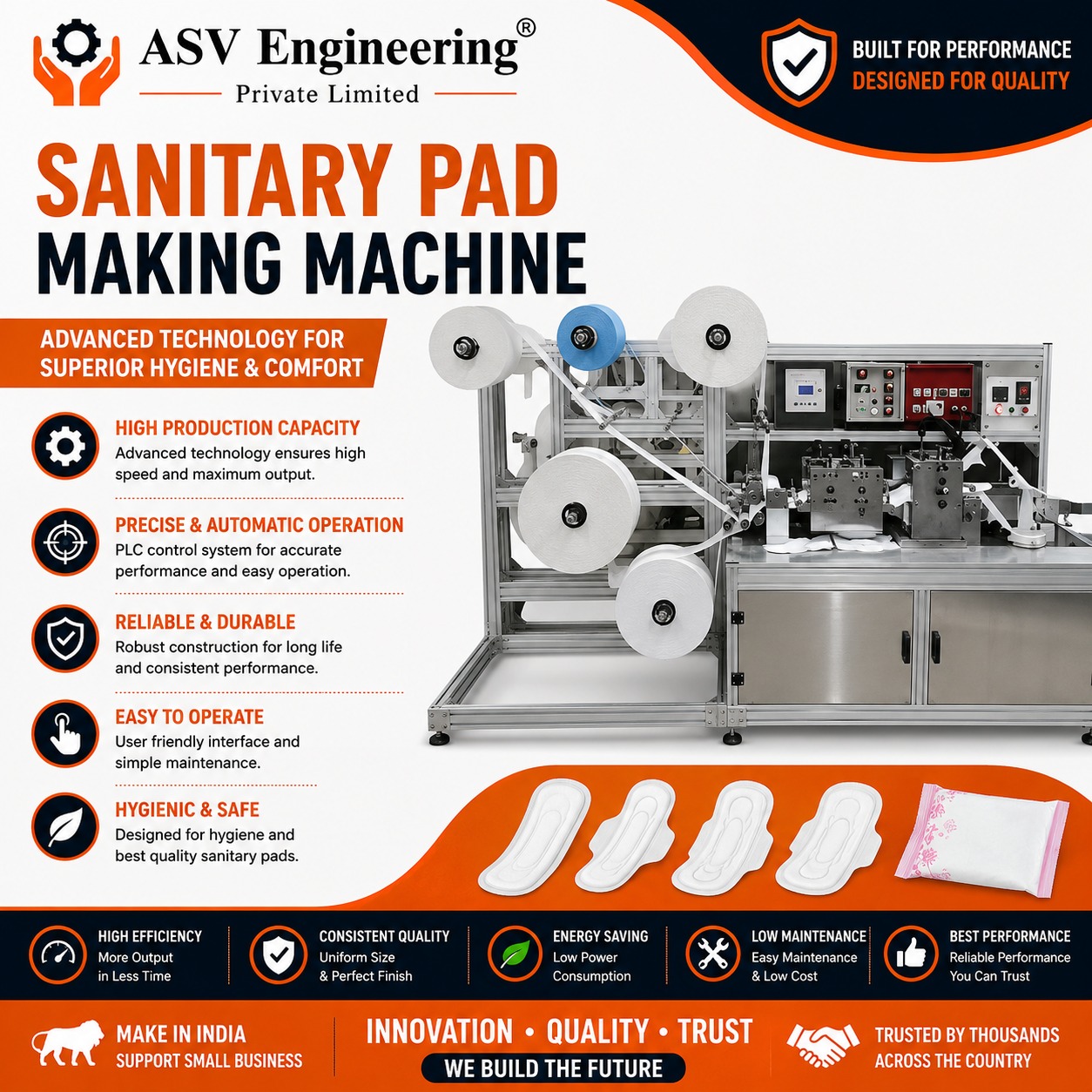
Sanitary Pad Making Machine
View Details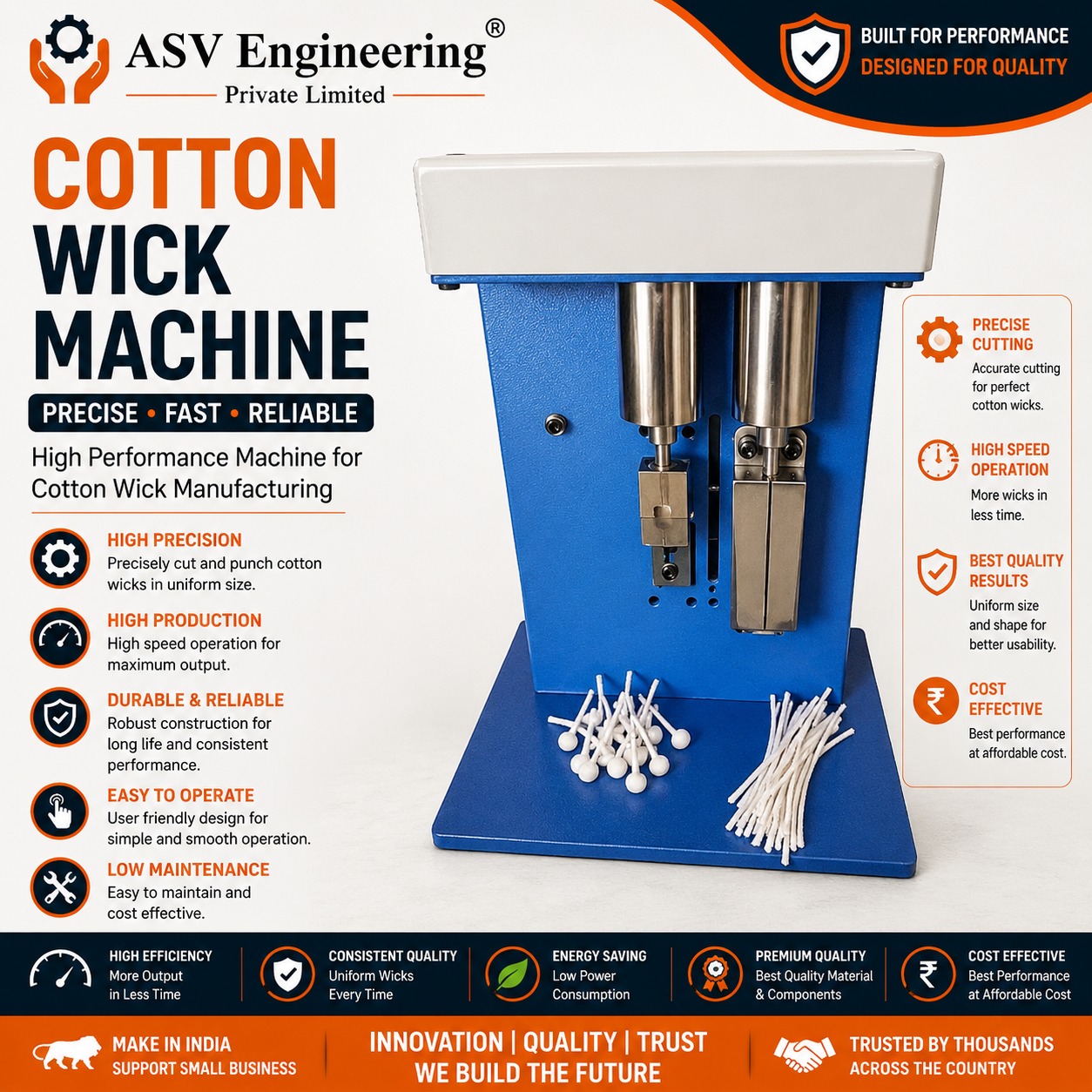
Cotton Wick Machine
View Details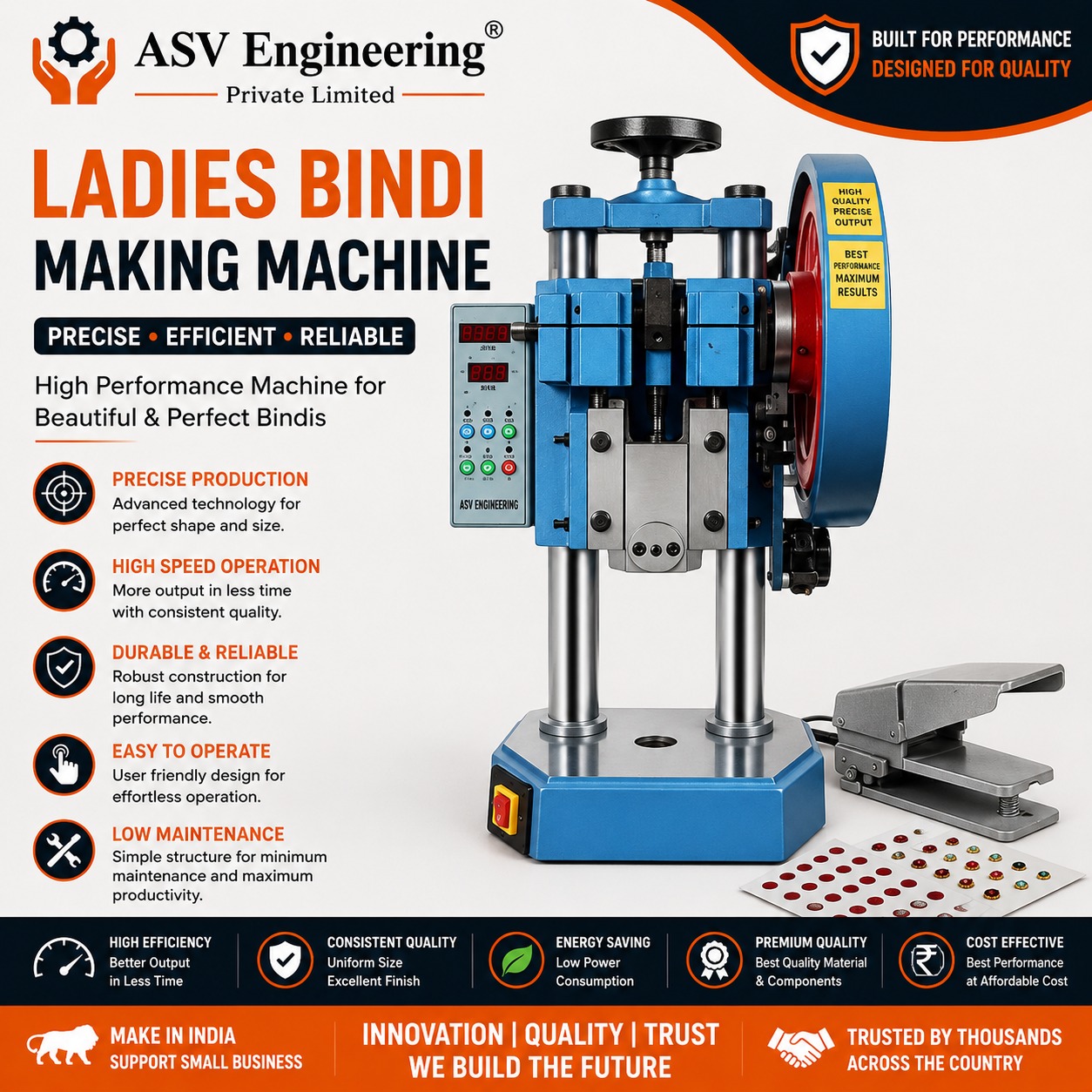
Ladies Bindi Making Machine
View Details