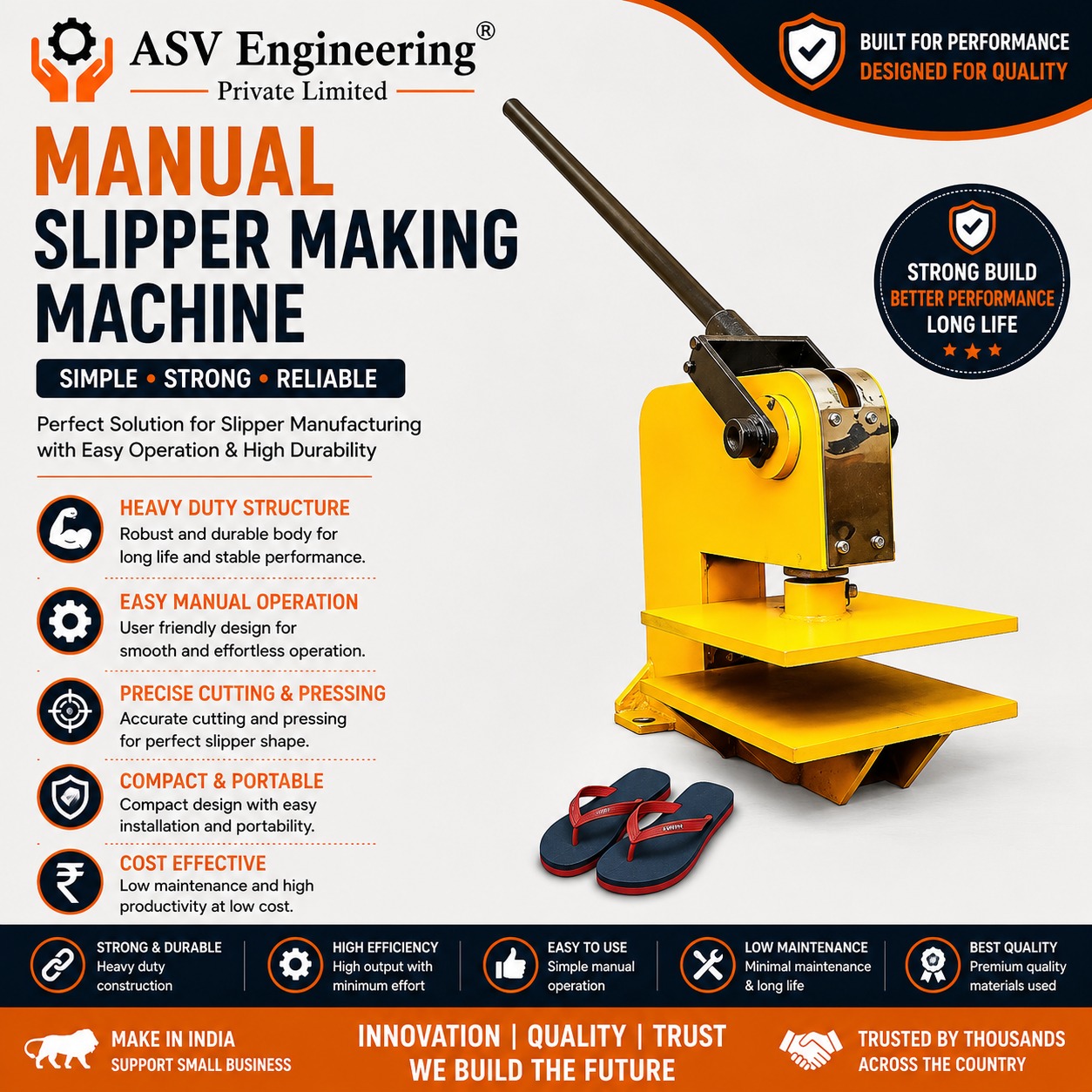
Manual Slipper Making Machine
Description
Manual Slipper Making Machine – Quality Manufacturer & Supplier in Delhi, India
The slipper and chappal manufacturing industry in India is massive, employing millions of people and serving a population that relies on affordable footwear for daily life. If you are planning to start a small slipper production unit or expand your existing footwear business, a dependable manual slipper making machine is the ideal first step. As a specialised manual slipper making machine manufacturer in Delhi, India, we build robust hand-operated slipper cutting and pressing machines that enable entrepreneurs to produce rubber slippers, EVA slippers, and flip-flops with consistent quality and minimal investment.
What Is a Manual Slipper Making Machine?
A manual slipper making machine is a hand-operated press that cuts rubber or EVA foam sheets into slipper sole shapes and, in some configurations, also bonds straps to the sole using heat or adhesive. The machine replaces the need for expensive die-cutting and injection moulding equipment by providing an affordable mechanical press that a single operator can run. It is the most popular starting point for slipper manufacturers in India because it allows production without electricity in some models and requires very little training to operate effectively.
Key Features
Our manual slipper making machine is fabricated from high-grade mild steel with a rigid C-frame or H-frame design that distributes pressing force evenly across the die area. This even force distribution is critical because it produces clean cuts with smooth edges on every sole, reducing waste from mis-cut pieces. The machine accepts standard slipper sole cutting dies in sizes ranging from children's 25 mm to men's 32 mm, and these dies are available as interchangeable accessories.
The hand-operated lever or fly-wheel mechanism provides smooth, progressive pressure rather than a sudden impact, which gives the operator better control and produces cleaner cuts. A depth adjustment screw lets you set the press travel to match different material thicknesses, from thin rubber sheets to thick EVA foam. The flat bed work surface gives you ample space to position material sheets and align them before pressing. The compact footprint means the machine fits easily in a small workshop or even a spare room in a house.
How Does It Work?
Place your rubber or EVA foam sheet on the machine's flat bed. Position the cutting die — a sharp-edged steel mould in the shape of a slipper sole — on top of the material, aligning it to maximise the number of soles cut from each sheet with minimal waste. Engage the lever or rotate the fly-wheel to drive the press plate down onto the die. The progressive pressure forces the die through the material and cuts out a clean sole shape. Release the press, lift the die, and remove the cut sole. Repeat the process to build your batch of soles. For strap attachment, apply adhesive to the sole strap slots and manually thread the straps through, or use a heated press attachment if your model includes that feature. The cut soles can then be finished with edge trimming, branding, and packaging.
Technical Specifications
- Machine Type: Manual lever press and manual fly-wheel press options
- Press Force: 1 to 3 tonnes depending on model
- Cutting Area: 350 mm by 250 mm standard, larger sizes available on request
- Material Thickness Capacity: 3 mm to 20 mm rubber or EVA foam
- Sole Sizes: Children's, ladies', and men's sizes with interchangeable dies
- Frame Construction: Heavy mild steel welded C-frame or H-frame
- Machine Weight: 45 kg to 90 kg
- Power Supply: No electricity needed for basic cutting models
- Production Rate: 200 to 500 pairs per eight-hour shift per operator
- Die Material: High-carbon tool steel, hardened and tempered
- Dimensions: Approximately 800 mm by 500 mm by 600 mm
Applications and Industries
Manual slipper making machines are the foundation of India's vast unorganised and small-scale footwear sector. Entrepreneurial individuals in Delhi, Kanpur, Agra, and numerous smaller towns use these machines to start home-based slipper manufacturing businesses with minimal capital. Existing shoe and slipper manufacturers use additional manual units to handle overflow production or to set up satellite manufacturing points closer to their raw material or labour sources. Schools, NGOs, and vocational training programmes purchase these machines to teach footwear making skills to underserved communities. Rubber product manufacturers diversify into slipper production using our machines as a low-risk entry point. Government skill development and rural employment schemes frequently procure manual slipper making equipment for training centres across India.
Benefits
The manual slipper making machine offers outstanding value for entrepreneurs entering the footwear industry. The absence of electricity requirement in basic models means production can start anywhere, including rural areas with unreliable power supply. The machine costs a fraction of an automated injection moulding setup while still producing market-quality slippers that sell at good margins. Material waste is minimal because the cutting die layout can be optimised sheet by sheet. The machine needs only one operator, keeping labour costs low during the startup phase. Raw materials like rubber sheets, EVA foam, and slipper straps are readily available in Indian markets at wholesale prices. As demand grows, you can add more machines and operators to scale production gradually without a large upfront commitment. The skill requirement is modest — most operators become proficient within a few days of practice.
Maintenance and Care
Keep the cutting die sharp by having it professionally sharpened or replaced when cuts become rough or incomplete. Clean the flat bed surface regularly to remove rubber or foam residue that could interfere with material placement. Oil the lever pivot points and press guides weekly to ensure smooth operation. Inspect the frame welds periodically for any signs of cracking, particularly around the high-stress areas near the press mechanism. Store spare cutting dies in a dry area to prevent rust formation on the cutting edges. When not in use for extended periods, apply a light coat of machine oil to all unpainted steel surfaces. Our Delhi factory stocks replacement dies, strap fixtures, and other spare parts that can be shipped to any address in India.
Frequently Asked Questions
What is the difference between a lever press and a fly-wheel press for slipper making?
A lever press uses a hand-operated lever arm that you pull down to apply pressure, giving you direct control over the pressing action. A fly-wheel press stores energy in a rotating fly-wheel and releases it during the cut, which reduces operator effort for thicker materials and can increase production speed.
Can this machine cut both rubber and EVA foam?
Yes, our machines handle rubber sheets, EVA foam, PVC, and similar flexible sheet materials. You may need different die sharpness settings or blade types for different materials, but the machine itself is compatible with all common slipper-making materials.
How many slipper soles can I cut per hour?
Production rate depends on the operator's pace and material size, but a typical operator can cut 25 to 40 soles per hour, which translates to 200 to 500 pairs in an eight-hour shift.
What is the starting price of a manual slipper making machine?
Our Delhi-manufactured models begin at approximately twelve thousand rupees for a basic lever press model. Additional cutting dies and accessories are priced separately. Contact +91 8588856870 for a complete quotation including die sets for your target slipper sizes.
Why Choose Our Delhi Factory and How to Order
Slipper making is a business where consistency matters — customers expect every pair to look and feel the same. Our manual slipper making machines are built at our Nangloi, Delhi factory with precise frame alignment, accurate die mounting, and smooth press action that delivers this consistency batch after batch. We understand the needs of small-scale Indian footwear manufacturers because we have been supplying them for years, and every design improvement we make comes from real feedback from the field.
We supply complete starter kits that include the machine, cutting dies for popular slipper sizes, strap insertion tools, and a detailed production guide. Pan-India delivery is available with secure packaging. For enquiries, custom die requests, or to place your order, call +91 8588856870. Our team will help you select the right configuration to start your slipper manufacturing venture on solid footing.
| Specification | Details |
|---|---|
| Machine Type | Manual Slipper Making Machine |
| Body Material | SS304 / MS |
| Power Supply | 220V/440V Three Phase |
| Warranty | 1 Year |
Related Products
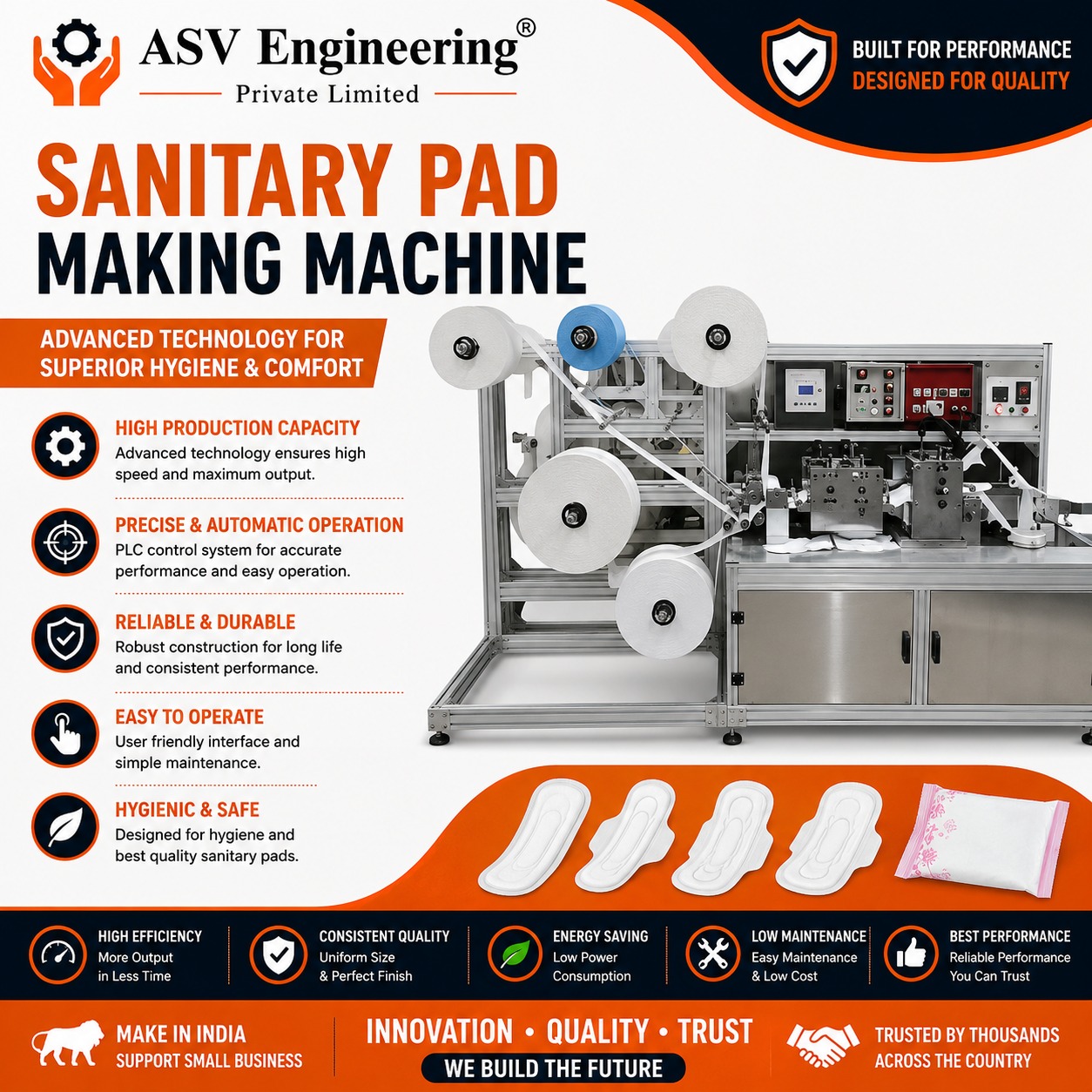
Sanitary Pad Making Machine
View Details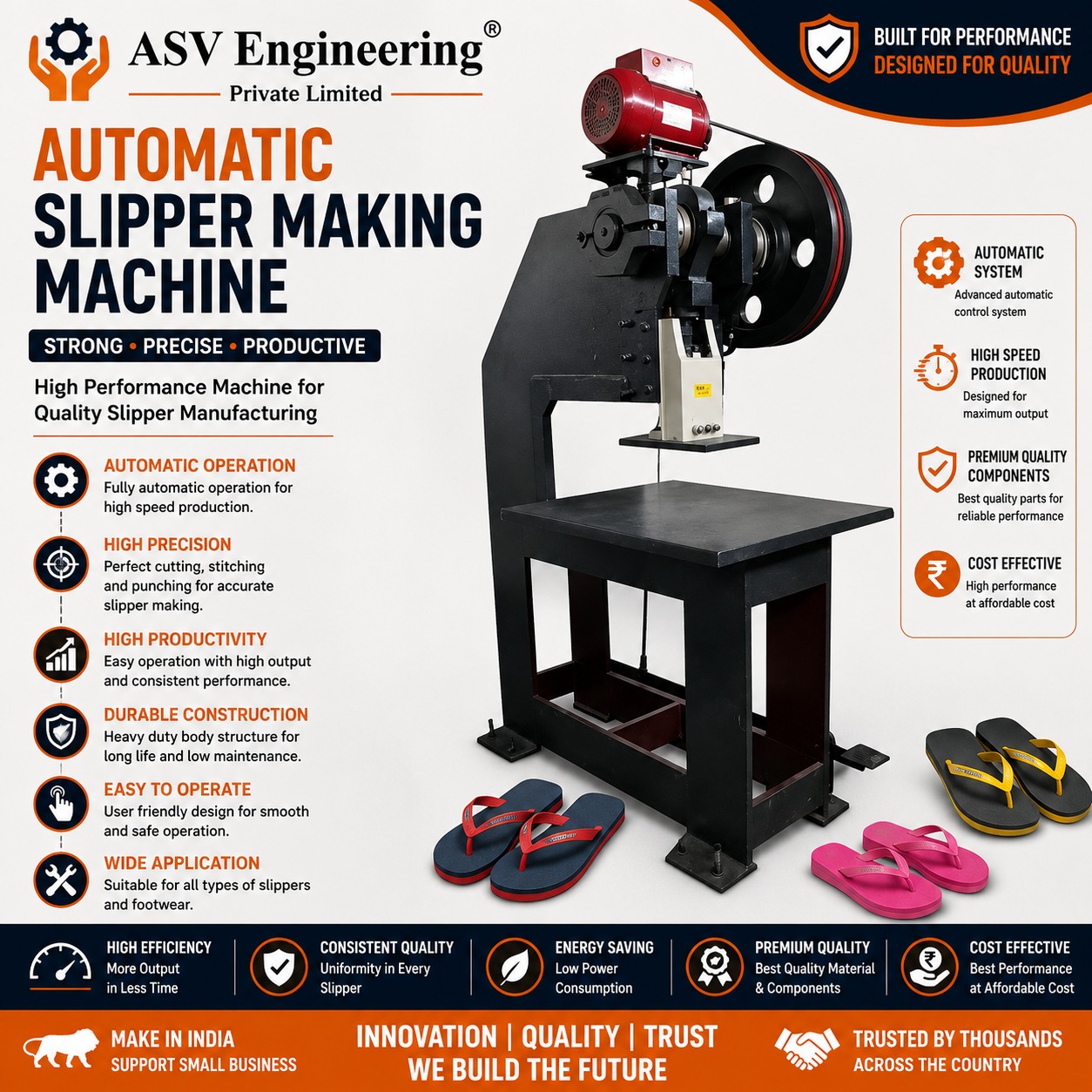
Slipper Making Machine
View Details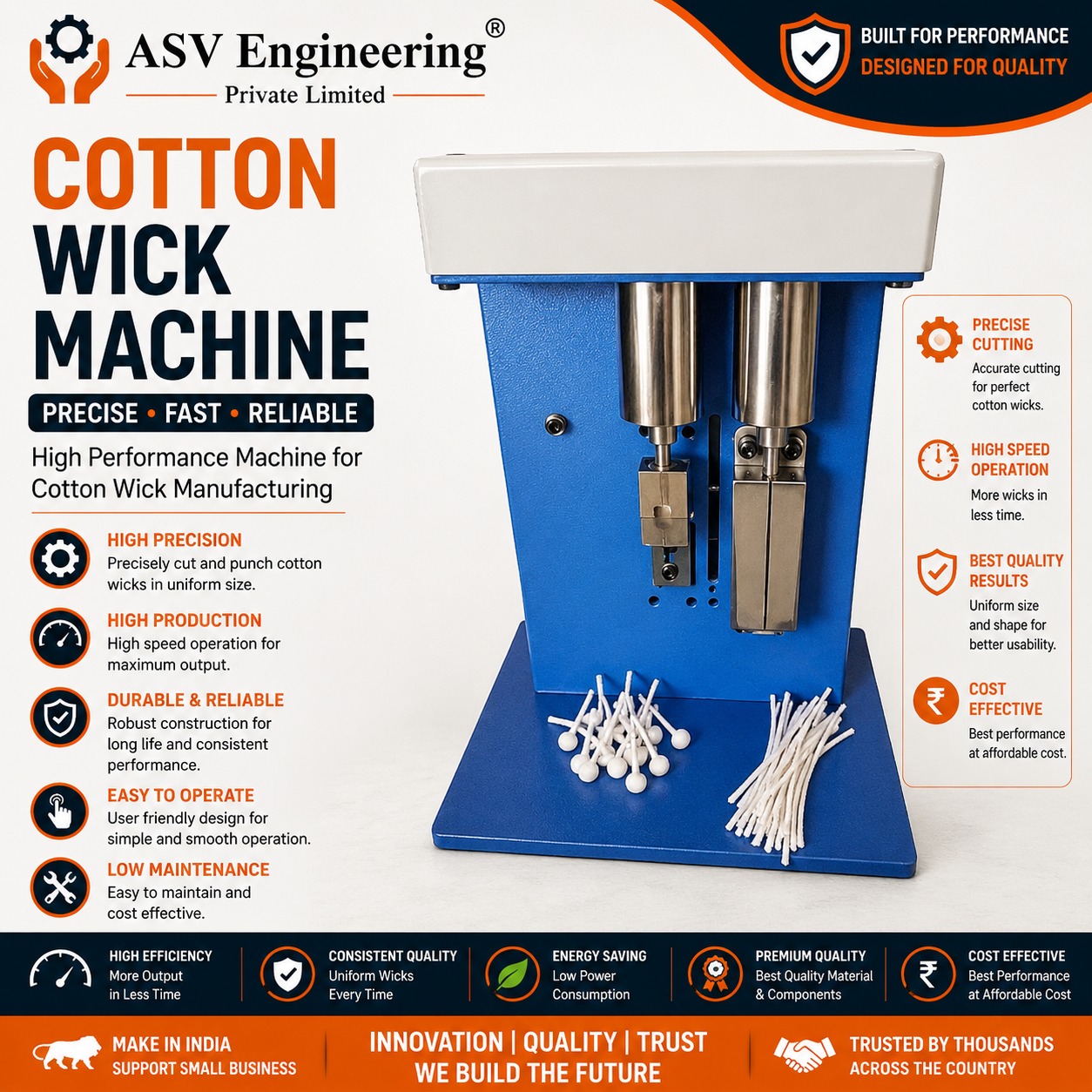
Cotton Wick Machine
View Details