Poha Roaster Machine
Description
Poha Roaster Machine – Expert Manufacturer & Supplier in Delhi, India
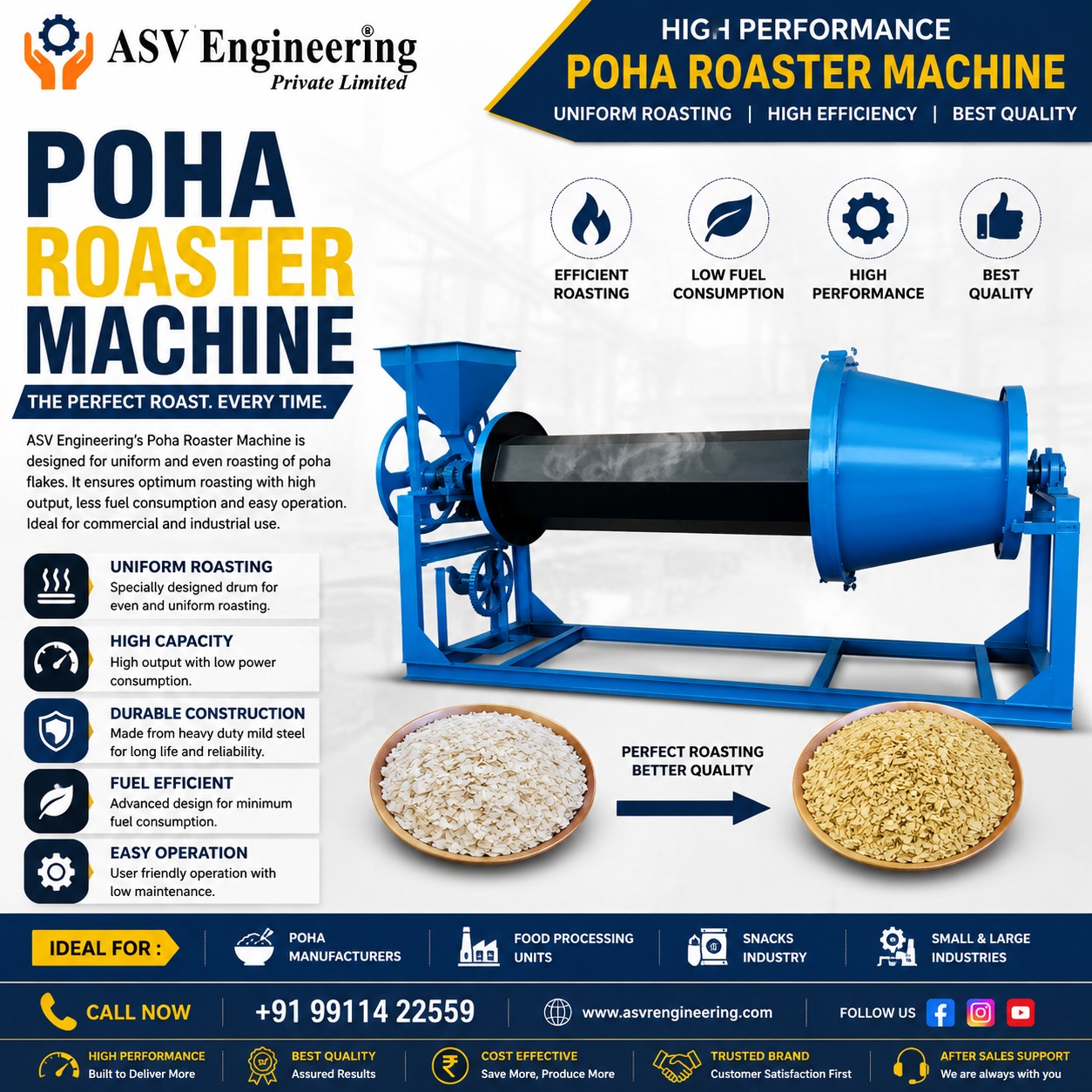
Roasting is a critical step in poha production that determines the final texture, shelf life, and taste of the finished product. A poorly roasted batch of poha turns soggy in storage or develops an uneven, unpleasant flavor that customers reject immediately. As a specialist poha roaster machine manufacturer in Delhi, India, we build roasting equipment that delivers perfectly even heat distribution across every grain, ensuring your poha consistently meets the quality standards that keep customers coming back. Our roasting machines are used by poha manufacturers across India who understand that the difference between good poha and great poha often comes down to the roasting stage.
The roasting process serves multiple purposes in poha production. It removes residual moisture from the flattened rice, which extends shelf life and prevents spoilage. It develops the characteristic slightly nutty flavor that consumers associate with quality poha. It also firms up the texture so that poha holds its shape during cooking rather than turning mushy. Our roaster machines are designed to accomplish all three objectives simultaneously through precise temperature control and uniform heat exposure, giving you a finished product that stands out in the market.
Key Features of Our Poha Roaster Machine
The roasting chamber is engineered for maximum heat efficiency. A rotating drum design ensures that every poha grain receives equal exposure to the heat source, eliminating the hot spots and cold spots that plague inferior roasters. The drum rotation speed is adjustable, allowing operators to control the roasting duration precisely for different poha thicknesses and moisture levels. A temperature control system with digital readout lets you set and maintain the exact roasting temperature required for your specific product.
The machine features an automatic discharge mechanism that empties the roasted poha into a cooling tray at the end of each cycle, preventing over-roasting from residual heat. The cooling tray uses ambient air to bring the temperature of the roasted poha down quickly, locking in the flavor and texture. The body is constructed from heavy-gauge mild steel with a food-grade stainless steel interior for the roasting chamber. Heat insulation surrounding the chamber minimizes energy loss and keeps the external surface at a safe operating temperature.
How Does a Poha Roaster Machine Work
The roasting process begins when pre-flattened poha is loaded into the rotating drum. The drum is heated either by a gas burner or electric heating elements positioned around its exterior. As the drum rotates, the poha inside tumbles continuously, ensuring every grain contacts the hot drum surface evenly. The controlled temperature and rotation speed work together to roast the poha uniformly without burning.
During roasting, moisture evaporates from the poha, and the starch in the grain undergoes slight caramelization that gives roasted poha its distinctive flavor. The process typically takes ten to twenty minutes per batch depending on the moisture content of the incoming poha and the desired roasting level. When the timer indicates the cycle is complete, the drum reverses rotation direction or opens a discharge port to release the roasted poha into the cooling tray. The cooled poha is then ready for sorting, grading, and packaging.
Technical Specifications
Our poha roaster machine range includes batch roasters and continuous flow roasters for different production volumes. The batch model processes fifty to one hundred kg of poha per cycle, with each cycle taking fifteen to twenty minutes. It operates on a three-phase power supply for electric models or connects to a standard LPG supply for gas models. The continuous flow model handles two hundred to five hundred kg per hour of continuous operation and is designed for integration into automated poha production lines.
The batch roaster weighs approximately 350 kg and occupies a floor area of about six by four feet. The continuous flow model weighs between 800 and 1500 kg depending on capacity. Temperature range is adjustable from 100 to 200 degrees Celsius, covering the full spectrum of roasting requirements from light golden to deep brown finishes. The drum is made from food-grade stainless steel, and the frame and body use heavy-duty mild steel with heat-resistant coating. Power consumption for electric models ranges from 15 kW to 45 kW. Gas models use between 10 and 30 kg of LPG per shift depending on capacity and roasting intensity.
Applications and Industries Served
Poha roaster machines from our Delhi factory serve producers at every scale of the poha industry. Small-scale rural producers who sell poha in local markets use our batch roasters to add value to their flattened rice and command better prices. Medium-scale manufacturers who supply to regional distributors and supermarket chains rely on our higher-capacity batch models for consistent daily production. Large industrial poha producers who distribute nationally use our continuous flow roasters integrated into their full production lines.
The roaster is also used by manufacturers of ready-to-eat poha mixes and flavored poha products, where the roasting step is essential for creating the shelf-stable base product that receives seasonings and flavorings. Some customers use the roaster to process other flattened grains and rice products beyond traditional poha, making it a versatile addition to any grain processing facility.
Benefits of Our Poha Roaster Machine
The investment in a quality roaster pays for itself through better product quality that commands higher market prices. Properly roasted poha has a longer shelf life, which reduces wastage and returns. Customers notice the difference in taste and texture, and once they find a supplier with consistently good roasted poha, they tend to stick with that supplier. Our machines enable you to be that reliable supplier.
Energy efficiency is a key design priority. The insulated roasting chamber retains heat effectively, reducing the energy needed to maintain target temperatures. The batch design minimizes waste between cycles, and the automatic discharge system eliminates the over-roasting that occurs when operators are slow to remove product from non-automated roasters. These efficiencies add up to lower operating costs per kilogram of roasted poha.
Maintenance and Care
Clean the roasting drum after each production shift to remove any residual poha and prevent buildup that could affect heat transfer. Inspect the drum interior weekly for any signs of wear, corrosion, or damage. Check the heating elements or gas burner system monthly for proper operation and efficiency. Lubricate the drum rotation bearings every two weeks with high-temperature food-grade lubricant. The temperature sensor should be calibrated periodically to ensure accurate readings. The cooling tray should be cleaned regularly to prevent any buildup of fine poha particles. A thorough annual inspection covering electrical systems, mechanical components, and safety features is recommended for all machines operating in commercial production environments.
Frequently Asked Questions
**What is the price of a poha roaster machine?**
Our poha roaster machines are priced from approximately two lakh rupees for the basic batch model up to eight lakhs for the high-capacity continuous flow model. Contact us for current pricing and to discuss which model suits your production needs.
**How long does each roasting cycle take?**
A typical batch roasting cycle takes fifteen to twenty minutes. The continuous flow model processes poha through the roaster in a similar timeframe but does so continuously without pauses between batches.
**Can the machine roast poha of different thicknesses?**
Yes, the temperature and rotation speed controls allow you to adjust the roasting parameters for thin, medium, or thick poha, ensuring consistent results regardless of the product specification.
**Is gas or electric heating better?**
Both have advantages. Gas heating is often more economical in areas with affordable LPG, while electric heating offers more precise temperature control and cleaner operation. We can help you decide based on your local energy costs and facility setup.
Why Choose Our Delhi Factory and How to Order
As a poha roaster machine manufacturer operating from our Nangloi facility in Delhi, we bring direct manufacturing expertise to every machine we build. Our engineers understand the specific challenges of poha roasting, from managing different rice varieties to achieving the exact roasting level that regional markets prefer. This expertise goes into every machine that leaves our factory, giving you equipment that performs reliably under demanding commercial conditions.
We provide pan-India delivery with complete installation and operator training included. Our service team remains available for ongoing support, and we stock spare parts for all our models to minimize any downtime. To explore our poha roaster machine range or to place an order, reach us at +91 8588856870. We encourage potential customers to visit our Nangloi factory, see the machines in operation, and discuss their requirements face-to-face with our engineering team. Let us help you produce roasted poha that stands out in the market.
| Specification | Details |
|---|---|
| Machine Type | Poha Roaster Machine |
| Body Material | SS304 / MS |
| Power Supply | 220V/440V Three Phase |
| Warranty | 1 Year |
Related Products
Pulverizer Machine
View Details
Chapati Making Machine
View Details
Atta Chakki Machine
View Details