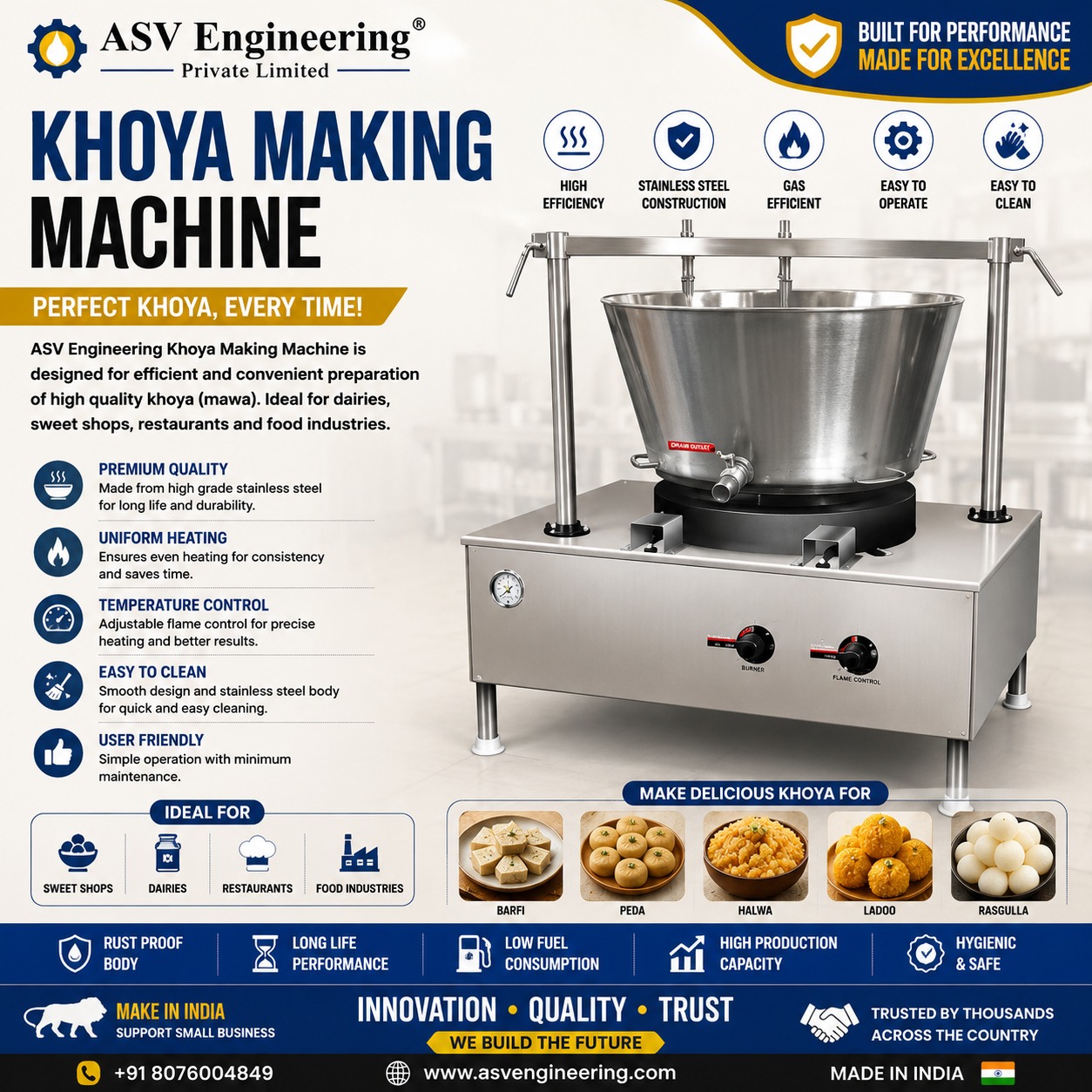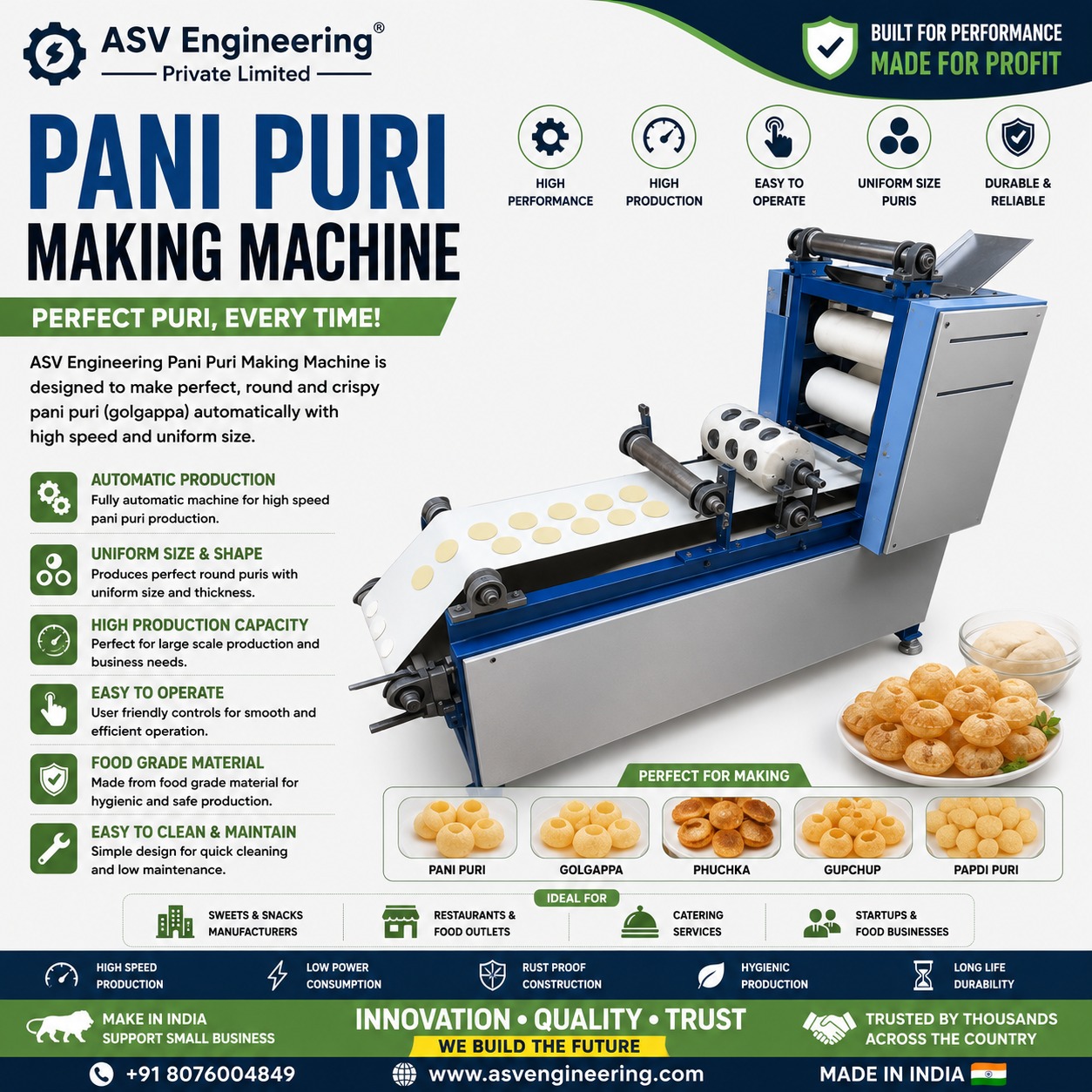
Pani Puri Making Machine
Description
Need a reliable pani puri making machine manufacturer in Delhi, India? Our automatic pani puri making machine is engineered to produce thousands of perfectly crispy, uniformly sized golgappa or puchka shells every hour, giving street food vendors, cloud kitchen operators, restaurant chains, and frozen snack manufacturers the speed and consistency they need to meet growing demand for India's most beloved street food.
Introduction and Overview
Pani puri, also called golgappa in Delhi, puchka in Kolkata, and gupchup in parts of Odisha, is arguably the most popular street food in India. The demand for pani puri has evolved from purely roadside stalls to branded kiosks, food court outlets, packaged ready-to-eat pani puri kits in supermarkets, and cloud kitchen models that deliver pani puri kits to homes. This expansion has created a need for reliable, high-speed shell production that manual methods cannot deliver at scale. Our pani puri making machine addresses this exact need by automating the dough rolling, cutting, and frying process to produce crisp, hollow, round shells of consistent size and thickness. If you are scaling your pani puri business or entering this fast-growing food segment, this machine is the production backbone you need.
Key Features
The machine takes prepared semolina and flour dough and processes it through a series of automated stages. First, the dough isSheeted into a uniform thin layer by precision rollers. Then, a rotary cutter stamps out perfectly round discs of the specified diameter. These discs are conveyed into a temperature-controlled frying section where they puff into hollow, crispy spheres in hot oil. The frying temperature and dwell time are adjustable, giving you control over shell crispness, color, and texture. Puri diameter options typically range from 1.5 inches to 2.5 inches. Production speed ranges from 2000 to 6000 shells per hour depending on the model. The machine body uses food-grade stainless steel throughout the product contact path. An integrated oil filtration system maintains frying oil quality and extends oil life. The control panel provides digital temperature readouts, speed adjustment dials, and an emergency stop.
How It Works
Dough made from a blend of semolina, refined flour, salt, and water is loaded into the hopper. TheSheeter rollers flatten it into a thin, continuous sheet of uniform thickness. The rotary die cutter then stamps out round discs from the sheet, and the remaining dough scrap is recycled back into the hopper. The cut discs drop onto a frying conveyor that carries them through a heated oil bath. As the discs encounter the hot oil, moisture in the dough flashes to steam and inflates each disc into a hollow sphere. The frying conveyor keeps the shells submerged for a precisely controlled duration before lifting them out and depositing them onto a draining and cooling rack. Excess oil drips off, and the finished pani puri shells are collected in bins or directed to a packaging line.
Technical Specifications
Production Capacity: 2000 to 6000 shells per hour. Puri Diameter: 1.5 inches to 2.5 inches, die-changeable. Shell Thickness: 1mm to 2mm, adjustable via roller gap. Dough Sheet Thickness: Adjustable from 1.5mm to 3mm. Frying Temperature: Adjustable between 160 and 200 degrees Celsius. Motor Power: 3 HP to 7 HP. Power Supply: 3-phase 440V, 50Hz. Oil Tank Capacity: 15 liters to 40 liters. Machine Weight: 200 kg to 500 kg. Dimensions: Approximately 7 feet by 3 feet by 4.5 feet for mid-range model. Material: SS304 stainless steel product-contact surfaces. Scrap Recovery: Integrated dough recycling system.
Applications and Industries
This machine is used by pani puri stall operators who want to standardize their shell quality and increase output, branded pani puri chain outlets like those expanding rapidly in malls and high streets across India, cloud kitchens that deliver pani puri kits to customers, packaged food companies that sell ready-to-fry or ready-to-eat pani puri shells in retail packaging, catering companies that serve pani puri at events and weddings, and frozen food manufacturers who produce frozen pani puri shells for the growing organized retail segment. The machine is also relevant for export-oriented manufacturers supplying to Indian grocery stores in the USA, UK, Canada, UAE, and Southeast Asia.
Benefits
Consistency is the foremost benefit. Every shell comes out the same size, same thickness, same crispness, which is critical for brand reputation in chain operations and packaged products. Output per operator increases dramatically compared to hand-rolling and frying. Oil consumption is optimized through precise temperature control and the integrated filtration system, reducing one of the major cost inputs in pani puri production. The dough scrap recycling feature minimizes wastage. The machine frees operators from the repetitive, physically taxing work of rolling and frying thousands of shells manually, reducing fatigue and improving workplace safety around hot oil.
Maintenance and Care
Clean the sheeter rollers after every production run to prevent dough buildup that would affect sheet thickness uniformity. Flush the frying oil tank and replace oil when it darkens or develops excessive foam, which indicates degraded oil quality. Clean or replace the oil filter element as recommended. Inspect the rotary die cutter for nicks or dull edges that would produce ragged disc edges. Wipe down all stainless steel surfaces with food-safe sanitizer at the end of each day. Check the conveyor chain tension weekly and lubricate with food-grade oil. The electrical panel should be kept dry and free of flour dust, which can be a fire hazard in combination with heat.
Frequently Asked Questions
What dough recipe works best with this machine? A standard recipe using 70 percent semolina and 30 percent refined flour with salt and water produces consistent, crispy shells. Exact proportions may need minor adjustment based on your local semolina brand and water quality. We provide a recommended recipe guide with each machine.
How much oil does the machine consume per hour? Oil consumption depends on the frying temperature and production rate. As a guideline, expect to add 1 to 2 liters of fresh oil per hour to maintain the tank level, with full oil replacement needed approximately every 8 to 12 hours of continuous frying.
What is the price of a pani puri making machine? Pricing depends on the production capacity, frying system, and additional features like automatic packaging integration. For an accurate quotation, contact our Delhi factory at +91 8588856870 or visit our Nangloi facility for a live demonstration.
Can the machine produce different shell sizes? Yes, by changing the rotary die cutter, you can produce shells in different diameters within the 1.5 to 2.5 inch range. We supply multiple die sets and can manufacture custom sizes for specific brand requirements.
Why Choose Our Delhi Factory and How to Order
We design and manufacture pani puri making machines at our Nangloi, Delhi factory where food-grade fabrication standards are maintained throughout the production process. Every machine undergoes trial runs with actual dough and oil before dispatch to verify shell quality, puffing consistency, and production rate. We have supplied machines to pani puri businesses across India and to international buyers in the Middle East and Southeast Asia. Each purchase includes the machine, initial die set, installation, and operator training. For pricing and technical discussion, call +91 8588856870. We welcome you to visit our factory and see the machine producing perfect pani puri shells before making your purchase decision. Pan-India delivery and after-sales support come standard with every order.
| Specification | Details |
|---|---|
| Machine Type | Pani Puri Making Machine |
| Body Material | SS304 / MS |
| Power Supply | 220V/440V Three Phase |
| Warranty | 1 Year |
Related Products
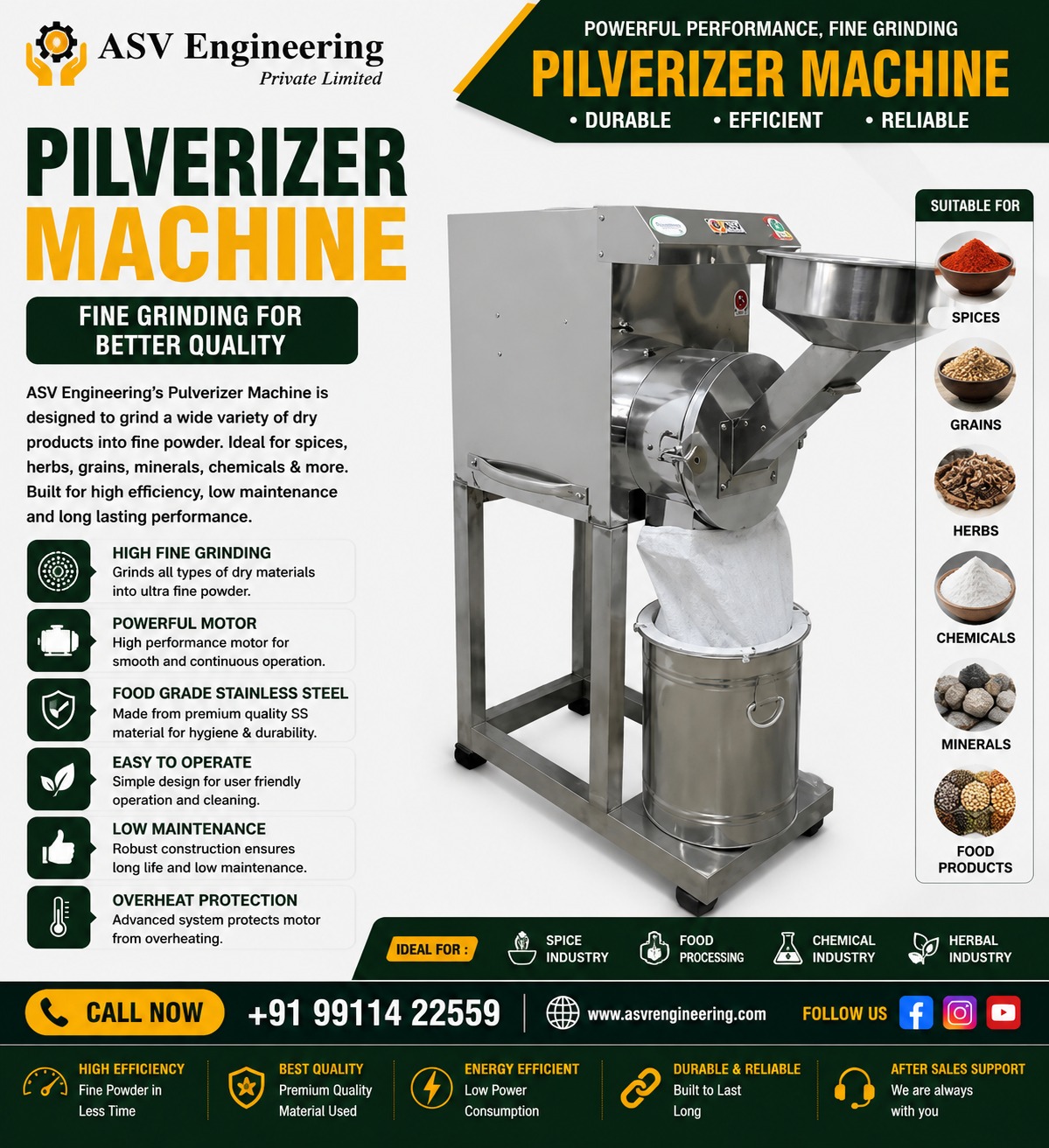
Pulverizer Machine
View Details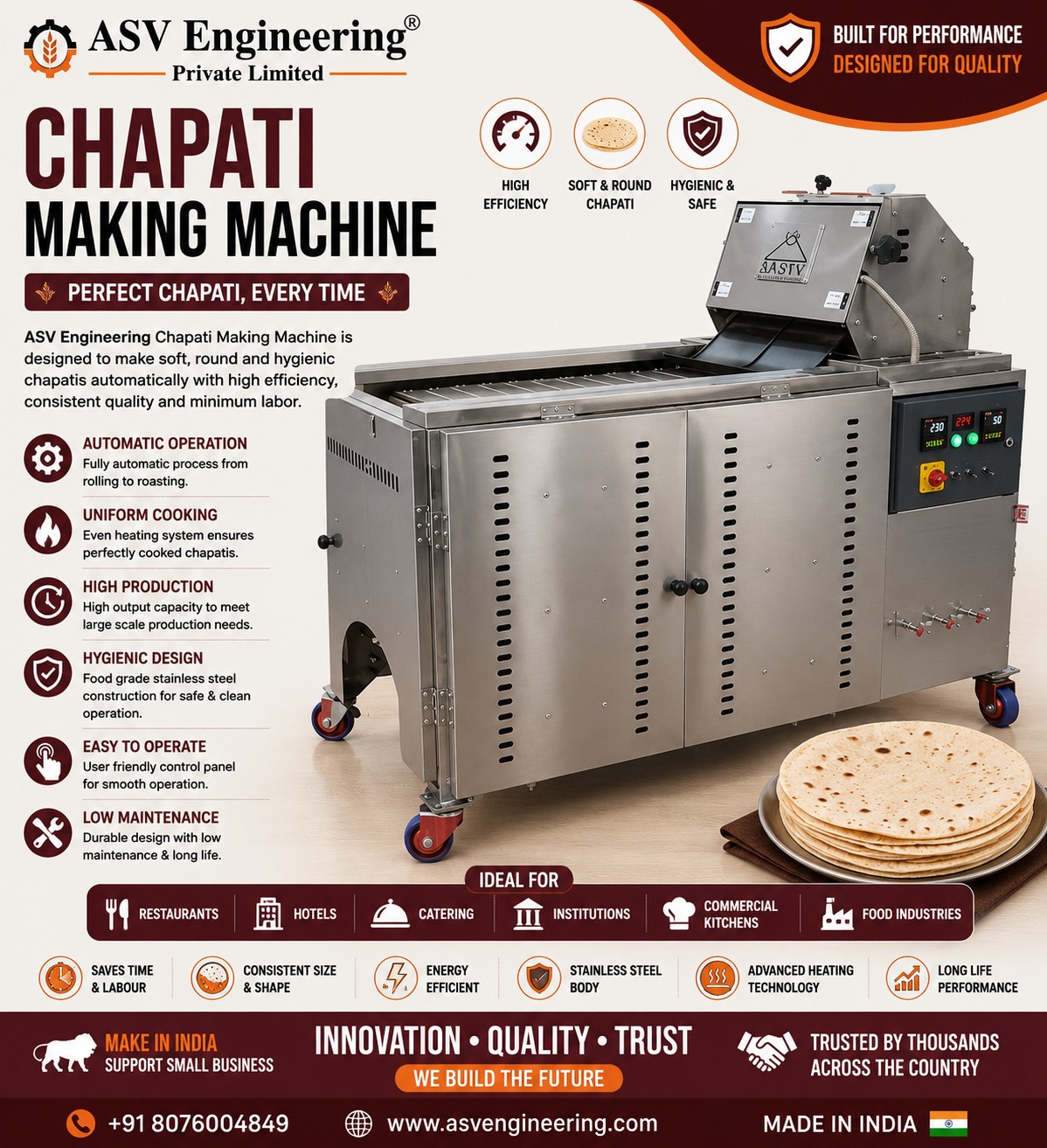
Chapati Making Machine
View Details
Atta Chakki Machine
View Details