Pat Pathar Chakki Machine
Description
Pat Pathar Chakki Machine – Dedicated Manufacturer & Supplier in Delhi, India
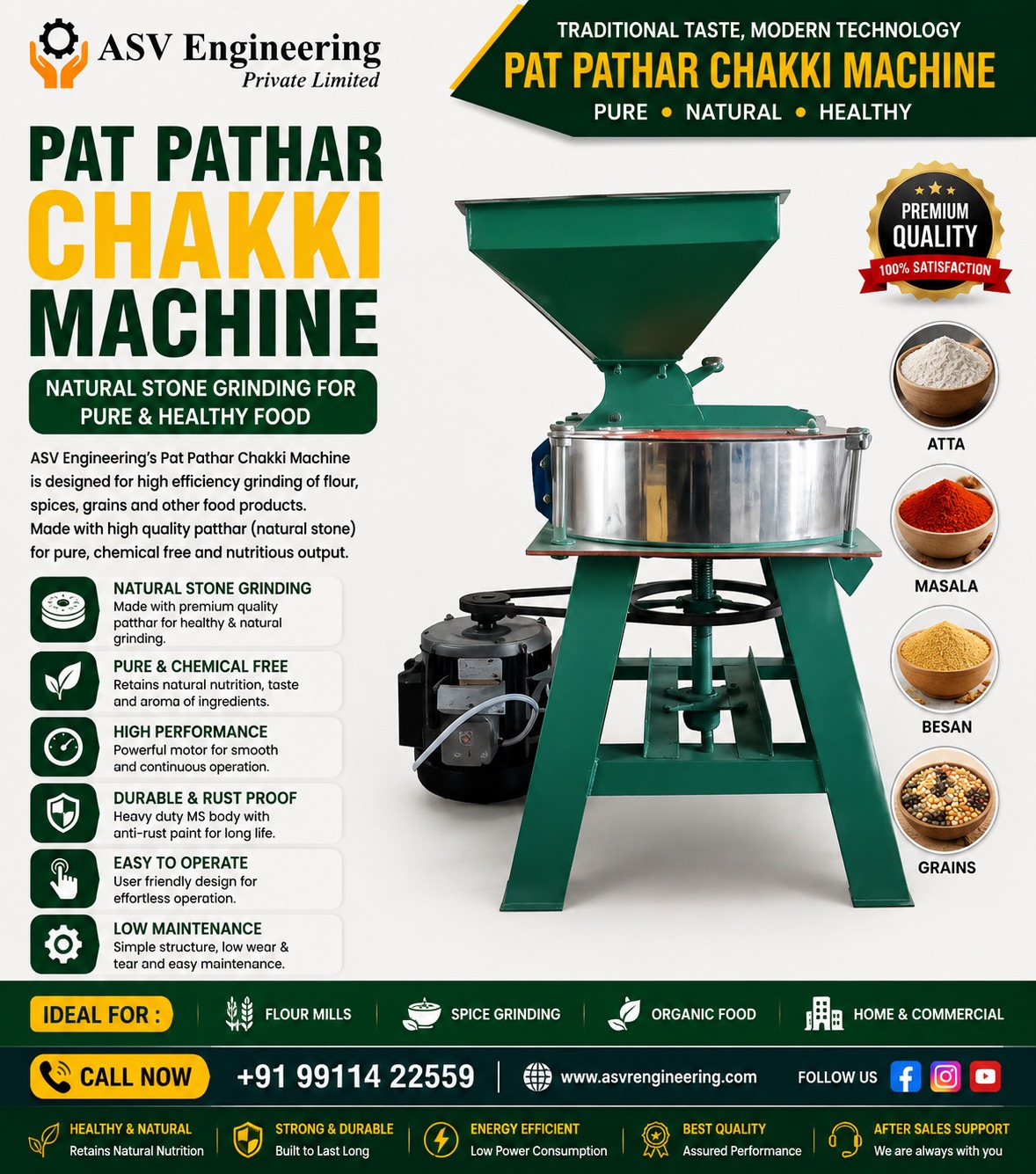
For flour mill operators who demand the finest, silkiest atta and the highest extraction rates from their wheat, the pat pathar chakki machine is the gold standard. As a focused pat pathar chakki machine manufacturer in Delhi, India, we produce horizontal stone grinding mills that deliver ultra-fine flour with exceptional consistency. Our machines are the preferred choice of commercial flour mills in Delhi, premium atta brands in Punjab, and grain processors in Gujarat and Maharashtra who refuse to compromise on flour quality.
What Is a Pat Pathar Chakki Machine?
A pat pathar chakki machine uses a pair of horizontally placed flat grinding stones — one stationary and one rotating — to grind wheat and other grains into flour. The term "pat pathar" literally means flat stone, describing the horizontal orientation of the grinding discs. This horizontal configuration allows gravity to work alongside the grinding action, spreading the grain evenly across the full surface of the stones and producing an exceptionally fine, uniform flour. Compared to the upright khada pathar design, the pat pathar approach gives the operator more control over flour fineness and typically achieves higher extraction rates from the same quantity of wheat.
Key Features
The distinguishing feature of our pat pathar chakki machine is the precision-ground flat granite stone pair that forms the heart of the grinding system. Each stone is individually balanced and lapped to micron-level flatness, ensuring full contact between the grinding surfaces. This complete contact is what produces the ultra-fine flour that pat pathar machines are known for. The stones are mounted on a heavy cast iron or fabricated steel base that provides the rigidity needed to maintain stone alignment over years of daily operation.
The stone gap adjustment mechanism uses a calibrated handwheel with locking position, letting you set and maintain the exact grinding gap for your desired flour grade. The wheat feeding system uses a star valve or vibrating feeder that distributes grain evenly across the stone surface, preventing overload on any section. The flour collection housing is sealed to contain fine flour dust, and the outlet chute directs the ground flour cleanly into your collection bags or bin. An optional cyclone dust collector attachment improves flour recovery and keeps the milling area clean.
How Does It Work?
Wheat or other grains enter the machine through the feeding hopper and are distributed evenly across the surface of the lower stationary stone by the feeding mechanism. The upper stone rotates at a controlled speed, and the grain is drawn into the narrowing gap between the two stones. As the grain travels outward from the centre toward the stone edges, it is progressively ground finer and finer. By the time the ground material reaches the outer edge of the stones, it has been transformed into smooth, uniformly fine flour. The ground flour falls off the stone edges into the collection housing and flows out through the discharge chute. The entire journey from whole grain to finished flour takes just seconds, and the low grinding speed ensures minimal heat generation, preserving the wheat germ's natural oils and nutritional content.
Technical Specifications
- Stone Material: Natural flat granite, precision-ground and balanced
- Stone Diameter: 350 mm, 450 mm, and 600 mm options
- Motor Power: 5 HP to 20 HP depending on stone size and throughput requirement
- Grinding Capacity: 30 kg to 150 kg of wheat per hour
- Flour Fineness: Achievable range from 50 mesh to 120 mesh for ultra-fine flour
- Stone Gap: Adjustable from 0.1 mm to 2 mm with calibrated handwheel
- Drive: Belt-driven with heavy-duty V-belts and cast iron pulleys
- Frame: Cast iron base with fabricated mild steel support structure
- Power Supply: 415V three-phase, 50 Hz
- Dust Collection: Optional cyclone separator and bag filter system
- Weight: 200 kg to 500 kg depending on model and stone size
- Floor Space: Approximately 1.5 metre by 1.2 metre including motor
Applications and Industries
The pat pathar chakki machine is the production workhorse for medium to large flour mills that supply retail atta to supermarkets and grocery stores across India. Premium atta brands that market stone-ground, nutrient-rich flour specifically choose pat pathar mills for the superfine texture that differentiates their product on the shelf. Commercial bakeries that need very fine flour for bread, biscuit, and confectionery production rely on pat pathar grinding to achieve the dough consistency their recipes demand. Multigrain flour producers mix wheat with ragi, bajra, jowar, soybeans, and other grains, and the pat pathar stones handle these varied hardness levels effectively. Spice grinding operations that produce fine turmeric, chilli, and coriander powders also adapt pat pathar machines for their use. Institutions like army canteens, railway catering, and large school midday meal programmes procure flour from mills running pat pathar machines for the quality assurance these mills provide.
Benefits of Pat Pathar Grinding
The primary advantage of a pat pathar chakki machine over other grinding methods is the flour fineness and uniformity it achieves. The flat stone configuration maximises the contact area between grinding surfaces, which means grain particles are ground more evenly and fewer large particles escape through unground. This produces atta that makes smoother, softer rotis with a more pleasant texture. The higher extraction rate means you get more flour from the same quantity of wheat, which directly improves your profitability. The slower rotational speed of the stones generates less heat, which protects heat-sensitive nutrients and keeps the flour's natural aroma intact. For branded atta producers, the ability to consistently produce superfine flour is a quality differentiator that commands premium pricing in the market. The robust construction of our Delhi-made machines ensures years of reliable operation with minimal unplanned downtime.
Maintenance and Care
Inspect the flat grinding stones monthly for any uneven wear patterns or scoring that could affect flour quality. Professional stone re-dressing should be performed every six to twelve months depending on usage intensity — we offer this service from our Delhi workshop. Check the stone gap setting weekly and recalibrate if you notice changes in flour fineness. Lubricate the main shaft bearings every two weeks with appropriate high-temperature grease. Inspect the drive belt tension and alignment monthly, adjusting or replacing belts as they stretch with use. Clean the flour collection housing and discharge chute daily to prevent stale flour accumulation that could affect fresh batch taste. Keep the motor air intake filter clean, especially in the dusty environment of a flour mill. Maintain a log of bearing condition, stone wear, and belt replacement for each machine to schedule preventive maintenance effectively.
Frequently Asked Questions
How does a pat pathar machine differ from a khada pathar machine?
Khada pathar uses vertically oriented standing stones, while pat pathar uses horizontally placed flat stones. Pat pathar machines generally achieve finer flour and higher extraction rates, making them preferred for premium atta and commercial flour milling. Khada pathar machines are simpler in construction and more suited to smaller neighbourhood atta chakkis.
What is the price of a pat pathar chakki machine?
Pricing depends on stone diameter, motor power, and frame construction. Our Delhi-manufactured models start from approximately seventy-five thousand rupees and increase for larger stones and higher capacity motors. Contact +91 8588856870 for a detailed quotation matching your throughput requirements.
Can I grind grains other than wheat?
Yes, pat pathar machines can grind maize, rice, millets, pulses, and spices, though the stone gap may need adjustment for different grain hardness levels. Some grains may require specific stone surface patterns for optimal results.
How often do the grinding stones need re-dressing?
Under normal commercial use running eight to ten hours daily, stones typically require professional re-dressing every six to twelve months. With lighter usage, the interval extends further.
Why Choose Our Delhi Factory and How to Order
A pat pathar chakki machine is only as good as the flatness and balance of its stones, and this is where our Nangloi, Delhi factory excels. We source premium granite, season it properly, and use precision grinding equipment to achieve the surface flatness that makes pat pathar machines effective. Every stone pair is balanced and test-run before assembly, and every complete machine undergoes a trial grinding session before dispatch to confirm flour quality meets our standards.
We provide delivery and installation across India, with our technicians available to calibrate the stone gap and train your operators on achieving optimal flour fineness for your specific wheat variety. For first-time flour mill operators, we offer guidance on setting up the milling space, choosing the right auxiliary equipment, and selecting flour packaging solutions. To discuss your flour milling requirements or place an order for a pat pathar chakki machine, call us at +91 8588856870. We are ready to help you build a flour milling operation that produces exceptional quality atta.
| Specification | Details |
|---|---|
| Machine Type | Pat Pathar Chakki Machine |
| Body Material | SS304 / MS |
| Power Supply | 220V/440V Three Phase |
| Warranty | 1 Year |
Related Products
Pulverizer Machine
View Details
Chapati Making Machine
View Details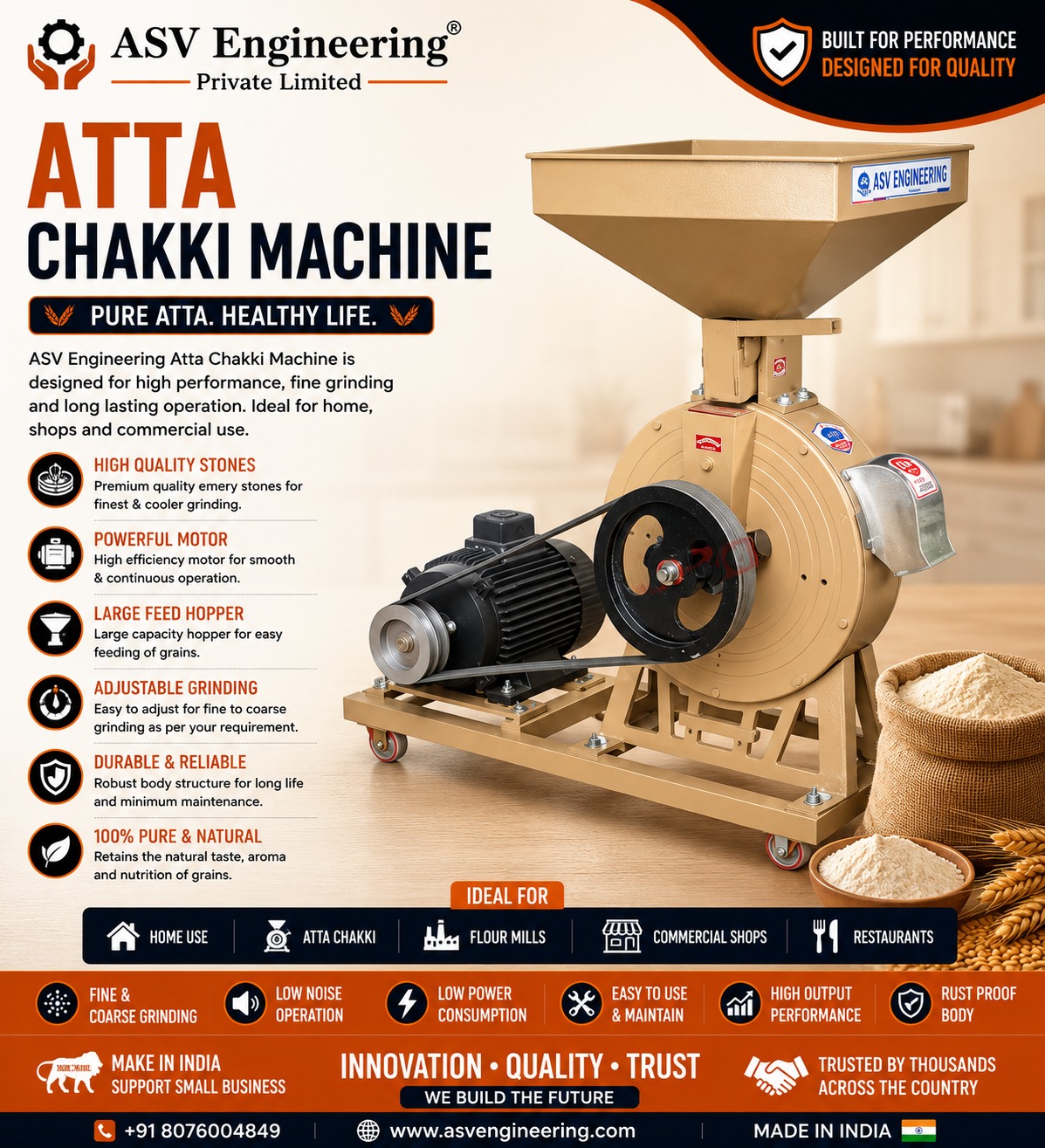
Atta Chakki Machine
View Details