Noodles Making Machine
Description
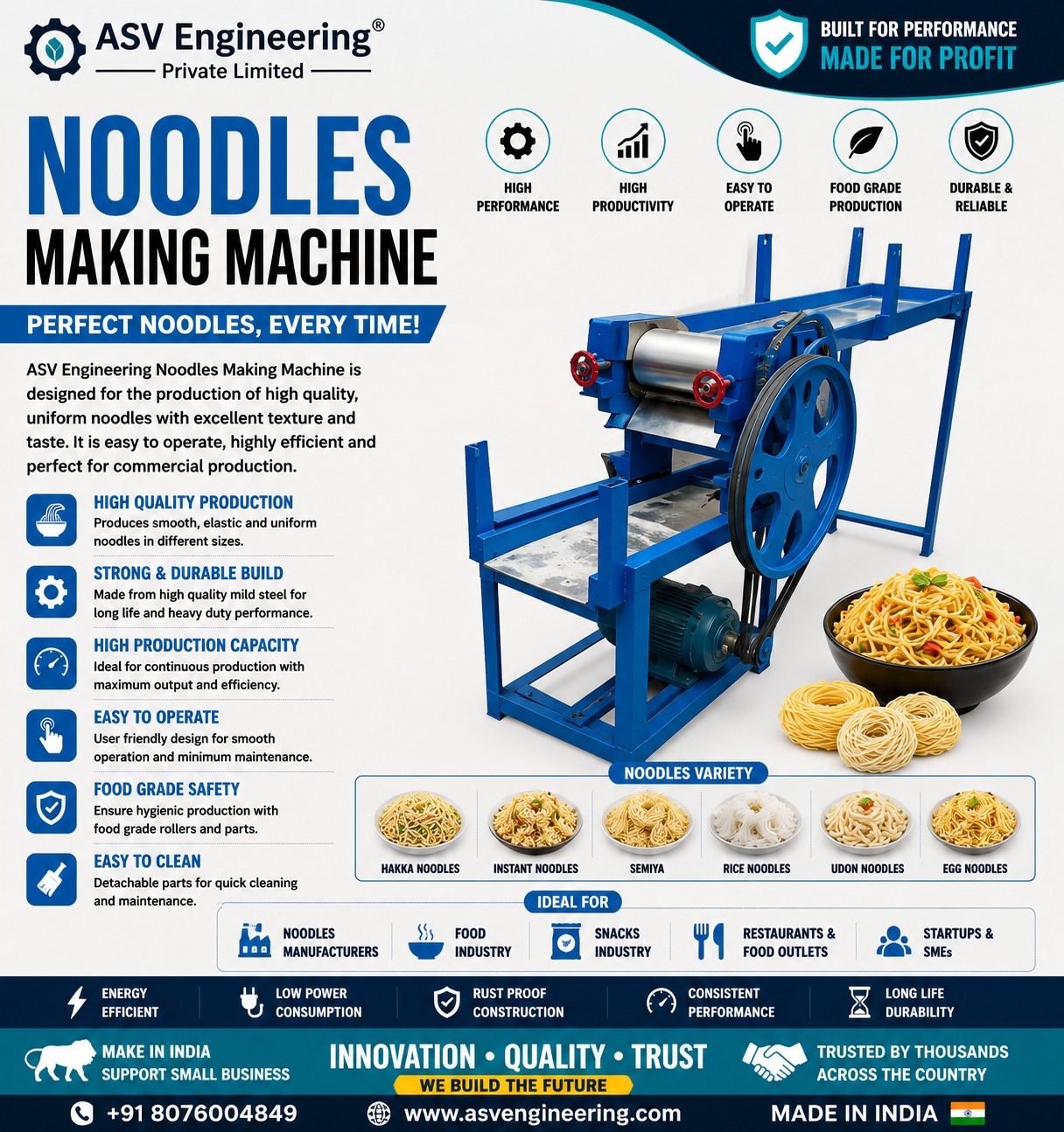
In search of a quality noodles making machine manufacturer in Delhi, India? Our commercial noodles making machine is engineered to produce consistent, high-quality noodles from a range of flour types, serving instant noodle manufacturers, fresh noodle producers, pasta makers, and food entrepreneurs who want to enter India's booming noodle market with a reliable production system.
Introduction and Overview
Noodles have become a dietary staple across urban and semi-urban India. From steaming bowls of Maggi at a roadside stall to premium ramen served in metropolitan restaurants, noodle consumption cuts across income levels and age groups. India's noodle market continues to grow at a strong pace, driven by convenience food trends, expanding young consumer demographics, and the spread of quick-service restaurants into smaller cities. For manufacturers looking to capture a share of this market, a dependable noodles making machine is the critical piece of equipment. Our machine handles the complete process from dough mixing and sheeting through cutting and strand formation, producing noodles of various thicknesses and styles. It is suited for producing fresh noodles for immediate sale, dried noodles for shelf-stable packaging, and parboiled noodles for instant noodle lines.
Key Features
The machine begins with a dough mixing section where flour, water, salt, and optional alkaline water or egg are combined into a smooth, elastic dough. The dough then enters a multi-stage sheeting system where a series of progressively thinner rollers reduce it to the desired thickness with precision and uniformity. From the sheeting section, the dough sheet passes through a cutting head fitted with grooved rollers that slit the sheet into individual noodle strands of the chosen width. Noodle width options range from 1mm thin vermicelli to 6mm thick hakka-style noodles. The cutting speed and sheet speed are synchronized to produce noodles without stretching or tearing. A dusting system applies a thin coating of starch to the noodles as they exit the cutter to prevent sticking. Production capacity ranges from 100 kg to 400 kg per hour for fresh noodles. The machine is built with food-grade stainless steel on all contact surfaces and mild steel structural framing. An optional steaming or blanching section can be integrated for instant noodle production lines.
How It Works
Ingredients are measured and loaded into the mixer, which combines them into a uniform dough. The dough is then fed into the sheeting section where it passes through 4 to 6 pairs of rollers, each pair reducing the sheet thickness incrementally. This gradual reduction preserves the gluten structure and produces a smooth, firm dough sheet. The final sheet enters the cutting head where rotary slitting rollers divide it into individual strands. The strands emerge as continuous noodle ribbons that are either collected on trays for fresh noodle sales or conveyed to a drying, frying, or steaming section depending on the end product. For instant noodles, the cut strands are steamed, flash-fried or air-dried, and then cooled before packaging. The entire process is continuous once the dough consistency is established.
Technical Specifications
Production Capacity: 100 kg to 400 kg per hour for fresh noodles. Noodle Width Range: 1mm to 6mm, changeable via cutter rollers. Dough Sheet Thickness: Adjustable from 1mm to 5mm. Number of Sheeting Stages: 4 to 6 roller pairs. Mixer Capacity: 20 kg to 50 kg per batch. Motor Power: 5 HP to 20 HP for main drive. Power Supply: 3-phase 440V, 50Hz. Dusting System: Automated starch dispenser. Machine Weight: 300 kg to 1200 kg depending on configuration. Dimensions: Standard line from 15x3x5 feet to 30x5x6 feet for complete production line. Material: SS304 stainless steel contact surfaces, MS structural frame.
Applications and Industries
This machine is used by fresh noodle manufacturers who supply to local markets, restaurants, and grocery stores, instant noodle companies that produce packaged products for national and regional distribution, pasta makers who produce Indian-style pasta and macaroni, cloud kitchens and central kitchens of restaurant chains that prepare noodles in bulk, food processing companies that produce dried noodle products for export, and mid-day meal and institutional food programs that serve noodles to large groups. The Indian noodle market is not limited to the large national brands. Regional and artisanal noodle brands are growing rapidly, and this machine serves their production needs.
Benefits
Automated noodle production eliminates the inconsistency and labor intensity of manual noodle making. Sheet thickness and noodle width are precisely controlled, producing noodles that cook evenly and present well. Output per operator is far higher than manual methods, enabling manufacturers to fulfill larger orders and enter wholesale markets. The multi-stage sheeting system develops gluten properly, producing noodles with the chewy, springy texture that consumers prefer. The machine's versatility in producing different noodle widths from thin vermicelli to thick hakka noodles means manufacturers can offer multiple products from a single equipment investment.
Maintenance and Care
Clean the dough mixer, sheeting rollers, and cutting head thoroughly after every production run. Residual dough will harden on the rollers and affect sheet quality on subsequent runs. Use warm water and a scraper to remove stuck dough, then wipe with food-safe sanitizer. Inspect the cutting rollers for nicks or wear that would produce ragged noodle edges. Lubricate the roller bearings and drive gears monthly. Check the dusting system hopper for clogs and ensure even starch distribution. The main drive belt or chain should be inspected monthly for tension and wear. If the machine includes a steaming or frying section, clean and maintain that equipment according to its specific requirements.
Frequently Asked Questions
What type of flour works with this machine? The machine handles refined wheat flour, whole wheat flour, semolina, rice flour, and various blends. For instant noodles, refined wheat flour with a small percentage of alkaline salt is standard. For rice noodles, rice flour mixed with tapioca starch works well.
Can this machine produce both round and flat noodles? Round noodles require a different die configuration than flat noodles. The standard machine produces flat-cut noodles. Round extruded noodles require an extrusion attachment that can be added. Discuss your requirements with our team.
What is the price of a noodles making machine? Pricing depends on the production capacity, number of sheeting stages, and whether additional sections like steaming or frying are included. Contact our Delhi factory at +91 8588856870 for a detailed quotation.
How much space is needed for a complete noodle production line? A basic fresh noodle line requires approximately 15 by 4 feet. A complete instant noodle line with mixing, sheeting, cutting, steaming, frying, and cooling sections requires 30 by 6 feet or more depending on capacity.
Why Choose Our Delhi Factory and How to Order
Our factory in Nangloi, Delhi manufactures noodles making machines with precision-machined rollers and cutting heads that produce consistent noodle quality over thousands of hours of operation. We offer configurations for fresh noodles, dried noodles, and instant noodles, and we work with each client to recommend the setup that matches their product type and production volume. Every machine is tested with actual dough before dispatch to verify sheet quality and noodle finish. We provide installation, training, and after-sales support across India. For a factory visit or to receive a customized quotation, call +91 8588856870. We are dedicated to helping food manufacturers across India build successful noodle production operations with equipment they can rely on.
| Specification | Details |
|---|---|
| Machine Type | Noodles Making Machine |
| Body Material | SS304 / MS |
| Power Supply | 220V/440V Three Phase |
| Warranty | 1 Year |
Related Products
Pulverizer Machine
View Details
Chapati Making Machine
View Details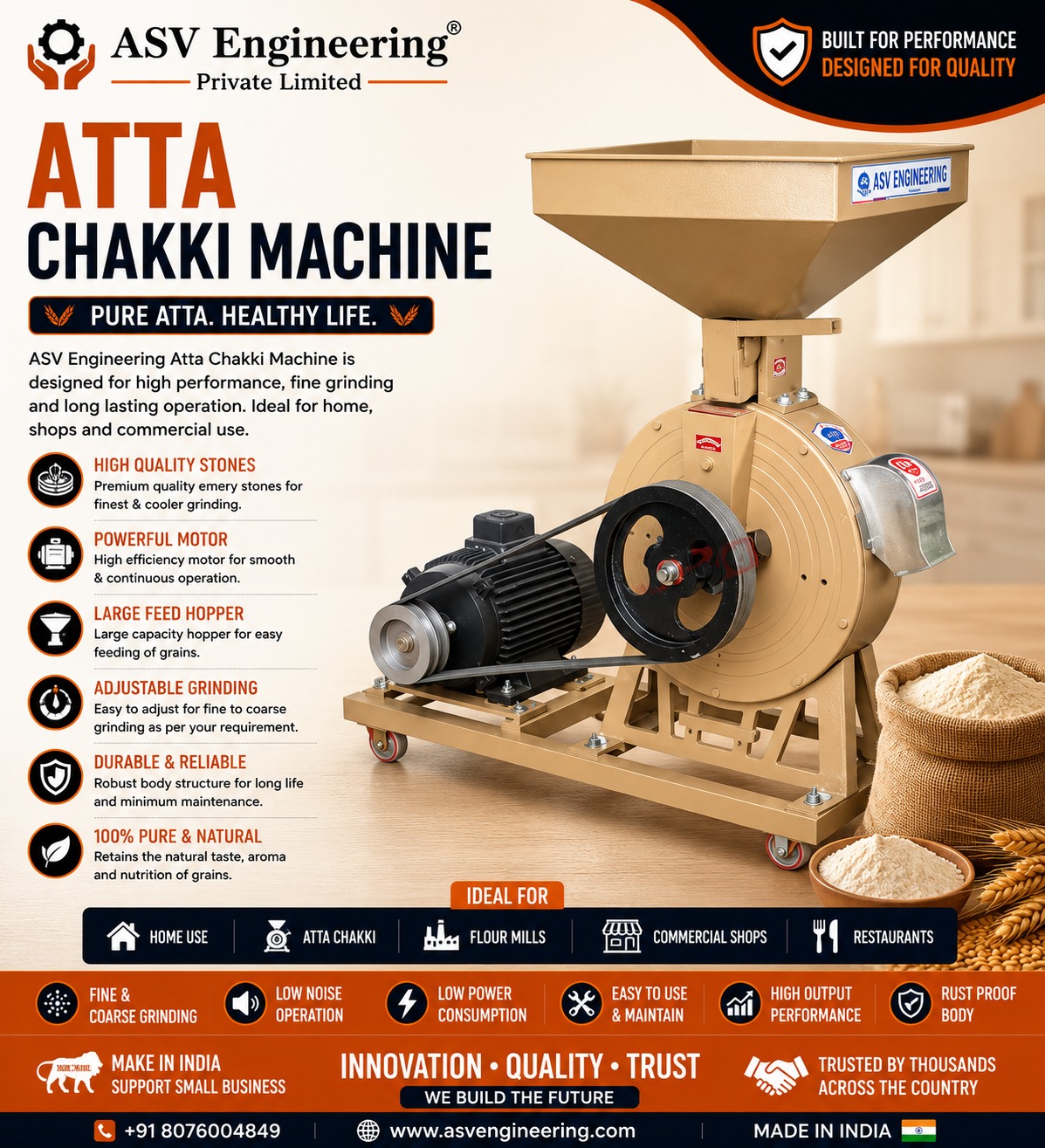
Atta Chakki Machine
View Details