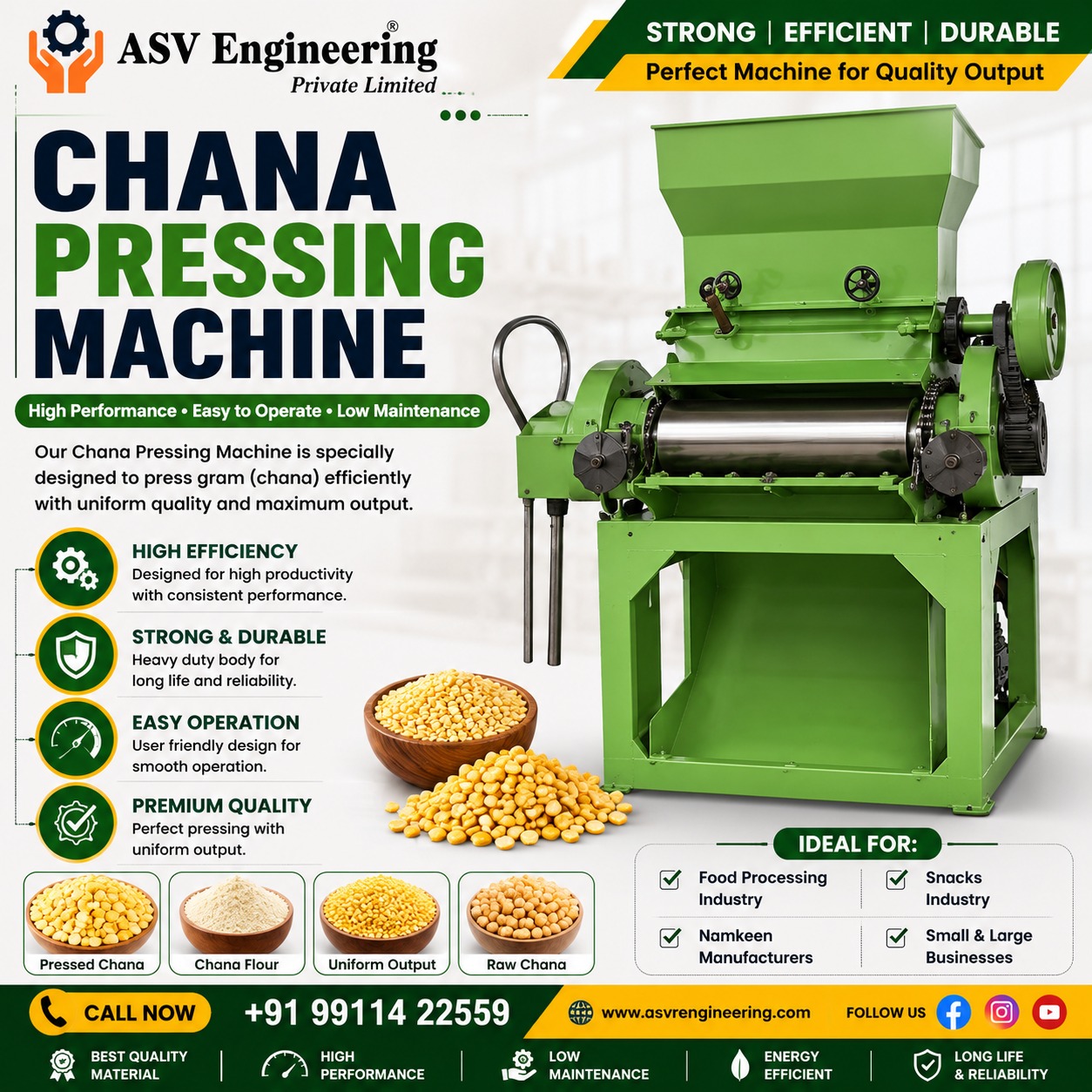
Chana Pressing Machine
Description
If you are looking for a chana pressing machine manufacturer in Delhi, India that understands the unique demands of Indian dairy and sweet-making operations, our factory builds machines purpose-built for pressing chana, paneer, and related dairy products. Chana pressing is a critical step in producing everything from soft paneer blocks to crumbled chana used in sweets like rasgulla, sandesh, and kalakand. Our machine delivers consistent pressure for uniform texture and moisture removal, giving your dairy products the quality and shelf stability your customers expect.
What Is a Chana Pressing Machine?
A chana pressing machine is a specialized dairy processing device that applies controlled pressure to freshly coagulated milk solids to expel whey and compress the chana into a firm, uniform block or slab. In traditional sweet-making, chana is wrapped in muslin cloth and weighted down with stones or heavy vessels, a method that is slow, inconsistent, and difficult to scale. Our chana pressing machine replaces that improvised approach with a mechanical or hydraulic pressing system that delivers repeatable pressure over a defined period, resulting in chana of consistent density, moisture content, and thickness every time.
Key Features
The chana pressing machine from our Delhi factory uses a sturdy stainless steel pressing chamber that is easy to clean and resistant to the acidic whey that contacts dairy processing equipment. The pressing plate is made from thick food-grade stainless steel with a perforated surface that allows whey to drain freely while supporting the chana block evenly. Pressure is applied through a manual screw mechanism on smaller models and through a hydraulic cylinder on larger commercial units. Adjustable height stops on the pressing column allow you to control the final thickness of the chana block, which is important for different sweet-making applications. Drip trays underneath the pressing chamber catch expelled whey for easy disposal or collection. The entire machine is designed to disassemble quickly for thorough washing between batches.
How Does the Chana Pressing Machine Work?
The operator lines the pressing chamber with a clean muslin cloth or food-grade filter and fills it with freshly made chana curds. The perforated pressing plate is placed on top of the curds, and the screw or hydraulic ram is engaged to apply downward pressure. As pressure builds, whey drains through the perforations and out through the base into the drip tray. The operator sets the desired pressure level and duration, and the machine maintains that pressure throughout the pressing cycle. For hydraulic models, a hand pump or motorized pump builds pressure gradually, which is important because sudden high pressure can crack the chana block. After the pressing cycle completes, the operator releases the pressure, removes the pressed chana block, and proceeds to cutting, crumbling, or sweet-making as required. The entire cycle takes between fifteen and forty-five minutes depending on the desired firmness.
Technical Specifications
The manual screw press model has a pressing chamber measuring 30 cm x 30 cm and stands approximately 60 cm tall, weighing about 20 kilograms. It can press up to 5 kilograms of chana per batch. The hydraulic press model features a larger chamber of 40 cm x 40 cm or 50 cm x 50 cm, stands about 80 cm tall, and weighs approximately 50 kilograms, pressing up to 15 kilograms of chana per cycle. Hydraulic models generate pressing force between 500 and 2000 kilograms, adjustable via a pressure gauge and relief valve. Both models are constructed from AISI 304 stainless steel for all food-contact components and mild steel with food-safe powder coating for the frame. The pressing plate perforation diameter is 3 millimeters, allowing efficient whey drainage while preventing chana from being pushed through the holes. No electrical power is required for manual models, while hydraulic motor-driven models need single-phase 220-volt supply.
Applications and Industries
Chana pressing machines are essential in Indian sweet shops, also known as mithai shops, that produce paneer, rasgulla, sandesh, and chumchum in bulk. Dairy processing units that produce block paneer for retail sale rely on pressing machines for uniform block dimensions that fit standard packaging. Cloud kitchens and restaurants that make fresh paneer in-house need consistent pressing to achieve the right texture for curries and grills. Dairy cooperatives and milk processing plants use larger hydraulic models for industrial-scale chana and paneer production. Export-oriented paneer manufacturers require precise moisture control, which our pressing machine delivers through calibrated hydraulic pressure. Catering companies that serve large gatherings also benefit from the ability to produce pressed chana blocks quickly and in quantity.
Benefits of Machine Pressing
Consistency is the foremost advantage. Hand-pressing chana with stones or weights produces blocks of varying density, which means different batches of sweets turn out differently. Machine pressing eliminates that variability. The controlled pressure ensures uniform moisture content throughout the block, which affects texture and shelf life. Production speed improves because multiple pressing units can operate simultaneously while the operator manages other tasks. Hygiene improves because the stainless steel pressing chamber is easier to sanitize than improvised cloth-and-stone setups. The precise thickness control allows you to produce paneer blocks of exact dimensions for standardized packaging, which is particularly important for retail and export markets where product presentation matters.
Maintenance and Care
Chana pressing machines require straightforward but regular maintenance. Disassemble and wash all food-contact components with warm water and dairy-safe sanitizer after every use. Pay special attention to the perforated pressing plate, where milk solids can accumulate in the holes if not cleaned promptly. For hydraulic models, check the hydraulic fluid level monthly and top up or replace as recommended by the manufacturer. Inspect the hydraulic seals and O-rings every three months for signs of wear or leakage. The screw thread on manual press models should be cleaned and lubricated with food-grade grease every two weeks to ensure smooth operation. The drip tray should be emptied and cleaned after each pressing cycle. Our Delhi factory maintains a ready stock of replacement seals, O-rings, pressing plates, and hydraulic cylinders, and we ship parts to any address in India.
Frequently Asked Questions
What is the price of a chana pressing machine in India?
Manual screw press models are the most affordable option, making them ideal for small sweet shops and home-based dairy businesses. Hydraulic models, which offer higher capacity and adjustable pressure, are priced higher for commercial and industrial users. Contact our sales team at +91 8588856870 for exact pricing based on the model and capacity you need.
How long does a pressing cycle take?
A standard pressing cycle takes fifteen to forty-five minutes depending on the quantity of chana, the desired firmness, and the pressing force applied. Softer chana for certain sweets requires less time and pressure, while firm paneer blocks for retail sale need longer, higher-pressure cycles.
Can I press paneer and chana with the same machine?
Yes. The machine handles any fresh milk curd regardless of whether it is chana for sweets or paneer for cooking. The pressing process is the same. You simply adjust the pressure and duration to suit the specific product you are making.
Is the machine difficult to operate?
Not at all. Manual models use a simple screw mechanism that anyone can operate after a brief demonstration. Hydraulic models require only pressing a pump handle or switching on the motor and setting the pressure gauge. No specialized training is needed, and our technician will walk your team through the operation during installation.
Why Choose Our Delhi Factory and How to Order
Our Nangloi, Delhi factory builds chana pressing machines with the understanding that Indian dairy and sweet-making businesses need equipment that is hygienic, durable, and simple to maintain. We use quality stainless steel and reliable hydraulic components because chana pressing machines face daily exposure to moisture and acidic whey, and substandard materials corrode quickly. Every machine is inspected and test-pressed before dispatch to confirm even pressure distribution and proper whey drainage. We offer pan-India delivery and installation assistance at your facility. To discuss your chana pressing requirements, get a price quotation, or place an order, call our team at +91 8588856870. We are committed to providing equipment that helps your dairy business produce better products more efficiently.
| Specification | Details |
|---|---|
| Machine Type | Chana Pressing Machine |
| Body Material | SS304 / MS |
| Power Supply | 220V/440V Three Phase |
| Warranty | 1 Year |
Related Products
Pulverizer Machine
View Details
Chapati Making Machine
View Details
Atta Chakki Machine
View Details