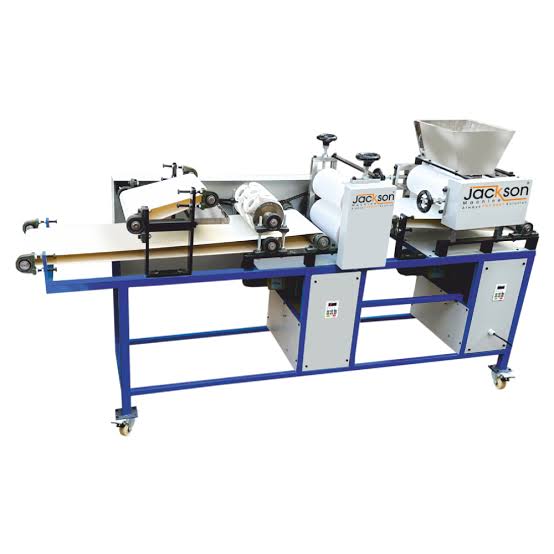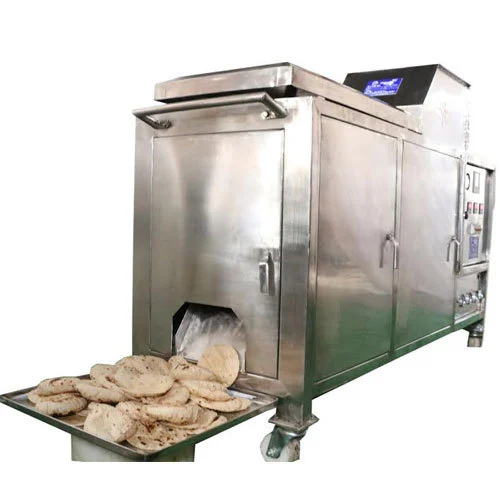
Mini Chapati Machine
SKU: CMM-011Description
The Mini Chapati Machine is the most compact and affordable chapati production solution in our range, designed for entrepreneurs, home-based food businesses, small shopkeepers, and anyone who wants to experience the benefits of automated chapati making without a significant investment. As a manufacturer and supplier of mini chapati machines in Delhi, India, we build these pocket-sized units to prove that even the smallest food business can improve efficiency and consistency through basic mechanization.
This machine is not trying to be an industrial powerhouse. It is a focused, simple tool that takes the most tedious part of chapati making—the pressing and puffing—and automates it in a unit small enough to fit on a kitchen countertop. For a home-based tiffin service producing 50 to 150 chapatis per meal, or a small shop that makes fresh rotis alongside other snacks, the mini chapati machine is a practical, budget-friendly upgrade.
Key Features of the Mini Chapati Machine
The design philosophy is simplicity. The machine has a small dough hopper, a single pressing station, and a compact puffing chamber. The pressing plate is operated by a small electric motor or a manual lever, depending on the model variant. The puffing chamber uses either a small electric heating element or a tiny gas burner to puff the chapati. Construction uses SS304 stainless steel for the pressing and puffing surfaces, with a lightweight mild steel or aluminum frame.
There is no complex control system—just basic on-off switches and a temperature knob for the puffing section. The entire machine weighs under 20 kg and can be easily stored in a kitchen cabinet when not in use. It plugs into a regular 220V wall socket and draws minimal power.
How It Works
The operator prepares dough using their regular recipe and rolls it into small portions by hand. Each portion is placed on the pressing plate. If the model is lever-operated, the operator pulls the handle to press the dough flat. If motorized, pressing happens at the push of a button. The pressed chapati is then placed in the puffing chamber. Within 15 to 30 seconds, the chapati puffs up from the heat. The operator removes it and repeats the process. With practice, a steady rhythm of one chapati every 15 to 20 seconds is achievable.
Technical Specifications
Output ranges from 60 to 180 chapatis per hour depending on the model and operator efficiency. Chapati diameter is typically fixed or adjustable within a narrow range of 4 to 5 inches. Power consumption is under 0.5 kW for electric models. Gas models use a small burner consuming roughly 0.3 kg of LPG per hour. Dimensions are roughly 1 foot by 1 foot by 1.5 feet. Weight is between 8 and 18 kg. No special installation is required—just a flat surface and a power outlet or gas connection.
Applications and Industries
The mini chapati machine serves home-based tiffin services, small tea stalls that also serve rotis, street food vendors, single-plate thali restaurants, small family-run dhabas, and individual households with large families. It is also a popular choice for testing the chapati machine concept before investing in a larger, higher-capacity model.
Benefits
The most obvious benefit is eliminating the arm fatigue and time involved in hand-rolling dozens of chapatis. Even at modest output, the machine saves significant physical effort over a meal preparation cycle. The consistent pressing produces chapatis of uniform thickness, which cook more evenly than hand-rolled ones. The low price and minimal operating cost make it accessible to virtually anyone. For aspiring food entrepreneurs, the mini chapati machine offers a low-risk way to start a chapati supply business.
Maintenance and Care
Wipe down the pressing and puffing surfaces after each use. Do not submerge the machine in water. For gas models, clean the burner periodically to prevent clogging. The machine has very few moving parts, so mechanical maintenance is essentially zero. Store in a dry place. If any issues arise, our Delhi team is available to advise on troubleshooting over the phone.
Frequently Asked Questions
How many chapatis can it make in an hour? Depending on the model and your speed, expect between 60 and 180 chapatis per hour. It is designed for small-scale production.
What is the price of a mini chapati machine? These are the most affordable machines we offer. Contact our Delhi team for current pricing and available models.
Can it make parathas or other flatbreads? Some models can press dough for parathas, puris, and other flatbreads by adjusting the thickness setting. Check with us for compatibility.
Is it suitable for commercial use? For small-scale commercial use, yes. If your production needs exceed 200 chapatis per hour, consider a larger model.
Why Choose Our Delhi Factory and How to Order
We manufacture the Mini Chapati Machine at our Nangloi, Delhi facility, bringing the same material quality and attention to detail found in our larger machines down to this entry-level unit. We ship across India through reliable courier services. To order a mini chapati machine or to ask questions about whether it suits your needs, call or WhatsApp us at +91 8588856870. We are happy to help you get started with your first automated chapati production.
| Specification | Details |
|---|---|
| Machine Type | Mini Chapati Machine |
| Capacity | 300 chapatis/hr |
| Body Material | SS304 Stainless Steel |
| Control | PLC Based |
| Power Supply | 220V/440V Three Phase |
| Fuel Type | Electric/Gas |
| Dough Weight | 30g-80g Adjustable |
| Chapati Size | 6-12 inch |
| Warranty | 2 Years |
Related Products
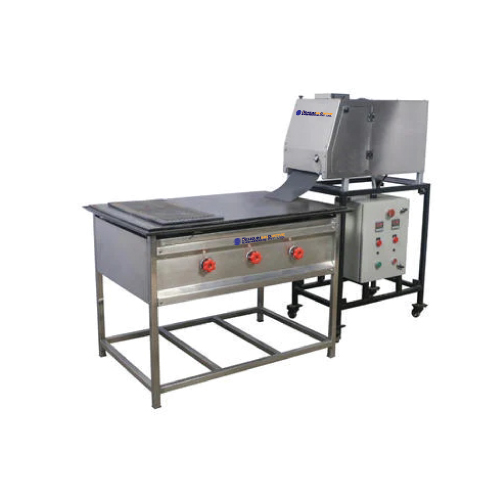
Semi Automatic Chapati Machine
View Details