Low Capacity Chapati Machine
SKU: CMM-007Description
The Low Capacity Chapati Machine is an ideal entry point for small food businesses, home entrepreneurs, and modest-sized kitchens that want to mechanize chapati production without committing to a large, expensive system. As a manufacturer and supplier of low capacity chapati machines in Delhi, India, we design these compact units for operators who need to produce 100 to 400 chapatis per hour—enough to serve a small restaurant, a local dhaba, a tiffin service, or a neighborhood catering operation efficiently.
This machine fills a real gap in the market. Many small food businesses still rely entirely on manual chapati preparation, which ties up workers for hours and produces inconsistent results. A low capacity machine provides the automation benefits of pressing and puffing at a scale that matches smaller demand levels and tighter budgets.
Key Features of the Low Capacity Chapati Machine
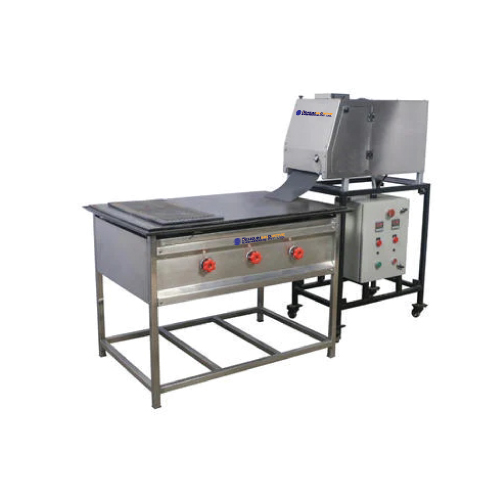
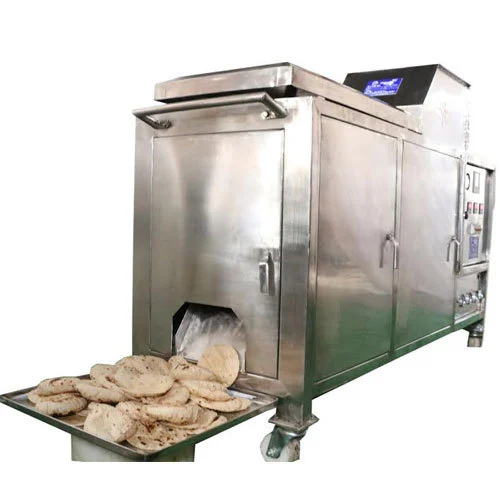
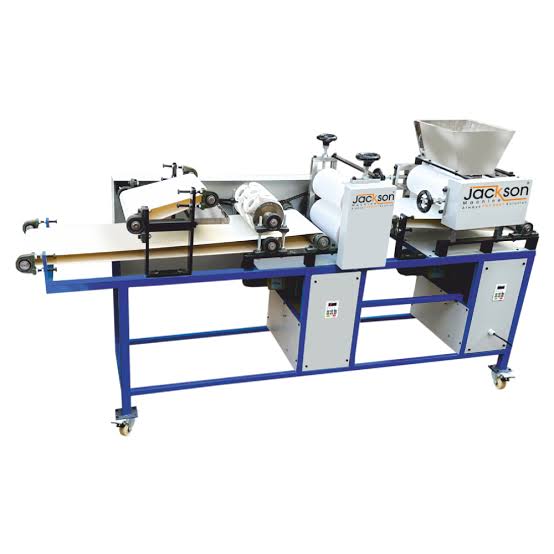
The unit is compact and lightweight, designed to sit on a sturdy kitchen counter or a dedicated low stand. Despite its small size, it uses the same quality materials as our larger machines—SS304 stainless steel for food-contact parts and powder-coated mild steel for the frame. The pressing station is manually fed or uses a small hopper with gravity feed, and the puffing section is a compact heated chamber that processes one or two chapatis at a time.
The control panel is simple and intuitive, with basic switches for power, pressing activation, and puffing temperature. There are no complex PLCs or touchscreens to learn, making it accessible to operators with no technical background. The machine plugs into a standard 220V household outlet, eliminating any need for special electrical work.
How It Works
The operator prepares dough using their regular recipe and divides it into small portions either by hand or using a simple dough divider. Each portion is placed on the pressing plate, the press is activated, and the flattened chapati is transferred to the puffing chamber. The puffing chamber heats the chapati from both sides, causing it to puff. The operator removes the finished chapati and loads the next portion. The cycle repeats continuously, with a practiced operator maintaining a steady rhythm.
Technical Specifications
Output ranges from 100 to 400 chapatis per hour depending on the model and operator speed. Chapati diameter is adjustable between 4 inches and 6 inches. The machine runs on 220V single-phase power with a total load of under 1 kW. Gas puffing variants use a small LPG burner consuming roughly 0.5 to 1 kg per hour. The entire unit measures approximately 2 feet by 1.5 feet by 2 feet and weighs 25 to 50 kg, easily movable and storable when not in use.
Applications and Industries
Low capacity chapati machines suit home-based food businesses, small tiffin services, roadside food stalls, juice shops that also serve snacks, small office canteens, and hostel kitchens. They are also popular with entrepreneurs testing the waters before scaling up to a larger machine. For households that entertain frequently or have large families, this machine eliminates the hours spent rolling and cooking chapatis by hand.
Benefits
The immediate benefit is time savings. A task that takes a skilled person 30 minutes to produce 30 chapatis manually can be accomplished in roughly the same time with the machine, freeing the operator to handle other kitchen tasks simultaneously. The machine produces more uniform chapatis than most hand rollers achieve, which improves presentation. The modest investment and low operating cost make it accessible to virtually any food business.
Maintenance and Care
Cleaning is simple—wipe the pressing surfaces and puffing chamber after each use with a damp cloth and mild detergent. Avoid abrasive cleaners on the stainless steel surfaces. Check the gas burner or electric element periodically for proper function. The machine has very few moving parts, so maintenance is minimal. Store it in a dry location when not in use to prevent any moisture-related issues.
Frequently Asked Questions
What is the price of a low capacity chapati machine? These are the most affordable machines in our range. Contact our Delhi team for current pricing and available models.
Can it make different sizes of chapatis? Yes, within the adjustable range of 4 to 6 inches. For larger chapatis, consider stepping up to a higher capacity model.
Is it suitable for commercial use? Absolutely. While compact, it is built to commercial standards and can handle daily use in a small food business.
How many people can it feed per hour? At typical output, it can produce enough chapatis to serve 20 to 50 people per hour, depending on chapati size and appetite.
Why Choose Our Delhi Factory and How to Order
We manufacture the Low Capacity Chapati Machine at our Nangloi, Delhi workshop with the same material quality and craftsmanship that goes into our larger industrial models. This means you get a durable, reliable machine even at the most affordable price point in our range. We ship across India via reliable courier and freight partners. To order or learn more, call or WhatsApp us at +91 8588856870. We will help you choose the right model for your needs and arrange prompt delivery to your doorstep.
| Specification | Details |
|---|---|
| Machine Type | Low Capacity Chapati Machine |
| Capacity | 400 chapatis/hr |
| Body Material | SS304 Stainless Steel |
| Control | PLC Based |
| Power Supply | 220V/440V Three Phase |
| Fuel Type | Electric/Gas |
| Dough Weight | 30g-80g Adjustable |
| Chapati Size | 6-12 inch |
| Warranty | 3 Years |