Tissue Paper Making Machine
Description
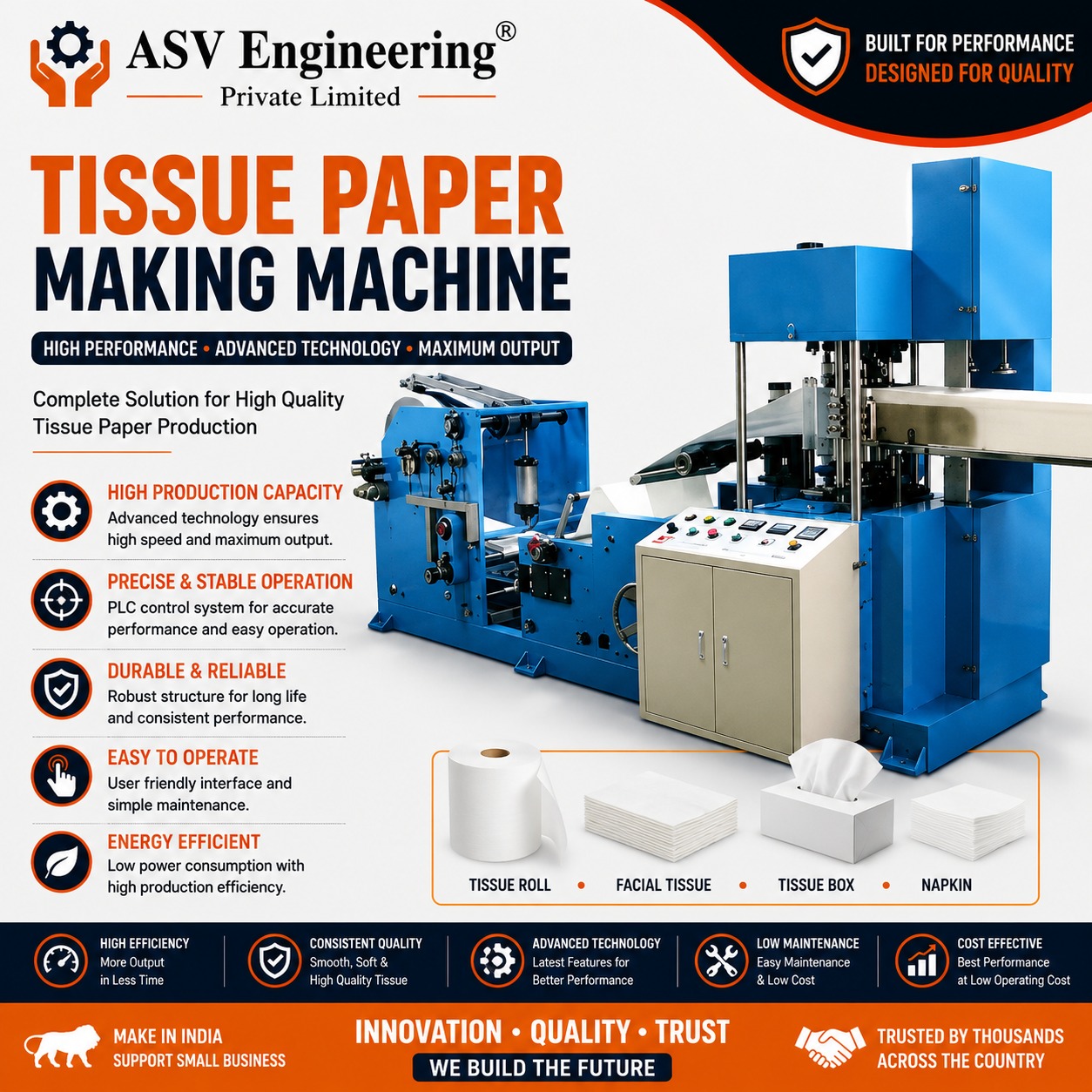
Tissue paper has become such an everyday part of modern life that most people never stop to consider how it is made. Behind the soft, absorbent sheets found in homes, restaurants, and public facilities stands a sophisticated manufacturing process, and at the heart of that process is the Tissue Paper Making Machine. Our Delhi-based factory has established itself as a dependable manufacturer and supplier of tissue paper making machines in Delhi, India, providing the equipment that transforms pulp into the finished rolls and sheets we all use daily.
What Is a Tissue Paper Making Machine?
A tissue paper making machine is an industrial system that manufactures tissue paper from raw materials such as virgin wood pulp, bamboo pulp, or recycled paper. The machine takes a slurry of fibres suspended in water and processes it through several stages to produce a continuous, thin, soft sheet of paper. The full process involves wet-laid sheet formation, pressing, drying, and often embossing and winding onto large parent rolls. Depending on the configuration, a tissue machine may produce the base tissue paper, or a converting line may be included to process the base paper into finished products like facial tissue, toilet paper rolls, napkins, and paper towels. These machines are central to an industry serving homes, businesses, and hospitality facilities worldwide.
How the Machine Works
The tissue paper making process is a remarkable sequence of transformations. The raw material is first pulped and mixed with water to form a fibre slurry. This slurry is sprayed onto a moving wire mesh screen, where water drains away and the fibres settle into a thin, wet sheet. The wet sheet then passes through a pressing section that squeezes out additional water and compresses the fibres. Next comes the drying section, where the sheet is dried against large heated cylinders or through air drying, producing a dry, absorbent paper. In many machines, a creping process loosens the fibre bonds slightly, creating the soft, textured feel characteristic of tissue. The paper is then wound onto massive parent rolls, which may be further processed by converting equipment into finished consumer products. Each stage is precisely controlled to achieve the desired softness, strength, and absorbency.
Key Features of Our Tissue Paper Machines
We manufacture tissue paper making machines designed for efficiency, quality, and reliable operation. The machines are built with industrial-grade materials capable of continuous operation. The forming section is engineered for even sheet formation, ensuring consistent quality across the paper width. Press and drying sections are designed for energy efficiency and effective moisture removal. Creping and embossing systems allow you to produce tissue with specific textures and patterns. Winding equipment creates well-formed parent rolls for further processing. Control systems monitor and regulate the various process parameters, ensuring consistent output. We offer configurations to suit different raw materials and production scales, from small-capacity units for local production to larger systems for serious industrial output.
Technical Specifications
Specifications vary considerably based on the machine's production capacity and configuration. Machine widths commonly range from around 1000 to 2800 millimetres, determining the width of the paper produced. Production speeds vary from modest figures for smaller machines to several hundred metres per minute for large, high-speed industrial lines. Basic machines might produce from a few tonnes up to tens of tonnes of tissue per day, while advanced systems produce considerably more. Raw material flexibility includes virgin pulp, bamboo pulp, bagasse, and recycled paper. Power and water requirements are substantial and depend on the machine's size and technology. Full technical specifications, including capacity, dimensions, and utility requirements, are provided for each model.
Applications and Industries
Tissue paper making machines serve the production of a wide variety of paper products. Manufacturers produce facial tissue, toilet paper, kitchen towel rolls, paper napkins, and paper handkerchiefs. The hospitality sector, including hotels, restaurants, and public facilities, relies on tissue products for daily use. Retail markets sell packaged tissue products to households. Healthcare settings use tissue products for hygiene purposes. Converters who process base tissue into finished consumer goods also depend on these machines or on the parent rolls they produce. With tissue consumption rising steadily in India and globally, the market for tissue production equipment remains robust and growing.
Benefits of Investing in a Tissue Paper Machine
For manufacturers, a tissue paper making machine offers substantial benefits. It allows you to produce tissue products in-house, capturing the value that would otherwise go to external suppliers. The automated process delivers consistent quality across all production, meeting the expectations of a discerning market. Production capacity enables you to serve both domestic and potential export markets. As tissue consumption grows with rising incomes and awareness of hygiene, the demand for high-quality tissue products continues to increase. Investing in reliable equipment positions you to capture this growing market profitably, with the durability of our machines providing long-term value.
Maintenance and Care
Tissue paper machines require careful, systematic maintenance. Daily cleaning of the forming, pressing, and drying sections prevents fibre build-up and maintains sheet quality. Regular inspection of the felt and wire screens is essential, replacing them when worn to maintain efficient operation. Keep all moving parts properly lubricated according to the manufacturer's schedule. Monitor and maintain the drying system and temperature controls. Ensure the pulp preparation system is well maintained for consistent fibre quality. Schedule regular professional inspections of the mechanical and control systems. Proper maintenance maximises uptime, product quality, and the operational life of the machine.
Frequently Asked Questions
What is the price of a tissue paper making machine in India? Pricing depends significantly on machine capacity, configuration, and technology. Contact our Delhi factory at plus 91 85888 56870 for a detailed quotation.
Can the machine use recycled paper as raw material? Yes, many of our configurations support recycled paper alongside virgin and bamboo pulp, giving flexibility in sourcing and cost.
What is the minimum factory space required? Space requirements depend on the machine size, but even compact units need substantial floor area, including space for pulp preparation and finishing. Our engineers will assess your site.
Do you offer installation and training? Yes, we provide complete installation, commissioning, and operator training across India.
Why Choose Our Delhi Factory
Our tissue paper making machines are manufactured in Nangloi, Delhi, by a team with deep experience in the paper industry. We build machines that balance performance, reliability, and value, using quality components and rigorous testing. Our commitment to customers extends beyond delivery, with warranties, spare parts, and responsive service support. We deliver and install tissue paper machinery across India, guiding you from factory floor to fully operational production. To explore how a tissue paper making machine can benefit your business, call our team at plus 91 85888 56870. We are ready to assist you in building a successful tissue paper operation.
| Specification | Details |
|---|---|
| Machine Type | Tissue Paper Making Machine |
| Body Material | SS304 / MS |
| Power Supply | 220V/440V Three Phase |
| Warranty | 1 Year |
Related Products
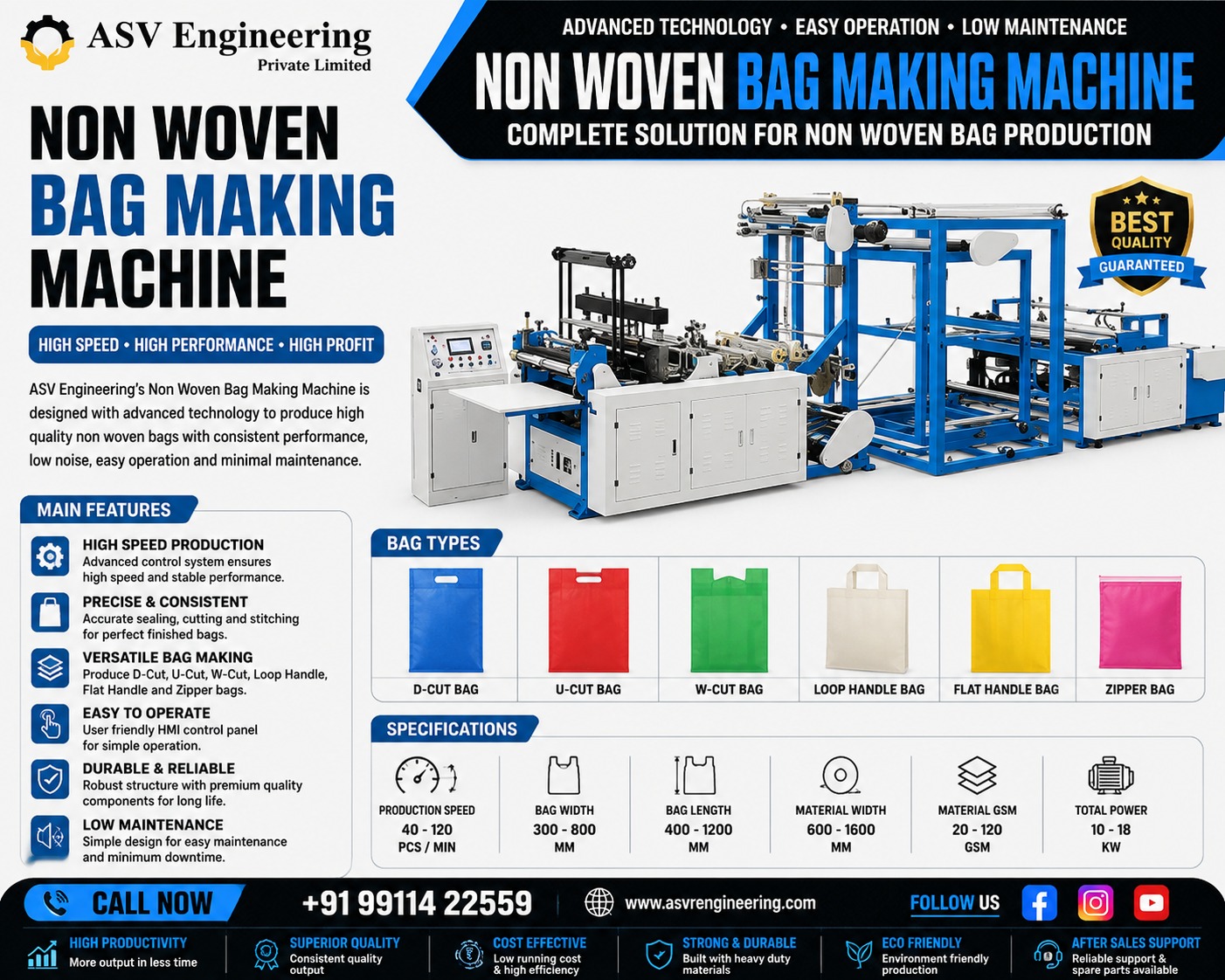
Non-Woven Bag Making Machine
View Details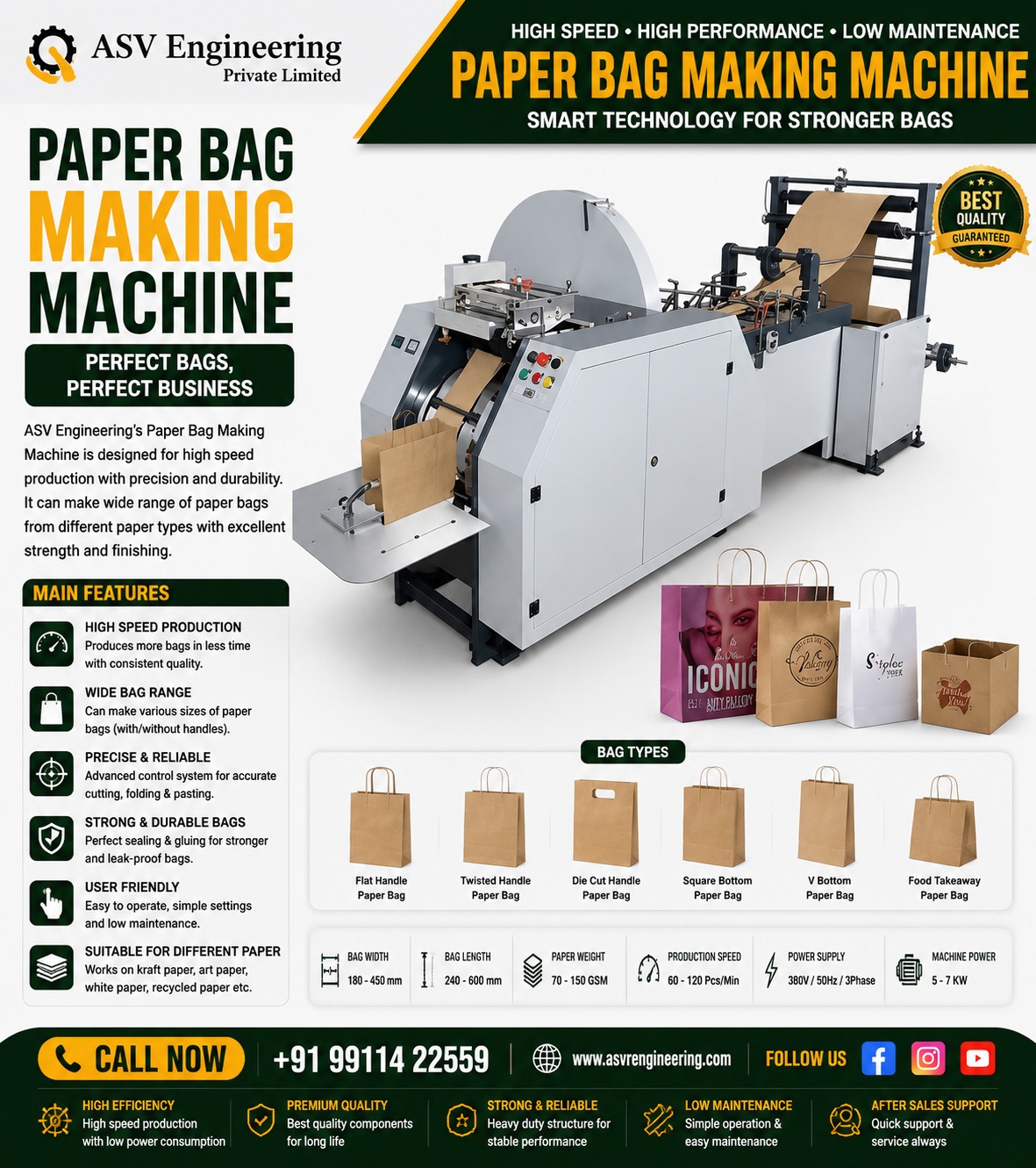
Paper Bag Making Machine
View Details