Dhoopbatti Making Machine
Description
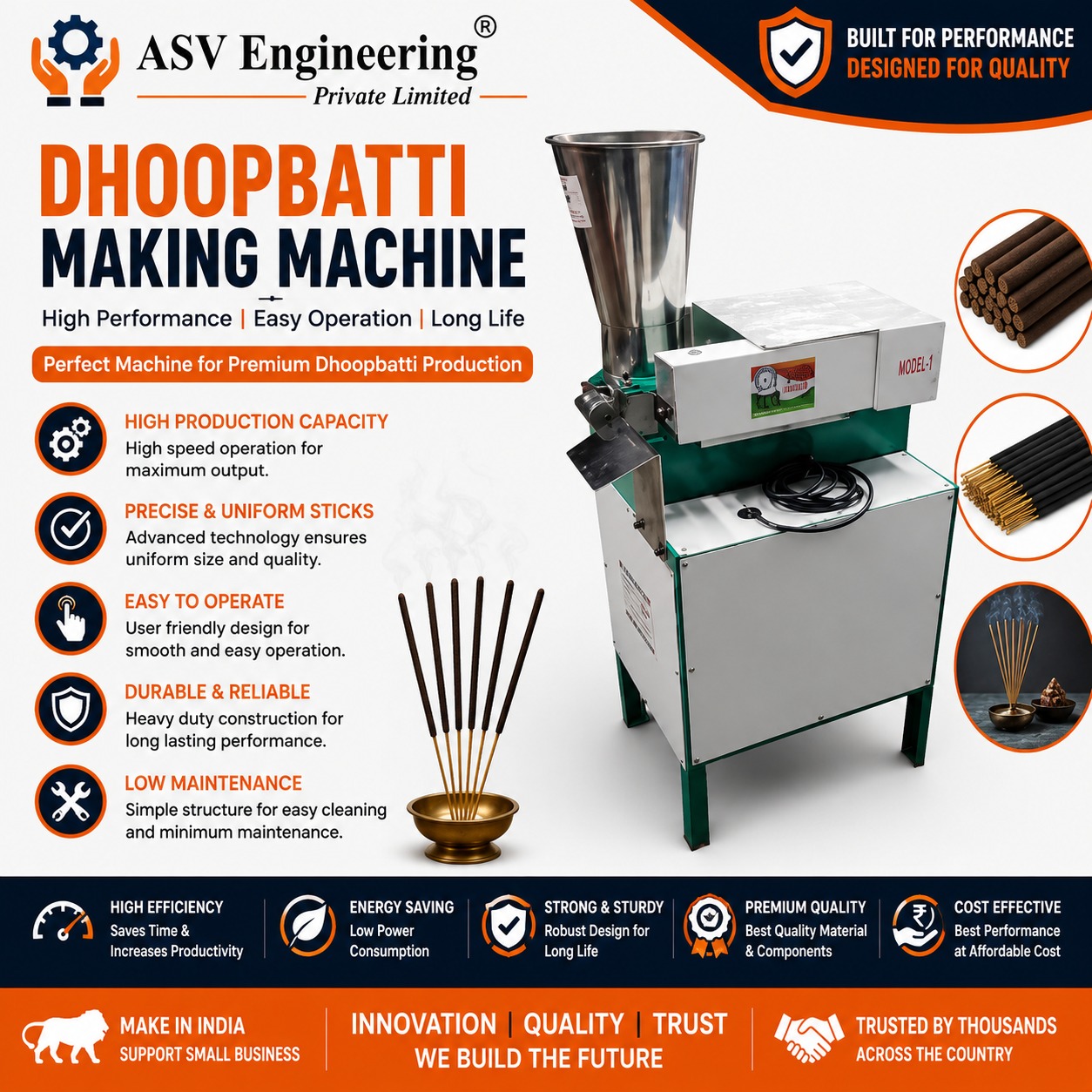
Need a trustworthy dhoopbatti making machine manufacturer in Delhi, India? Our specialized dhoopbatti making machine is designed to produce thick, cone-shaped or cylindrical incense sticks known as dhoopbatti, which are widely used in Hindu temples, Sikh gurdwaras, Buddhist monasteries, and households across India. Unlike standard thin agarbattis, dhoopbattis require a heavier coating of aromatic paste on a thicker core, and this machine is built precisely for that purpose.
Introduction and Overview
Dhoopbatti occupies a distinct niche in the Indian incense market. These thicker, more potent incense sticks are favored for their intense fragrance and longer burn time. They are integral to aarti ceremonies, meditation sessions, and daily puja in millions of homes. The production of dhoopbatti has traditionally relied on skilled artisans who shape the paste by hand, a slow and physically demanding process that limits output. Our machine changes that equation entirely, enabling manufacturers to produce thousands of high-quality dhoopbattis per hour with just one or two operators. If you are a puja product manufacturer, an incense brand looking to expand your dhoopbatti range, or an entrepreneur entering the religious products market, this machine is your gateway to consistent, scalable production.
Key Features
The machine features a reinforced extrusion system specifically calibrated for the denser, heavier paste used in dhoopbatti production. The coating thickness is adjustable from 4mm to 10mm, far exceeding what a standard agarbatti machine can handle. Dhoopbatti length options typically range from 6 inches to 10 inches, and the machine accommodates both bamboo stick cores and coreless dhoop formats with appropriate die configurations. Production speed is 80 to 150 sticks per minute depending on dhoopbatti diameter and paste viscosity. The frame is built from heavy-wall mild steel tubing to absorb the additional vibration generated by extruding thicker paste. Contact surfaces use food-grade stainless steel. An adjustable guide rail system ensures each stick receives a centered, even coating. The machine operates on 3-phase 440V power and draws 3 to 4 HP.
How It Works
Prepared dhoopbatti paste, which is typically a blend of charcoal powder, makko or Jigat binding powder, natural resin, and concentrated fragrance oils, is loaded into the oversized hopper. Bamboo sticks or coreless dhoop molds are fed through the stick magazine. The extrusion die wraps a thick, uniform layer of paste around each core. The coated sticks emerge onto a reinforced conveyor belt that supports their heavier weight without sagging. From the conveyor, sticks can be collected manually or routed to a dedicated drying area. The entire process is continuous and does not require pausing between cycles.
Technical Specifications
Production Capacity: 80 to 150 sticks per minute. Coating Thickness: 4mm to 10mm adjustable. Stick Length: 6 inches to 10 inches. Motor Power: 3 HP to 4 HP. Power Supply: 3-phase 440V, 50Hz. Hopper Capacity: 12 kg to 18 kg. Machine Weight: Approximately 250 kg to 320 kg. Dimensions: Roughly 7 feet by 2.5 feet by 3.5 feet. Frame Material: Heavy-wall MS tubing with SS304 contact parts. Conveyor Speed: Synchronized with extrusion rate.
Applications and Industries
This machine serves dhoopbatti manufacturers who supply to temple committees, gurdwara management boards, religious product distributors, and retail brands that package dhoopbatti for modern supermarket shelves. It is also used by companies producing meditation kits, wellness gift sets, and pooja samagri boxes that bundle multiple items together. The machine is popular among MSME manufacturers who benefit from government subsidies and sell through both offline wholesale channels and online marketplaces like Amazon and Flipkart.
Benefits
The most significant advantage is the ability to produce thick dhoopbattis with a level of uniformity that hand-production cannot achieve. Consistent diameter means consistent burn time, which is a quality marker that repeat customers notice. Labor requirements drop from a team of skilled hand-rollers to just one or two machine operators. Production output can increase tenfold or more compared to manual methods. The machine also opens the possibility of producing premium, well-finished dhoopbattis that command higher retail prices.
Maintenance and Care
Dhoopbatti paste is stickier and denser than standard agarbatti paste, so thorough cleaning of the extrusion die after every shift is essential. Use warm water and a stiff nylon brush to remove buildup from die surfaces. Inspect the conveyor belt for paste accumulation and wipe it down daily. Lubricate all bearings and drive components weekly. Check the hopper seal for leaks, as dried paste buildup around the seal can cause uneven feeding. The motor and electrical panel should be inspected monthly by a qualified technician. Keep spare die sets on hand to minimize downtime when switching between dhoopbatti sizes.
Frequently Asked Questions
What is the difference between this machine and a regular agarbatti making machine? Regular agarbatti machines are designed for thin coating on slender bamboo sticks. Dhoopbatti requires significantly thicker coating, higher extrusion pressure, and a more robust construction. Using a standard machine for dhoopbatti production would lead to uneven coating, frequent breakdowns, and poor product quality.
How much paste does a dhoopbatti making machine consume per hour? Consumption depends on dhoopbatti diameter and production speed. As a guideline, a machine running at 100 sticks per minute with 8mm coating uses approximately 15 to 20 kg of paste per hour. Our team can help you calculate exact consumption for your specific product size.
What is the price of this machine? Pricing depends on the model, capacity, and any customization required. Contact our Nangloi Delhi factory at +91 8588856870 for an accurate quote based on your production targets.
Can this machine also make standard thin agarbattis? While it can technically produce thinner sticks by changing the die, the machine is optimized for thicker dhoopbatti production. For best results with standard agarbattis, we recommend our dedicated automatic agarbatti making machine.
Why Choose Our Delhi Factory and How to Order
We manufacture dhoopbatti making machines at our Nangloi, Delhi factory where every unit is fabricated, assembled, and tested under one roof. Our engineering team understands the unique demands of dhoopbatti production because we have worked closely with incense manufacturers across India to refine this machine over multiple design iterations. We offer pan-India delivery, on-site installation, operator training, and responsive after-sales support. To discuss your dhoopbatti production requirements and receive a customized quotation, call us at +91 8588856870 or visit our factory to see the machine producing dhoopbattis in real time. We also export to international markets where Indian religious and incense products are in demand.
| Specification | Details |
|---|---|
| Machine Type | Dhoopbatti Making Machine |
| Body Material | SS304 / MS |
| Power Supply | 220V/440V Three Phase |
| Warranty | 1 Year |
Related Products
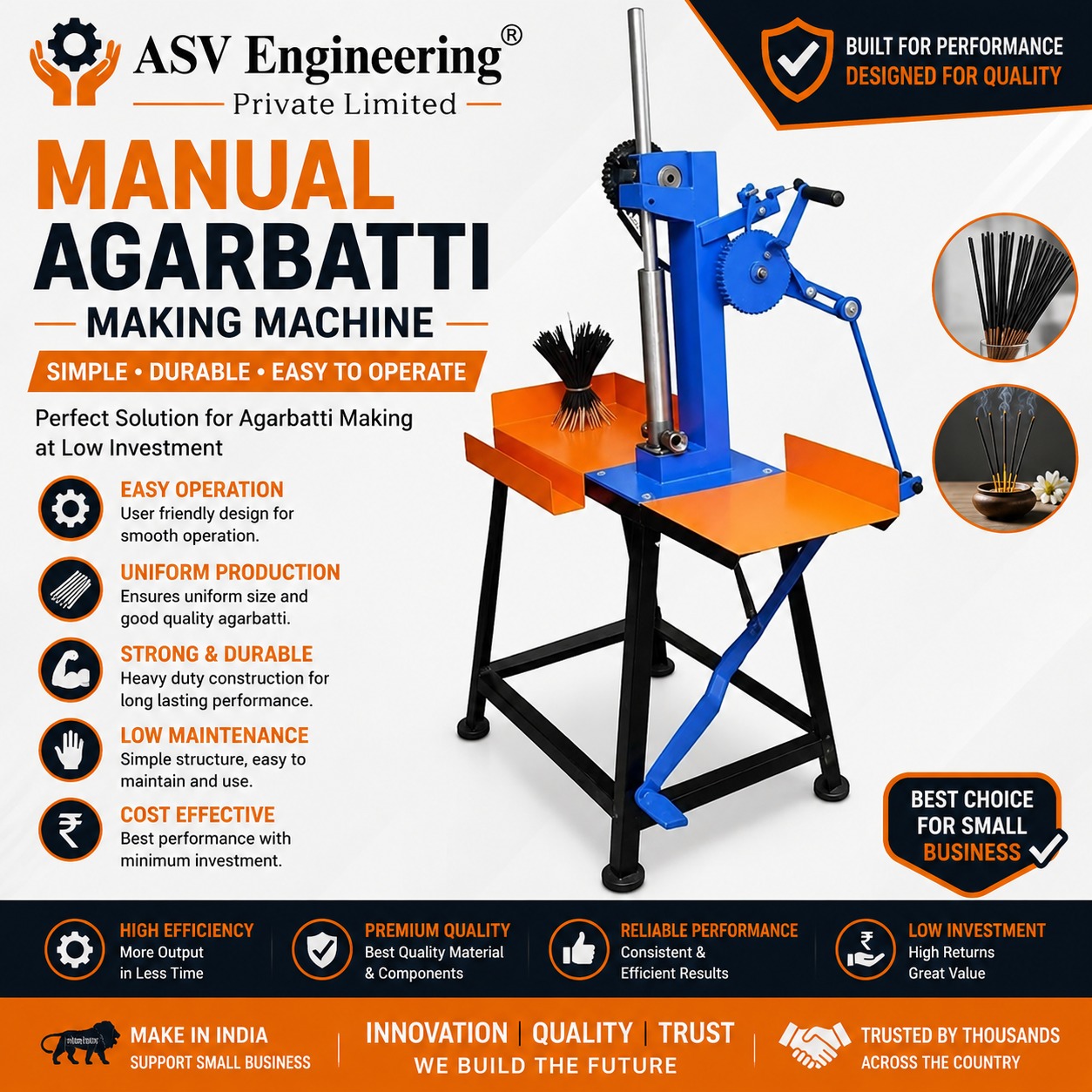
Manual Agarbatti Making Machine
View Details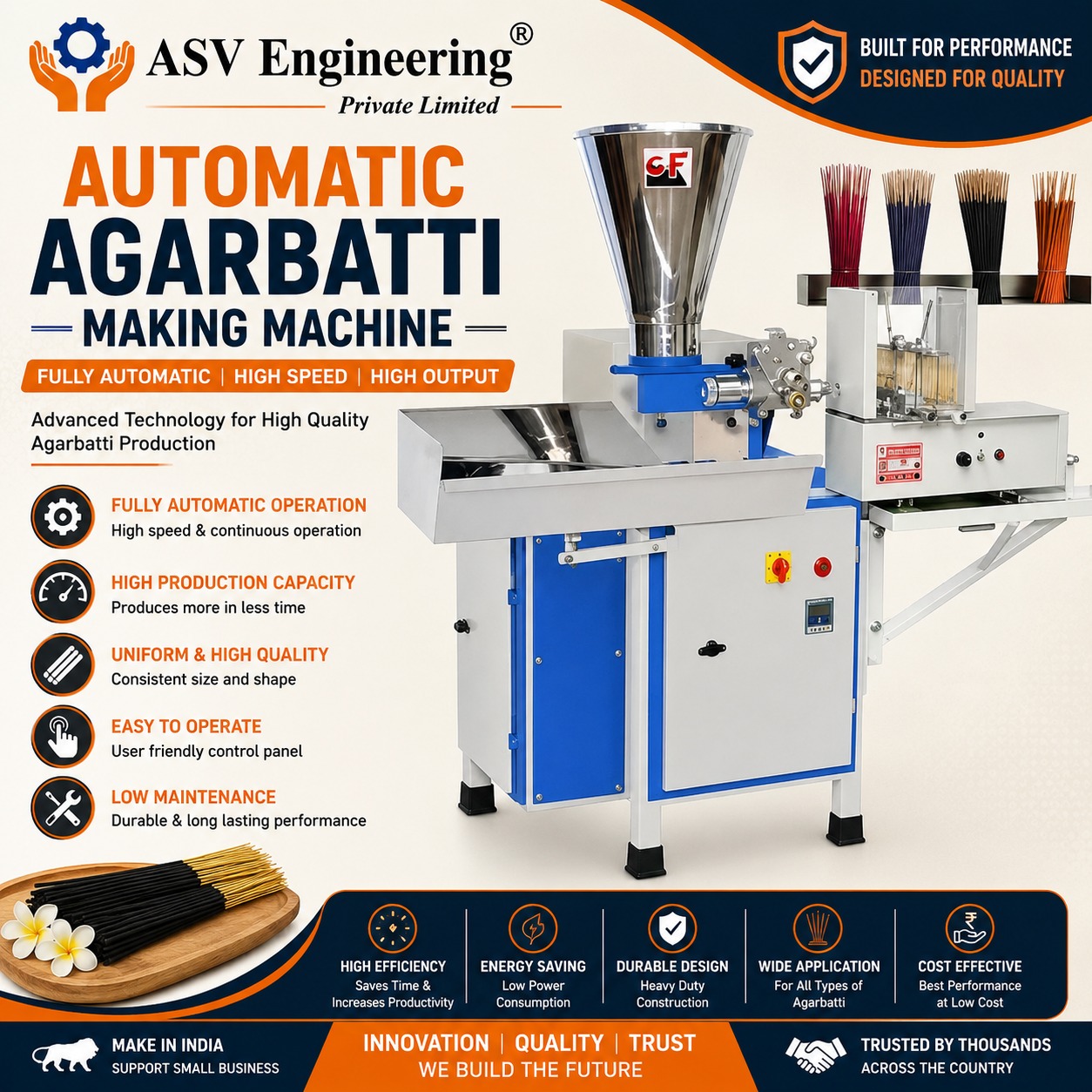
Automatic Agarbatti Making Machine
View Details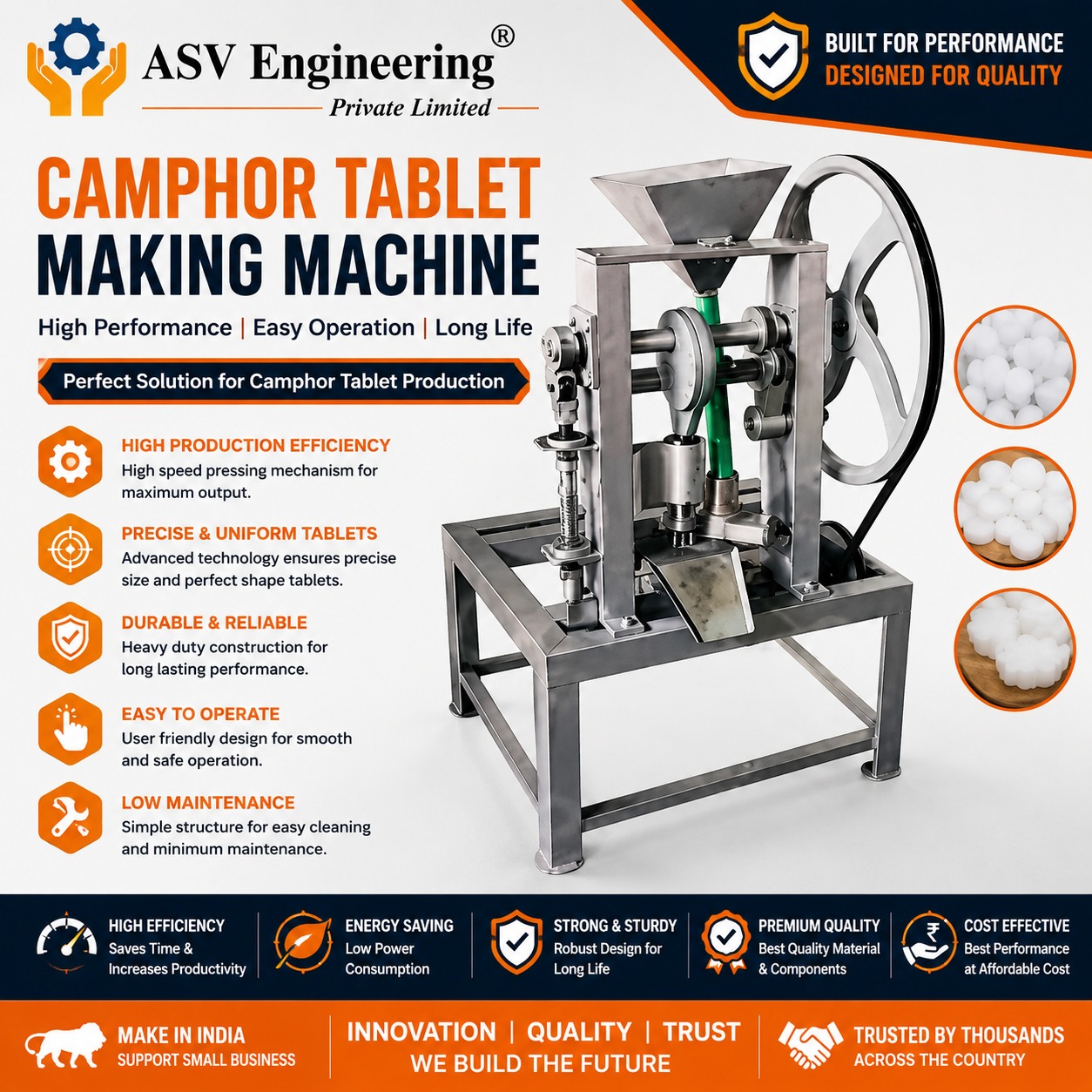
Camphor Tablet Making Machine
View Details