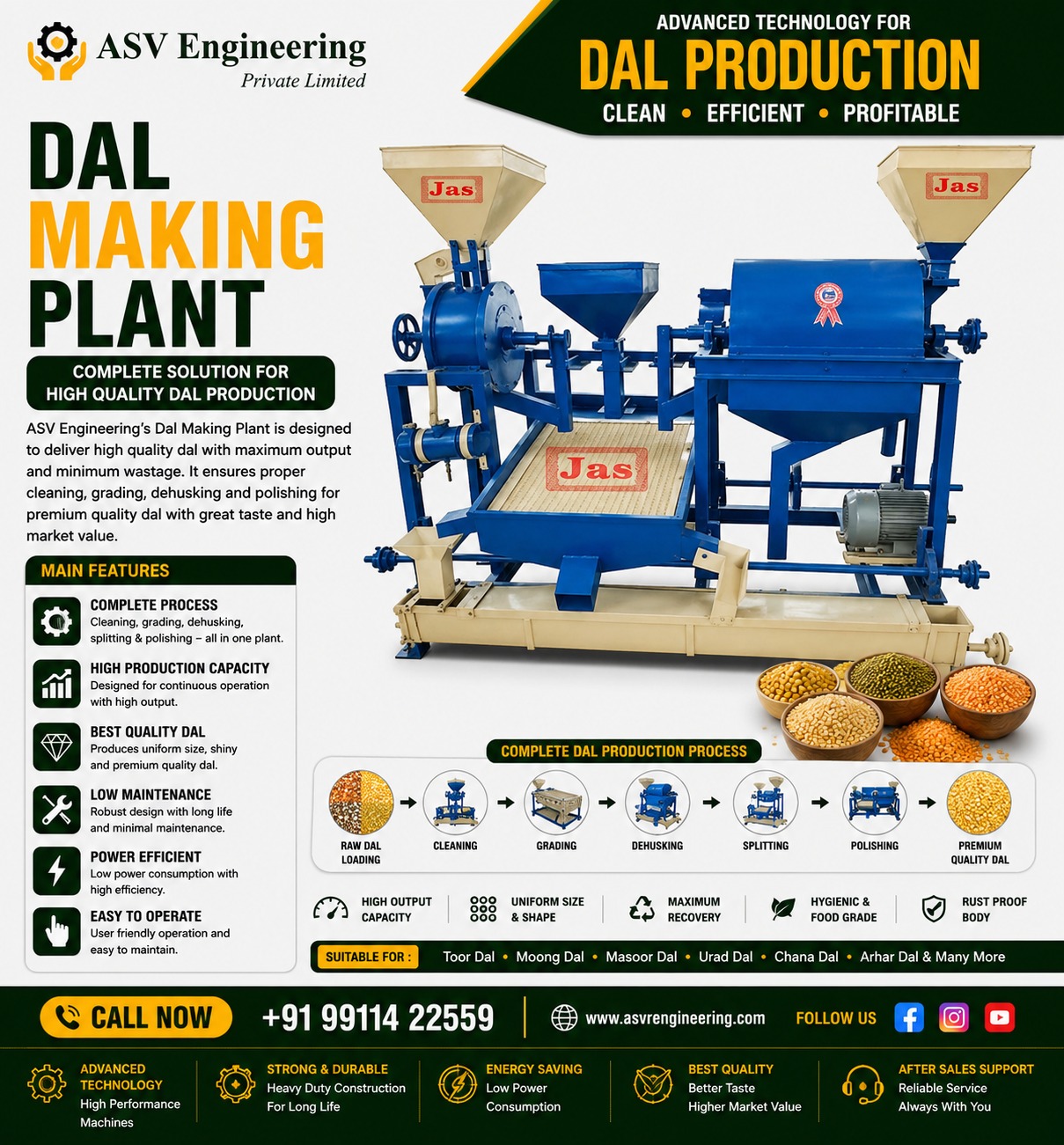
Dal Making Plant
Description
Finding a capable dal making plant manufacturer in Delhi, India is essential for anyone entering or expanding in the pulse processing industry. Dal, the staple protein source for hundreds of millions of Indians, undergoes a multi-step transformation from raw pulse grain to the clean, graded, polished, and packaged product that reaches consumers. Our factory designs and builds complete dal making plants that handle every stage of this transformation, giving processors the throughput, quality control, and hygiene standards that modern markets demand. From small-scale operations serving local mandis to large industrial plants supplying national brands, we configure each system to match your specific pulse varieties and production targets.
What Is a Dal Making Plant?
A dal making plant is an integrated pulse processing system that takes raw whole pulses through cleaning, de-husking, splitting, polishing, grading, and packaging stages to produce ready-to-cook dal products. Unlike single machines that handle one processing step, a complete dal making plant links multiple machines with conveyors and elevators into a continuous workflow. This integration eliminates manual material handling between stages, reduces contamination risk, and dramatically increases throughput. The plant is essential for pulse millers, agricultural cooperatives, food processing companies, and anyone involved in the dal supply chain from procurement to retail packaging.
Key Features
Our dal making plant is designed modularly so that each processing stage can be independently adjusted, maintained, or upgraded without dismantling the entire line. The cleaning section uses vibrating screens, destoners, magnetic separators, and aspirators to remove stones, dirt, metal, and light impurities from raw pulses before any de-husking begins. The de-husking unit employs rubber roller hullers or emery roll hullers, selected based on the specific pulse type being processed. The splitting section uses corrugated roller mills that crack de-husked pulses into clean halves. A polishing stage removes residual husk dust and smooths the dal surface for an appealing appearance. Grading screens separate whole pulses, splits, and broken pieces into distinct product streams. The packaging section includes an automatic weighing and bagging machine that fills bags of preset weight with high accuracy. The entire plant is controlled from a central electrical panel with individual start-stop controls for each section and emergency stop buttons at critical points.
How Does the Dal Making Plant Work?
Raw pulses enter the plant through the intake hopper, which feeds them onto the cleaning line. Vibrating screens separate oversized and undersized debris. The destoner removes stones and heavy impurities that are similar in size to the pulses. Magnetic separators capture any metal fragments. Cleaned pulses then move to a conditioning or tempering stage where moisture is evenly distributed through the grain to loosen the husk bond. The tempered pulses enter the de-husking unit where rubber or emery rollers rub the husk loose from the kernel. De-husked pulses pass through an aspirator that blows away the separated husk while the kernels continue forward. The kernels enter the splitting mill where corrugated rollers crack them into halves. After splitting, the dal moves to a polishing drum or cone polisher that removes fine dust and gives the surface a smooth finish. Grading screens then separate the final product into grades based on size and whole-to-split ratio. Finished dal flows to the packaging station where it is weighed, bagged, and sealed. The entire journey from raw pulse to packaged dal takes minutes, with the plant processing hundreds of kilograms per hour continuously.
Technical Specifications
Plant capacity ranges from 100 kilograms per hour for small commercial setups to 2000 kilograms per hour for large industrial operations. The complete plant footprint ranges from 200 square feet to 2000 square feet depending on capacity and configuration. Power requirement ranges from 25 kilowatts to 200 kilowatts across all sections, supplied on three-phase 415-volt connections. The de-husking unit can be configured with rubber rollers for softer pulses like moong and masoor, or emery rollers for harder pulses like chana and urad. Splitting mill output fineness is adjustable through roller gap settings. Grading screens are available in mesh sizes tailored to specific pulse dimensions. The packaging machine handles bag sizes from 250 grams to 50 kilograms with weighing accuracy of plus or minus one percent. Dust collection is integrated throughout the plant using cyclone separators and bag filters to maintain clean air in the processing area. The central control panel features motor overload protection, interlocked safety switches, and process monitoring displays.
Applications and Industries
Dal making plants serve the entire Indian pulse processing ecosystem. Pulse millers and aggregators who purchase raw pulses from agricultural mandis use these plants to process and sell finished dal at higher margins. Agricultural cooperatives in pulse-growing regions like Madhya Pradesh, Rajasthan, Maharashtra, and Karnataka install dal making plants to add value to locally grown crops before they leave the region. Food processing companies that manufacture packaged dal products for retail sale require consistent, high-quality output that only an integrated plant can deliver. Export-oriented dal producers need the precise grading and packaging capabilities that our plants provide. Even large restaurant chains and institutional food service operators process their own dal in bulk to ensure quality and cost control. Government-funded food processing incubation centres often include dal making plants as anchor equipment for rural enterprise development.
Benefits of an Integrated Dal Making Plant
The integration of all processing stages into a single continuous line brings multiple benefits that individual standalone machines cannot match. Throughput increases dramatically because material moves automatically between stages without manual loading and unloading. Product quality improves because each stage is calibrated to work with the output of the previous one, resulting in cleaner, more uniform dal. Contamination risk decreases because the closed processing line minimizes human contact with the product. Labor requirements drop because one or two operators can monitor the entire plant from the central panel rather than staffing each machine individually. Wastage decreases because the integrated aspiration and screening systems capture broken pieces and husk rather than letting them mix with the final product. The centralized control panel allows quick adjustments to processing parameters when switching between pulse varieties, which is important for mills that handle multiple types of dal.
Maintenance and Care
A dal making plant is a complex system that requires regular, structured maintenance to deliver consistent performance. Daily tasks include cleaning all product contact surfaces, inspecting screens and sieves for blockages or damage, and checking aspiration settings. Weekly maintenance involves inspecting rubber and emery rollers for wear, adjusting roller gaps if particle size drifts from specification, and lubricating all bearings and drive chains. Monthly tasks include checking conveyor belt tension and alignment, inspecting electrical connections in the control panel, and cleaning or replacing dust collection bag filters. Quarterly maintenance should include a thorough inspection of all motors, gearboxes, and structural connections. A full annual overhaul by qualified technicians is recommended to address wear components that may not be visible during routine inspections. Our Delhi factory provides a comprehensive maintenance schedule with every plant installation, and our service team is available for annual overhauls, emergency repairs, and spare parts supply across India.
Frequently Asked Questions
What is the price of a dal making plant in India?
The cost depends on capacity, the number of processing stages included, and the level of automation. Small-capacity plants for startup operations start at a moderate investment, while large industrial lines with full automation and packaging command significantly higher prices. Contact our sales team at +91 8588856870 for a customized quotation based on your capacity targets, pulse varieties, and facility layout.
Which pulses can the plant process?
Our plants are configured to handle toor, masoor, moong, urad, chana, and other pulse varieties available in the Indian market. Different pulses may require different de-husking roller configurations, but our modular design makes it easy to switch or add configurations as your product mix evolves.
How much space do I need for the plant?
Space requirements vary significantly with capacity. A small 100 kg per hour plant fits in roughly 200 square feet, while a 2000 kg per hour industrial line may need 1500 to 2000 square feet including raw material storage and finished product warehouse areas. We provide a detailed layout plan with every quotation.
Do you provide training for plant operators?
Yes. Our installation team trains your operators on plant operation, basic troubleshooting, and daily maintenance procedures during the commissioning period. We also provide a comprehensive operation manual in Hindi and English, and our technical support team is available by phone for ongoing guidance.
Why Choose Our Delhi Factory and How to Order
Our Nangloi, Delhi factory has extensive experience building dal making plants that serve the Indian pulse processing industry. We understand that different regions grow different pulses, each with unique processing characteristics, and we design our plants to handle that diversity. Every plant is assembled, wired, and tested in our factory before dispatch, and we invite clients to visit and witness the testing firsthand. We provide pan-India delivery, on-site installation and commissioning, operator training, and responsive after-sales support. To discuss your dal processing requirements, request a layout plan and quotation, or schedule a factory visit, call our team at +91 8588856870. We are committed to helping Indian pulse processors build efficient, profitable operations with equipment they can trust.
| Specification | Details |
|---|---|
| Machine Type | Dal Making Plant |
| Body Material | SS304 / MS |
| Power Supply | 220V/440V Three Phase |
| Warranty | 1 Year |
Related Products
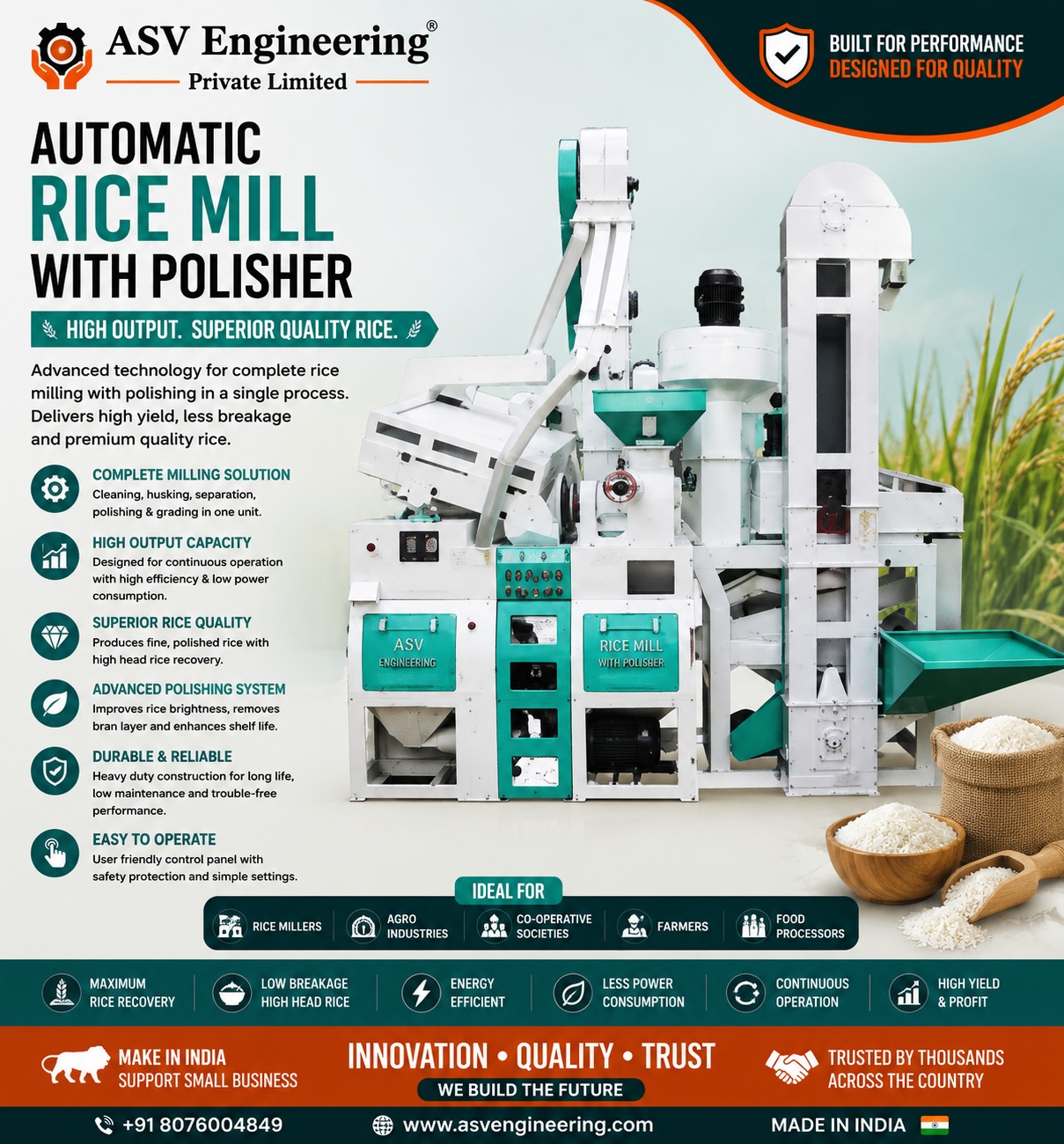
Automatic Rice Mill With Polisher
View Details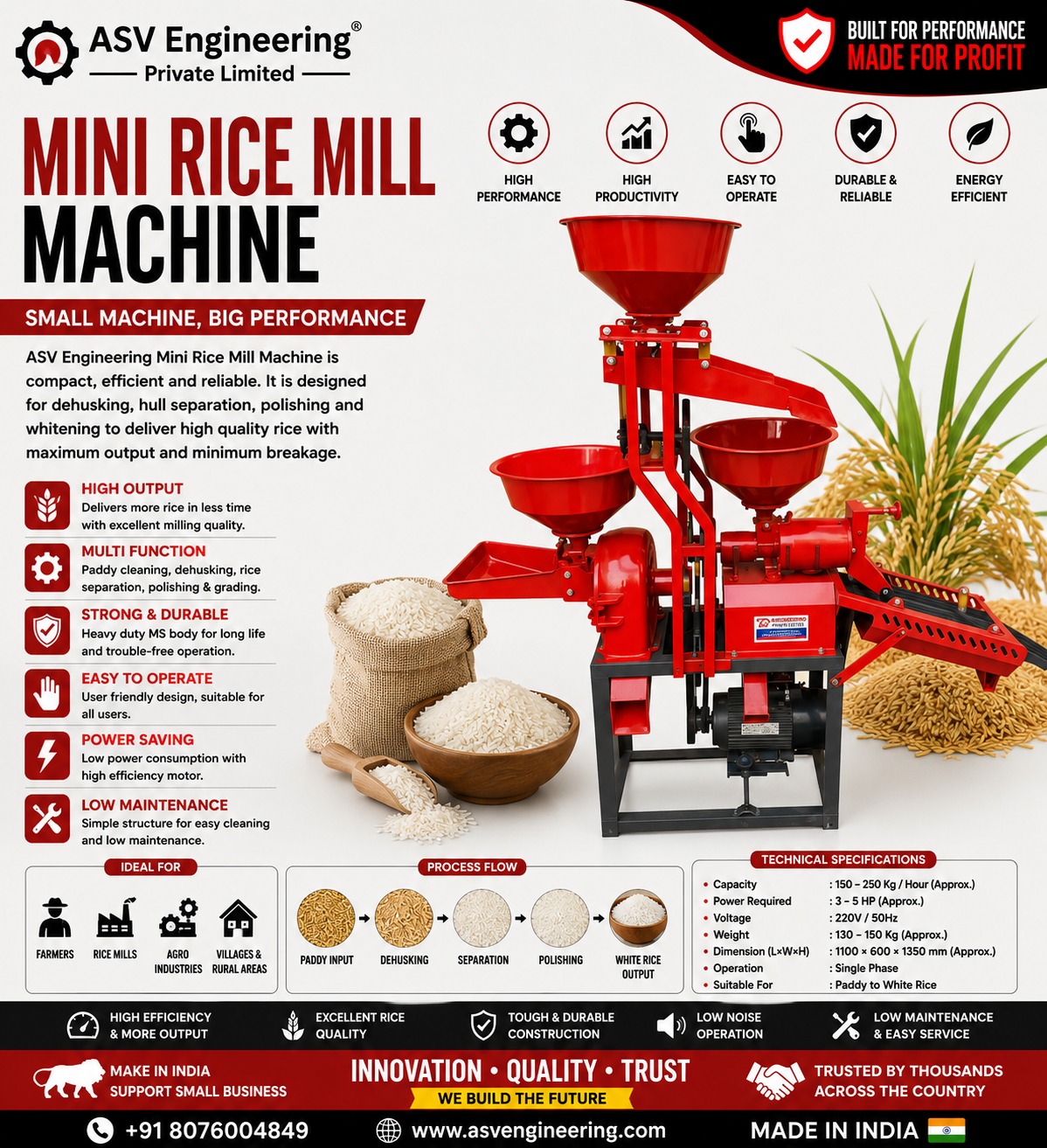
Mini Rice Mill Machine
View Details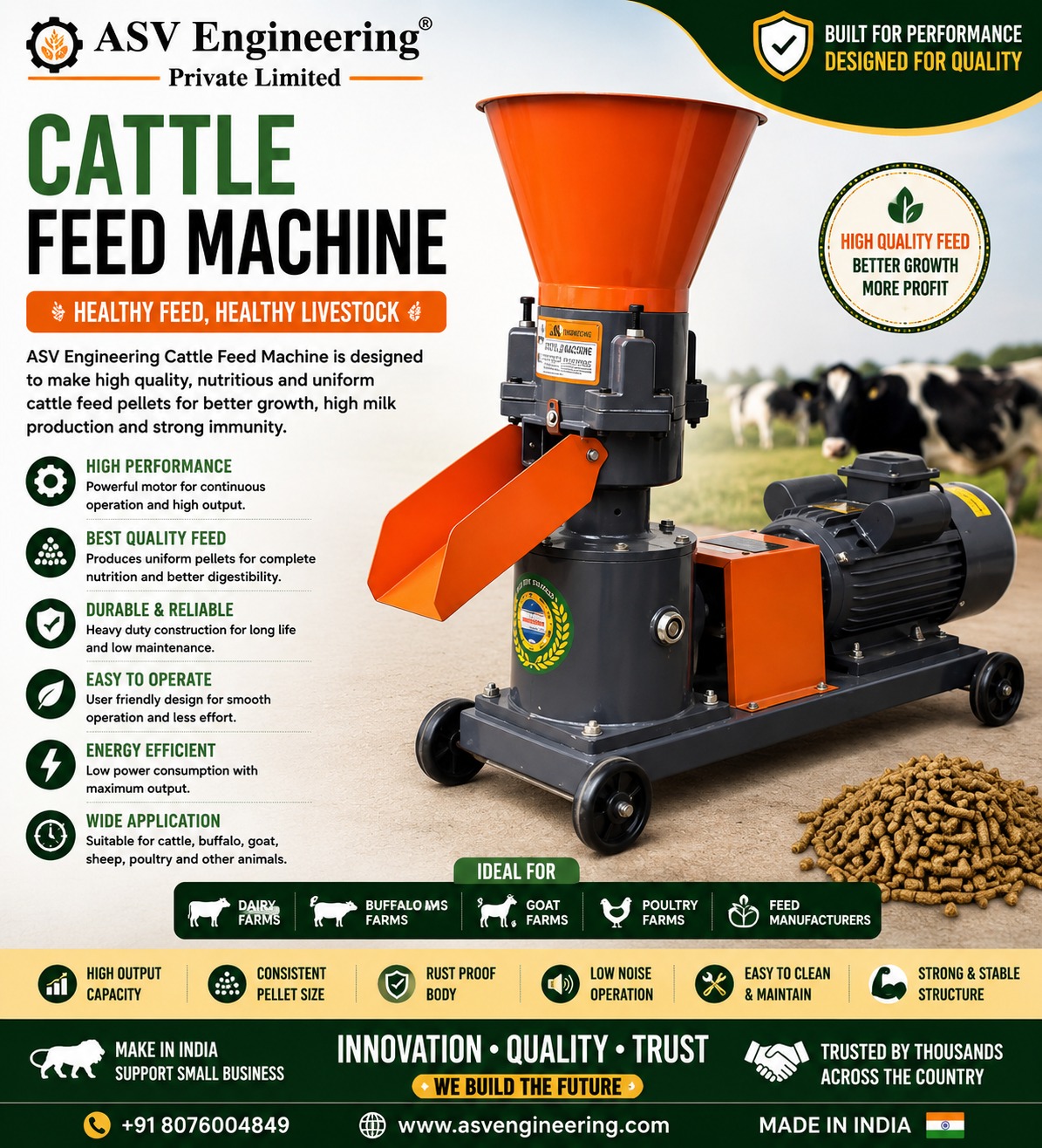
Cattle Feed Machine
View Details