Dal Dryer Machine
Description
Dal Dryer Machine – Manufacturer & Supplier in Delhi, India
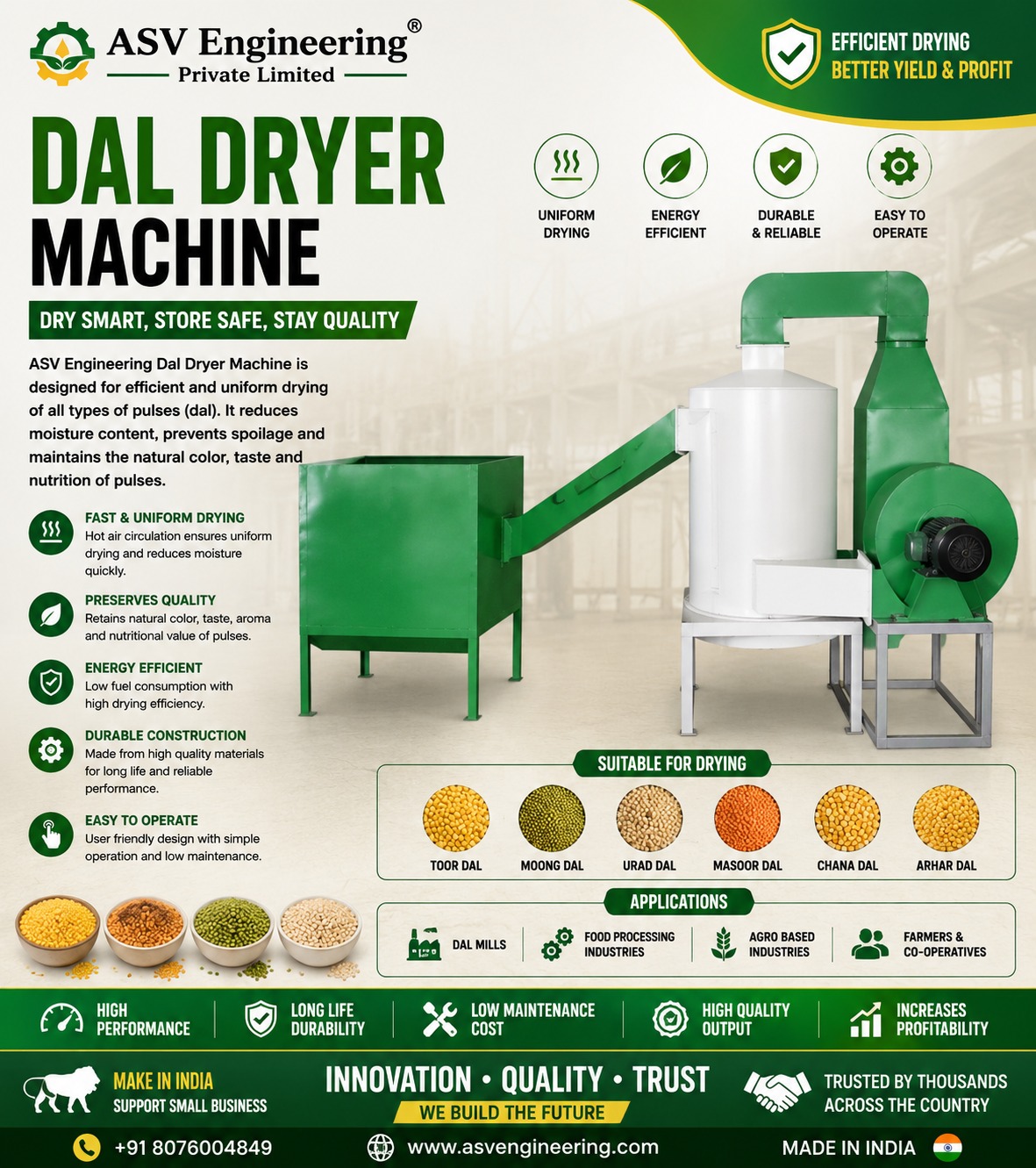
A dal dryer machine is an essential piece of equipment for pulse processing businesses, and as a Delhi-based manufacturer, we produce these machines for dal mills, food processing companies, and agricultural processors throughout India. Our dal dryer machines are engineered to reduce the moisture content of washed and processed lentils, chickpeas, pigeon peas, black gram, and other pulses to safe storage levels quickly and uniformly. Based in Nangloi, Delhi, we supply dal drying equipment that serves the pulse processing industry from small custom processing units to large commercial dal mills across every major pulse-producing state in India.
What Is a Dal Dryer Machine?
A dal dal dryer machine is specialized food processing equipment designed to remove excess moisture from pulses after the washing, soaking, and de-husking stages of dal production. Pulses that have been processed through soaking and de-husking carry significant surface moisture that must be removed before the dal can be packaged, stored, and transported without risk of spoilage, mold growth, or quality degradation.
Traditional sun drying, which remains common in many parts of India, is weather-dependent, time-consuming, and hygienically questionable. A mechanical dal dryer eliminates these problems by providing controlled, consistent drying conditions that reduce moisture content to the target level in hours rather than days, regardless of weather conditions.
Key Features of Our Dal Dryer Machine
Our Delhi-manufactured dal dryers feature a heated air drying system that passes temperature-controlled air through a bed of wet dal, evaporating surface moisture efficiently and uniformly. The temperature control system allows operators to set the optimal drying temperature for each pulse variety, preventing overheating that could damage the grain quality or cause discoloration.
The drying chamber is designed for even air distribution across the entire bed of pulses, preventing wet spots and over-dried areas that would result in inconsistent moisture levels in the output. The modular tray or conveyor system maximizes the surface area exposed to the drying air, accelerating the moisture removal process.
Constructed from food-grade stainless steel and food-safe materials, the dal dryer meets the hygiene standards required for food processing equipment. The smooth interior surfaces are easy to clean, and the machine design allows thorough cleaning between batches of different pulse varieties to prevent cross-contamination.
How Does the Dal Dryer Machine Work?
The drying process begins when washed and de-husked dal is spread onto the drying trays or fed onto the conveyor belt of the dryer. The dal should be spread in an even, thin layer to maximize exposure to the drying air. The trays are then loaded into the drying chamber or the conveyor moves the dal through the drying zone.
The heating system warms the incoming air to the set temperature, and a fan forces this warm air through the bed of pulses. As the warm, dry air passes over and through the wet dal, it absorbs moisture from the grain surfaces. The moisture-laden air is then exhausted from the drying chamber, and fresh air is drawn in, heated, and circulated continuously.
The drying continues until the dal reaches the target moisture content, typically between 10 and 12 percent for most pulse varieties. The operator monitors the moisture level using a moisture meter and stops the dryer when the target is reached. The dried dal is then cooled to ambient temperature before packaging to prevent condensation inside the packaging material.
Technical Specifications
Our dal dryer machine range covers different production scales to match the needs of various pulse processing operations. The compact model suitable for small dal processing units has a drying capacity of 50 to 100 kg per batch. This model uses a 3 HP blower motor and an electric heating system with a total power consumption of approximately 5 to 8 kilowatts, operating on 415V three-phase supply.
The medium-capacity model handles 200 to 500 kg per batch with a 5 HP blower motor and heating capacity of 15 to 25 kilowatts. This model is our most popular choice among commercial dal mills that process pulses for regional markets. The large-capacity model processes 1000 to 2000 kg per batch with a 10 HP blower motor, designed for large-scale dal mills and pulse processing factories that serve national markets and export channels.
Drying time varies based on the initial moisture content, target moisture level, pulse variety, and ambient conditions, but typical drying cycles range from 2 to 6 hours. The temperature control range spans from ambient to 70 degrees Celsius, and the moisture content reduction per cycle is typically 8 to 15 percentage points depending on the starting moisture level.
Applications and Industries Served
Dal dryer machines serve the pulse processing industry, which is a critical component of India's food security infrastructure. Pulses are a primary protein source for a large portion of the Indian population, and efficient processing and storage of pulses requires proper drying to prevent losses.
Commercial dal mills that process toor dal, moong dal, urad dal, chana dal, masoor dal, and other pulse varieties are the primary users of our dal drying equipment. These mills purchase raw pulses from farmers and agricultural markets, process them through cleaning, grading, de-husking, and polishing, and then dry the finished dal before packaging and distribution.
Cooperative societies and government procurement agencies that process and store pulses under the public distribution system also require reliable drying equipment to maintain pulse quality during storage. Export-oriented pulse processors who need to meet international quality standards for moisture content invest in controlled drying systems to consistently achieve the required specifications.
Benefits of Mechanical Dal Drying
Speed is the most obvious advantage over traditional sun drying. While sun drying may take two to five days depending on weather conditions, a mechanical dal dryer accomplishes the same moisture reduction in a few hours. This speed translates to faster inventory turnover, quicker order fulfillment, and reduced storage requirements for wet dal.
Quality control improves significantly with mechanical drying. The operator controls the temperature and drying duration, ensuring that the dal reaches exactly the right moisture level without the variability inherent in sun drying. Over-dried dal becomes brittle and breaks during handling, while under-dried dal is prone to mold and insect infestation. Mechanical drying hits the target consistently.
Hygiene and food safety are enhanced because the dal is dried in an enclosed, controlled environment protected from dust, insects, birds, and animal contamination that are inevitable with open-air sun drying. This is particularly important for processors serving premium markets or export customers who require documented food safety practices.
Maintenance and Care
The drying trays or conveyor belt should be cleaned after each batch to prevent residue buildup that could harbor bacteria or mold. Wash the trays with food-safe cleaning solution and dry them thoroughly before loading the next batch. Inspect the trays for dents, warping, or corrosion that could affect air distribution or contaminate the dal.
The heating elements or heat exchanger should be inspected monthly for scale buildup or damage. Clean or descale as needed to maintain heating efficiency. The blower fan bearings should be lubricated every month during active use, and the fan blades should be checked for balance and cleaned of any accumulated dust.
Check the temperature sensor calibration periodically to ensure accurate temperature control. An inaccurate sensor could lead to overheating, which damages pulse quality, or insufficient heating, which extends drying time and increases energy consumption. Replace the sensor if calibration drift cannot be corrected.
Frequently Asked Questions
**What is the price of a dal dryer machine in India?**
Pricing depends on the drying capacity, heating system type, and level of automation. Our small batch models are priced for entry-level processors, while large continuous-feed models are priced for commercial dal mills. For specific pricing, contact us at +91 8588856870 with your capacity requirements.
**How long does it take to dry one batch of dal?**
Drying time typically ranges from 2 to 6 hours depending on the initial moisture content, the type of pulse, the target moisture level, and the dryer capacity relative to the load. Wetter pulses and larger batch sizes require longer drying times.
**What types of pulses can be dried in this machine?**
Our dal dryer machines are suitable for all major pulse varieties cultivated in India, including toor, moong, urad, chana, masoor, rajma, and lobia. The temperature and airflow settings can be adjusted to optimize drying for different grain sizes and moisture characteristics.
**Is the machine energy efficient?**
Our dal dryers are designed for energy efficiency with insulated drying chambers that minimize heat loss and efficient fan motors that move maximum air with minimum power consumption. The actual energy cost per kilogram of dried dal is quite economical, especially compared to the losses from sun drying due to weather damage and spoilage.
Why Choose Our Delhi Factory and How to Order
Our Nangloi, Delhi factory is where we design, fabricate, assemble, and test every dal dryer machine before it reaches your facility. We use food-grade materials for all contact surfaces and quality components for the heating, fan, and control systems. Each machine undergoes a complete drying cycle test with actual pulses to verify performance, temperature accuracy, and drying uniformity.
As a Delhi-based manufacturer serving the Indian food processing industry, we offer competitive factory-direct pricing, pan-India delivery, and installation support that includes setup, calibration, and operator training. We also provide guidance on drying parameters for different pulse varieties to help you optimize your drying process from the start. To discuss your dal drying requirements or place an order, reach us at +91 8588856870. Our team welcomes you to visit our Nangloi factory to see our dal dryer machines in operation and evaluate their performance for yourself.
| Specification | Details |
|---|---|
| Machine Type | Dal Dryer Machine |
| Body Material | SS304 / MS |
| Power Supply | 220V/440V Three Phase |
| Warranty | 1 Year |
Related Products
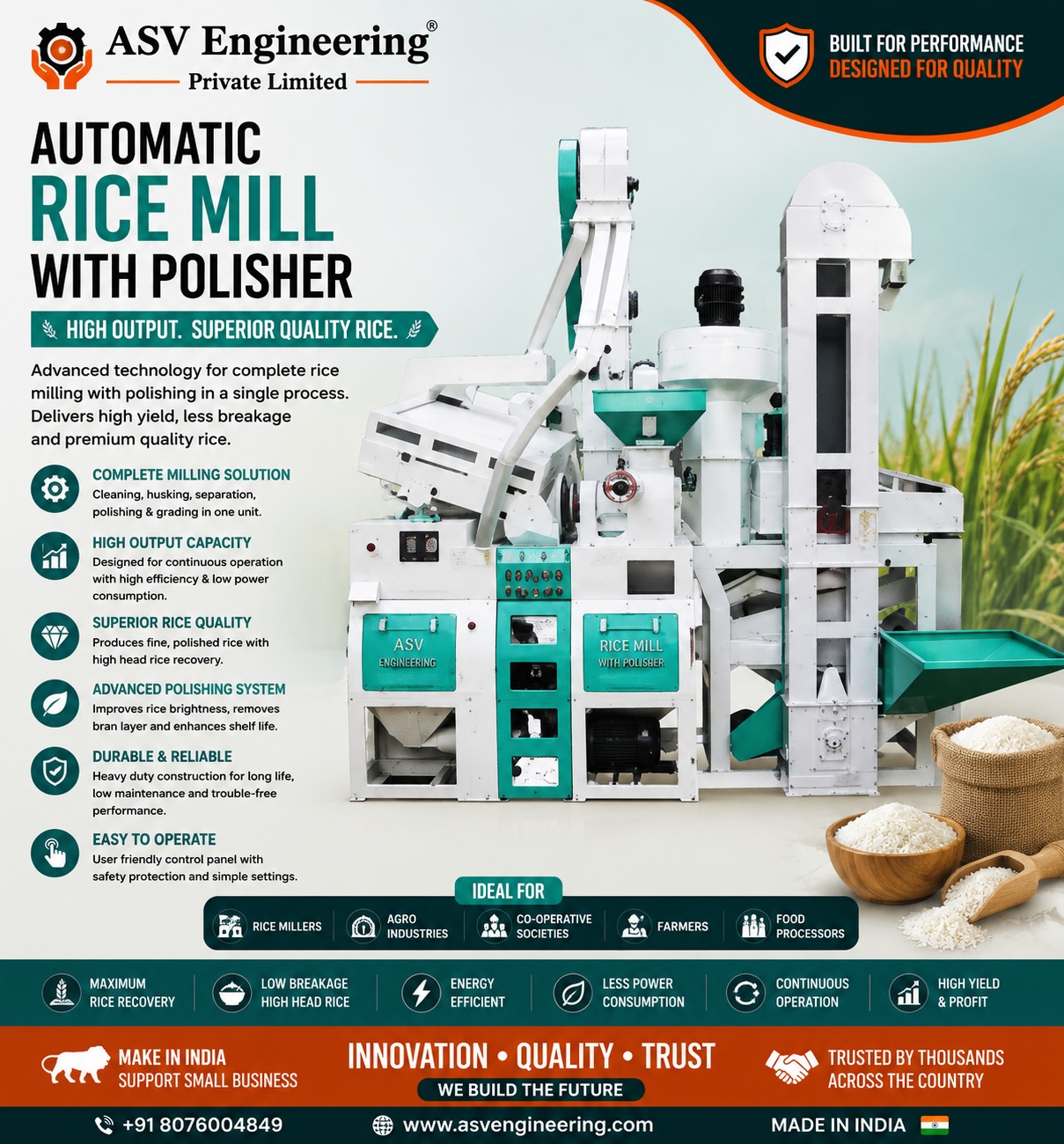
Automatic Rice Mill With Polisher
View Details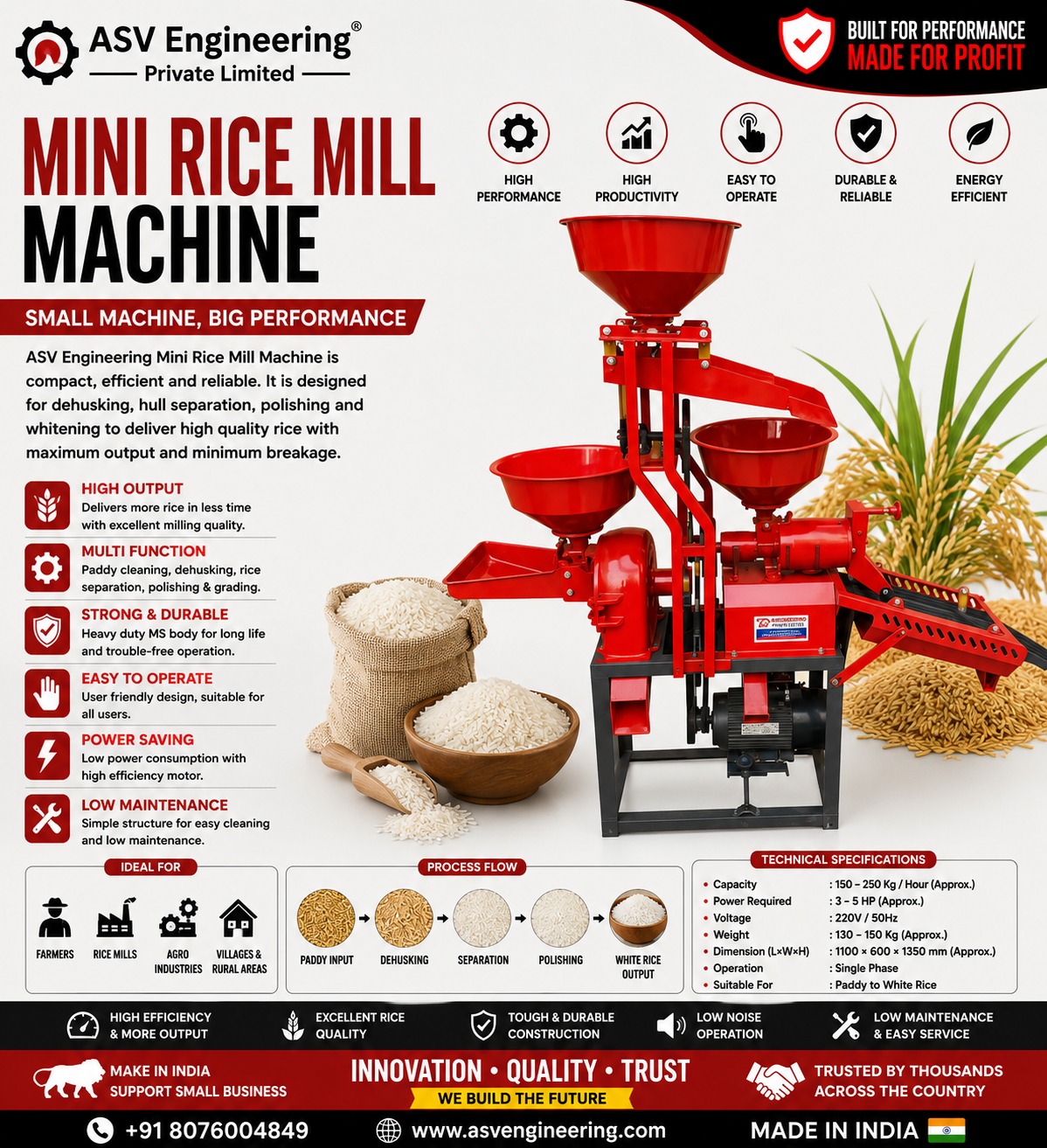
Mini Rice Mill Machine
View Details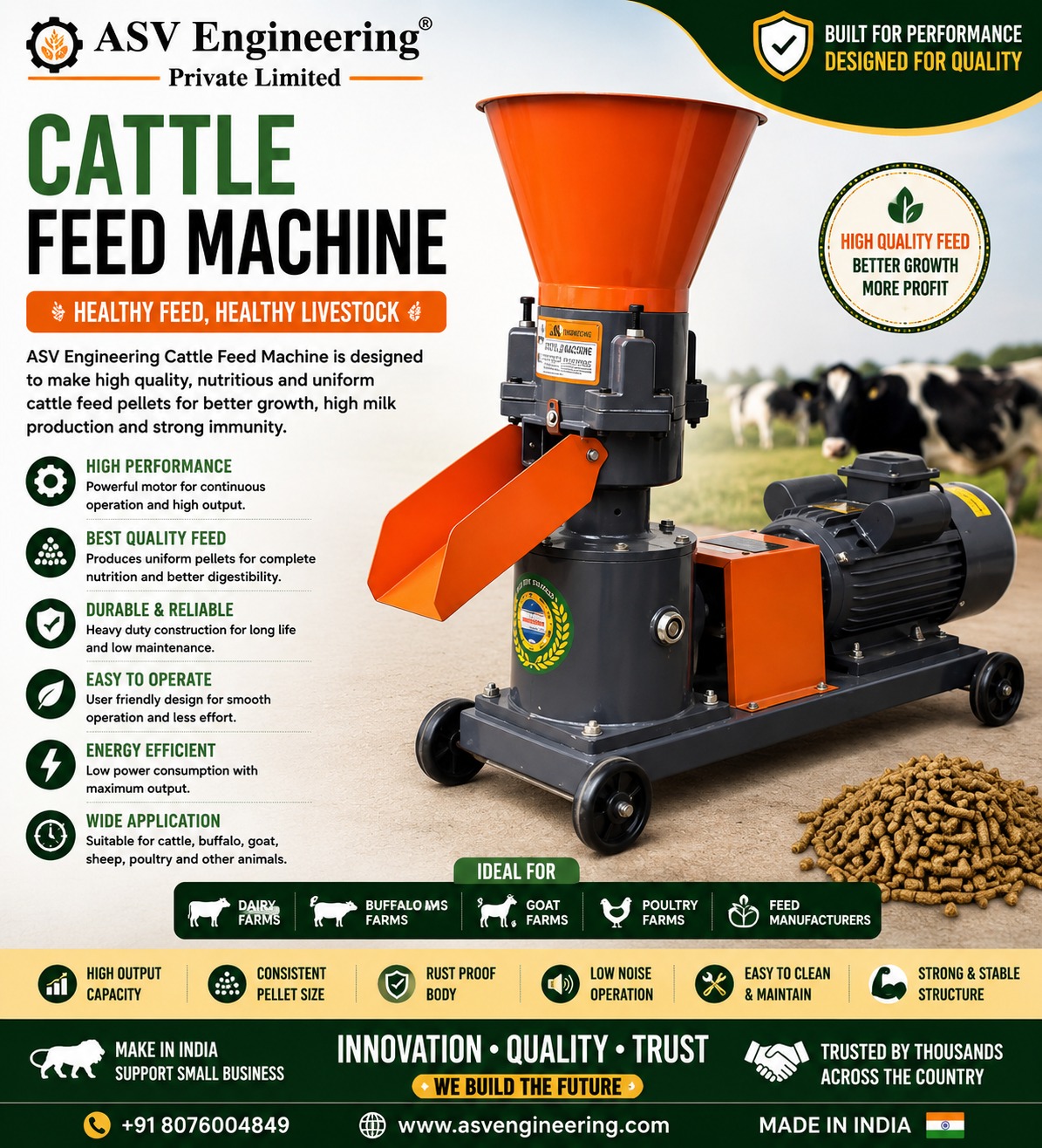
Cattle Feed Machine
View Details